What Is a Reciprocal Link in SEO?
Every few months a client forwards an email from someone offering a link swap. You link to their site, they link back, and everyone benefits. That pitch is as old as the web itself, and the straight answer is more nuanced than most guides suggest.
Reciprocal links have been part of link building discussions since before anyone tracked search rankings. Two websites pointing to each other. That is the mechanic. What has changed considerably over nineteen years running SEO Company To-The-TOP! is how search engines read that exchange, and under what conditions it helps or hurts your website.

Two Sites. One Agreement.
Worth knowing before anything else.
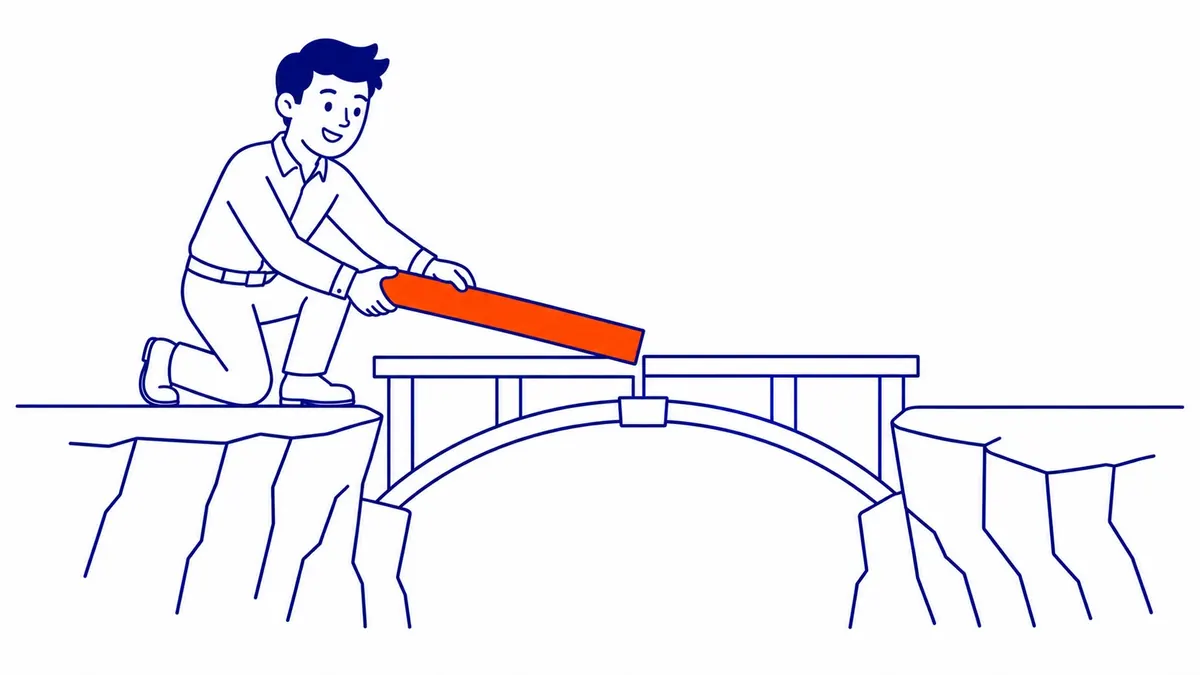
Reciprocal links form when two websites agree to link to each other. Site A links to Site B. That second site links back. Both gain a backlink from the other’s domain.
That arrangement predates modern search. Bloggers and small businesses found complementary sites and traded links because it sent referral traffic. An outdoor gear shop linking to a trail guide, the guide linking back. Both gained visitors. Rankings were still secondary at that point. Whether the two websites linked because of genuine content overlap or purely for manipulation is what search algorithms have gotten much better at distinguishing. That distinction drives almost every call on whether a given link exchange is worth accepting.
Where Link Exchanges Came From
Context matters here.
In the early web, search engines ranked pages largely on link volume. More links meant higher rankings. Mass link swap programs thrived in that environment. Reciprocal linking between two sites passed authority in both directions, and webmasters built entire networks around the practice.
Early Web vs Post-Penguin Reality
Google’s Penguin update in 2012 targeted link schemes, including bulk reciprocal linking between unrelated sites. Later link spam updates refined the pattern recognition further. Sites that had built profiles primarily through link exchanges watched rankings drop, sometimes without any notice in Search Console.
That shift did not eliminate them. It penalised the ones that existed purely for ranking manipulation, with no genuine topical connection between the two websites involved.
What Google’s Webmaster Guidelines Say
Google’s webmaster guidelines have listed excessive reciprocal links as a violation since at least 2005. “Excessive” is the word doing most of the work. Photography blogs linking to camera shops are not what the guidelines target. Networks of sites swapping links at scale, regardless of topical relevance, are.
One relevant exchange. Hundreds of irrelevant ones. That is where the line sits.

When Reciprocal Links Help Your Site
Still, context changes everything.
Two sites in the same niche, each linking to genuinely useful content on the other. Search engines read that as relevant information exchange. Reciprocal links between complementary businesses carry real weight when topics align and content serves the reader.
The Difference Between Natural and Transactional
Natural reciprocal links form without a formal agreement. A Calgary accountant references a resource article in their tools section. The firm links back in a post about year-end digital reporting. Neither party arranged anything. Each link existed because the content connected.
Transactional ones start with an outreach email: you link to my site, I link to yours. The link goes up regardless of whether content on your website or theirs genuinely connects. Both patterns have been documented long enough for search algorithms to distinguish them in most cases.
Relevance is the deciding factor. Reciprocal links between sites in your niche, pointing to content your audience actually needs, pass real value. Links between unrelated domains, say a florist and a software firm, carry almost none. Relevance decides more than the tag, though nofollow links and ranking value deserve their own look.
When Reciprocal Links Hurt Your SEO
Scale is where problems start.
One or two exchanges with relevant sites raises no flags. A site whose link profile shows most referring domains also receiving a return link from yours, that is the pattern search engines flag.
Signs a Link Exchange Is Working Against You
Natural link building does not produce symmetrical results. Most high-quality backlinks are one-way links from authoritative sources that cited your content without expecting anything in return. Too many of these exchanges dominating your website’s link activity stand out against that baseline.
Red flags from what we see in audits: referring domain has no topical connection to your site. Anchor text is over-optimised on both sides. The exchange was arranged through a broker or private network. Similar IP ranges appear across multiple linking domains. Excessive reciprocal linking across sites with those characteristics pushes the arrangement into link spam territory.
Algorithmic penalties from this pattern tend to be gradual. Rankings decline across several search results without a manual action notice. That makes the cause harder to trace without a proper SEO website audit examining the full picture. Exchanges muddy the picture, so start from what counts as backlinks in SEO before auditing the profile. Exchanges at that scale are grey hat by any reasonable reading of the guidelines.

How To Keep Your Backlink Profile Clean
Selection criteria is everything.
Link exchanges work only when both sites meet a relevance threshold. The practical test: would you link to this site in a resource article even without the return link? If the answer is no, the exchange probably does not belong in your profile.
What a Natural Link Profile Looks Like
Healthy link profiles contain mostly one-way links from authoritative sites, earned through content quality and consistent link building outreach. These arrangements sit in the minority, perhaps five to ten percent of referring domains at most, all topically relevant.
For businesses working with a search engine optimization company, the alternatives to link swaps tend to produce stronger signals. Guest posts, industry citations, PR-driven coverage, original data other sites want to reference. Still, the right reciprocal link in the right context is not something to dismiss outright.
To-The-TOP! has been doing Calgary SEO since 2007. In audits, excessive reciprocal links are among the first patterns we look for. Not because they are automatically harmful. Because they are often the symptom of a link strategy built around shortcuts rather than earned authority.
Worth asking about before agreeing to a swap.

Frequently Asked Questions
Are reciprocal links bad for SEO?
Not automatically. A small number of reciprocal links between topically related sites is common and generally harmless. Volume and relevance are what matter. A link profile built primarily on link exchanges across unrelated domains draws algorithmic scrutiny. Moderation and topical fit matter far more than the tactic itself.
Do reciprocal links still count as backlinks?
They count. Search engines still process them as authority signals. The weight any backlink carries depends on the linking domain’s quality, topical fit, and whether the overall pattern looks earned or manufactured. Reciprocal links between two sites in the same niche pass more value than the same arrangement between sites with no topical connection.
What is the difference between a reciprocal link and a one-way link?
One-way links point in a single direction. Your site receives a link and links back nothing in return. Reciprocal links involve a mutual agreement. Each site points to the other. One-way links from authoritative sources tend to carry stronger signals in search rankings because they suggest someone found your content worth citing without expecting anything back.
How does excessive reciprocal linking affect rankings?
Gradual suppression, typically. Google’s algorithms look for link spam patterns, and a high ratio of reciprocal links to total backlinks is one indicator. The drop tends to be algorithmic rather than a sudden manual penalty, which is why it often goes undiagnosed for months. Periodic review of your website’s backlink profile, standard in any Google Ads management or organic search engagement, is how these patterns get caught early.
Contact Calgary SEO Company To-The-TOP!
Questions about anything in this article, or about your own rankings? Talk to a Calgary SEO specialist directly.
Phone: (403) 308-5949
Address: 1509 14 Ave SW, Calgary, AB T3C 0W4
Hours:
Monday to Friday: 10:00 am – 7:00 pm
Saturday: 12:00 pm – 4:00 pm
Sunday: closed
