
What Is Keyword Strategy and How It Differs From Keyword Research
Keyword research finds the terms. What to do with those terms, that’s what keyword strategy decides. Which cluster gets built first. Ownership of each specific term, page by page. How everything ties back to actual business goals.
Without a real strategy behind it, keyword research just produces a long list going nowhere useful.

Grouping Keywords Into Real Content Clusters
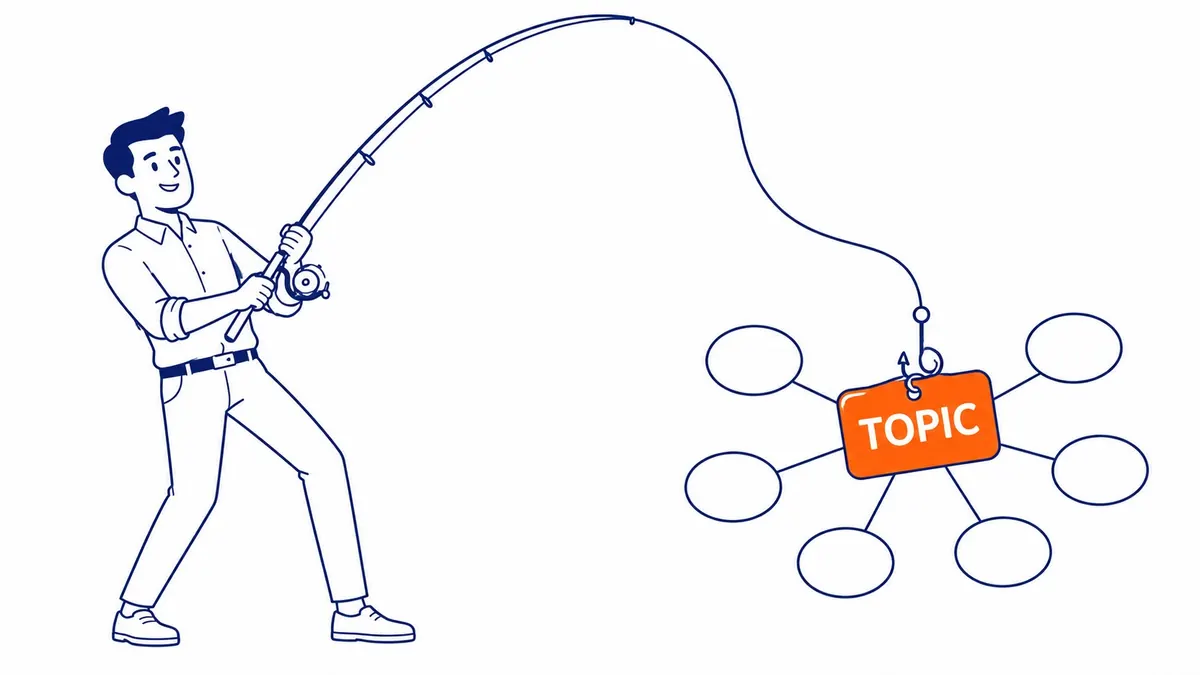
Related keywords group into a cluster around one central topic. A dozen closely related terms might fall under a single cluster, all served by one comprehensive page. Not a dozen thin ones scattered everywhere.
Clustering prevents the exact same intent getting targeted by multiple competing pages. One clear owner per topic keeps a site’s internal structure clean and its authority concentrated.
A well-built cluster also creates natural internal linking opportunities. A pillar page gets linked up to by supporting pages. That pillar links back down in return, reinforcing the whole topic in Google’s eyes. Clusters map onto an SEO funnel neatly once you sort them by what the searcher wants.
Matching Keywords to Actual Search Intent
An intent hides behind every single keyword. Informational or navigational. Commercial or transactional. Matching content type to that intent matters more than matching the literal words alone.
A commercial-intent term deserves a page built to convert, not a long educational blog post. Mismatched intent tanks rankings even when the keyword itself gets targeted correctly.
Search results themselves reveal intent clearly. Checking what already ranks for a target term shows exactly what format and depth Google expects to satisfy that specific search.

Prioritizing Keywords by Real Business Value
Search volume alone misleads prioritization badly. More real business value often comes from a lower-volume, high-intent commercial term than a high-volume informational one ever delivers.
Competition level factors directly into priority too. A realistic, winnable term ranked soon beats an aspirational one that stays buried on page three for years.
Prioritizing by actual conversion potential, rather than raw search volume alone, consistently produces better returns. True for a Calgary SEO content investment too.

Mapping Keywords to the Buyer Journey
Awareness-stage keywords bring in visitors just starting to research a problem. Close to ready to buy or hire, that’s who decision-stage keywords bring in.
Every stage gets covered deliberately by a complete keyword strategy. Not just the bottom-funnel commercial terms everyone chases first. The initial visit gets earned by awareness content, and decision content converts it later.
Internal links tie these stages together. Awareness content should always link toward the decision-stage page it’s meant to eventually funnel visitors into.

Building the Strategy Into an Actual Content Plan
A keyword strategy without an execution plan stays theoretical. Assigning specific keywords to specific pages, with specific deadlines, turns strategy into actual published content.
Revisiting the strategy quarterly keeps it current. Search behavior shifts. Competitors publish new content. Gradually going stale is what happens to a keyword strategy built once and never revisited, because of both.
Tracking which keywords actually drive traffic and conversions closes the loop. A strategy adjusts based on real results, not just the assumptions made when it was first built. Knowing what comes after keyword research is what separates a plan from a spreadsheet. Gaps show up in that tracking too, and closing them is content gap analysis in SEO.

Auditing an Existing Keyword Strategy for Gaps
An existing keyword strategy rarely stays perfect for long. Reviewing what’s actually ranking against what the strategy originally intended reveals real drift. Drift that accumulates quietly over time, often without anyone fully noticing until later.
Gap analysis compares a site’s current keyword strategy against competitors covering the same space. Terms a competitor ranks for, that a site’s own keyword strategy never accounted for, represent real missed opportunity.
Cannibalization often hides inside a keyword strategy that grew organically without oversight. A strategy that needs consolidation, not more content, gets signaled by two or three pages quietly competing for the same term.

Common Keyword Strategy Mistakes Worth Avoiding
Chasing volume alone, without considering intent or competition, wastes enormous effort on a keyword strategy that never converts. Nothing, that’s what high traffic means without the right kind of visitor actually arriving.
Ignoring existing page ownership creates a keyword strategy at war with itself. New content targeting a term an existing page already owns just cannibalizes results instead of adding new ones.
Building a keyword strategy once and treating it as permanent guarantees it eventually falls behind. Search behavior shifts. Competitor content and business priorities too, and a strategy needs to shift right along with them.
Months of wasted content production get saved by avoiding these three mistakes upfront. True for a Calgary SEO client building a strategy from scratch.
Frequently Asked Questions
How is keyword strategy different from keyword research?
Research finds and evaluates individual keywords. Strategy decides how those keywords get organized. Prioritized and assigned across an entire site’s content plan too.
How often should a keyword strategy get updated?
Quarterly works well for most sites. Faster-moving industries or highly competitive niches sometimes benefit from more frequent review.
Should every keyword get its own dedicated page?
No. Closely related keywords with the same search intent should share one comprehensive page. Proper keyword clustering handles that, rather than splitting things across separate thin pages. See keyword research services for building this out properly.
Contact Calgary SEO Company To-The-TOP!
Questions about anything in this article, or about your own rankings? Talk to a Calgary SEO specialist directly.
Phone: (403) 308-5949
Address: 1509 14 Ave SW, Calgary, AB T3C 0W4
Hours:
Monday to Friday: 10:00 am – 7:00 pm
Saturday: 12:00 pm – 4:00 pm
Sunday: closed