What Is the SEO Funnel? The Three Stages Explained
The SEO funnel is a way of matching search content to where a searcher sits in a buying decision, usually split into three stages: awareness, consideration and decision. People at the top are asking broad questions, people in the middle are comparing options, and people at the bottom are ready to hire or buy, so each stage needs a different kind of page and is measured in a different way. The term has a second, more technical meaning too, which describes how a page moves through Google’s crawling, indexing and serving stages before it can earn a visit at all, and both meanings are covered below.
Most sites drift toward one end of the funnel without planning it. Some publish blog post after blog post and wonder why traffic climbs while enquiries stay flat, and others build a handful of service pages that nobody finds because nothing on the site answers the earlier questions. SEO Company To-The-TOP! has worked on Calgary SEO since 2007, and the funnel is one of the simplest tools for deciding what a site should publish next and what each page is supposed to achieve.
The Three Stages of the SEO Funnel
Each stage of the SEO funnel lines up with a kind of search intent, which is the reason the model works for search in particular. A search query tells you a great deal about what the person wants right now, and the wording usually reveals how close they are to acting. The stages are sometimes labelled top, middle and bottom of funnel (TOFU, MOFU and BOFU), which means the same thing.

Awareness stage
At the top of the funnel, someone has a problem or a question and usually no business in mind yet. They type things like “why is my furnace blowing cold air” or “what is an SEO funnel”, and they want a clear answer rather than a sales pitch. Blog posts, explainer guides and how-to articles belong here. Awareness queries often make up the largest group of searches in a market and buying intent is at its lowest here, so the realistic goal of an awareness page is to answer the question well enough that the reader remembers the site, explores another page or comes back later, not to produce an enquiry on the first visit.
Consideration stage
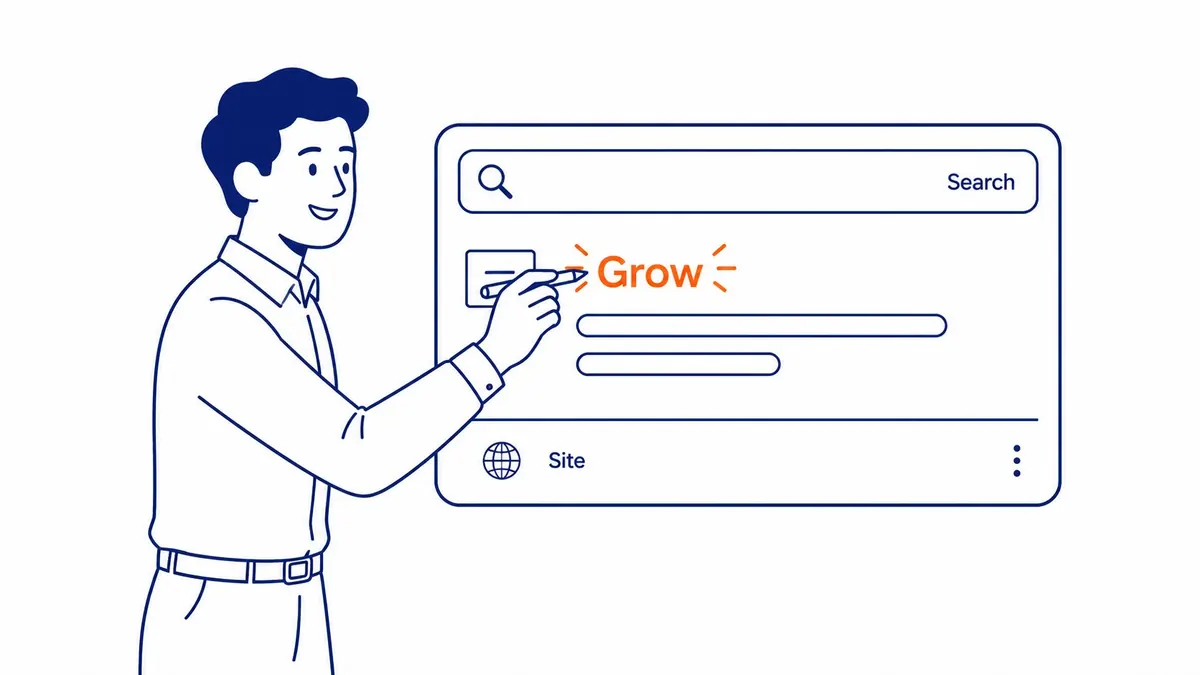
In the middle, the searcher understands the problem and is weighing up the ways to solve it. The queries turn into comparisons and evaluations: “furnace repair or replacement”, “SEO versus Google Ads for a small business” or “best SEO company Calgary”. Comparison guides, cost explainers, process pages and reviews work here, because the reader needs enough detail to narrow the field. Reading keyword intent correctly matters most at this stage, since a comparison query answered with a sales page, or a sales query answered with a beginner’s guide, tends to lose the reader either way.
Decision stage
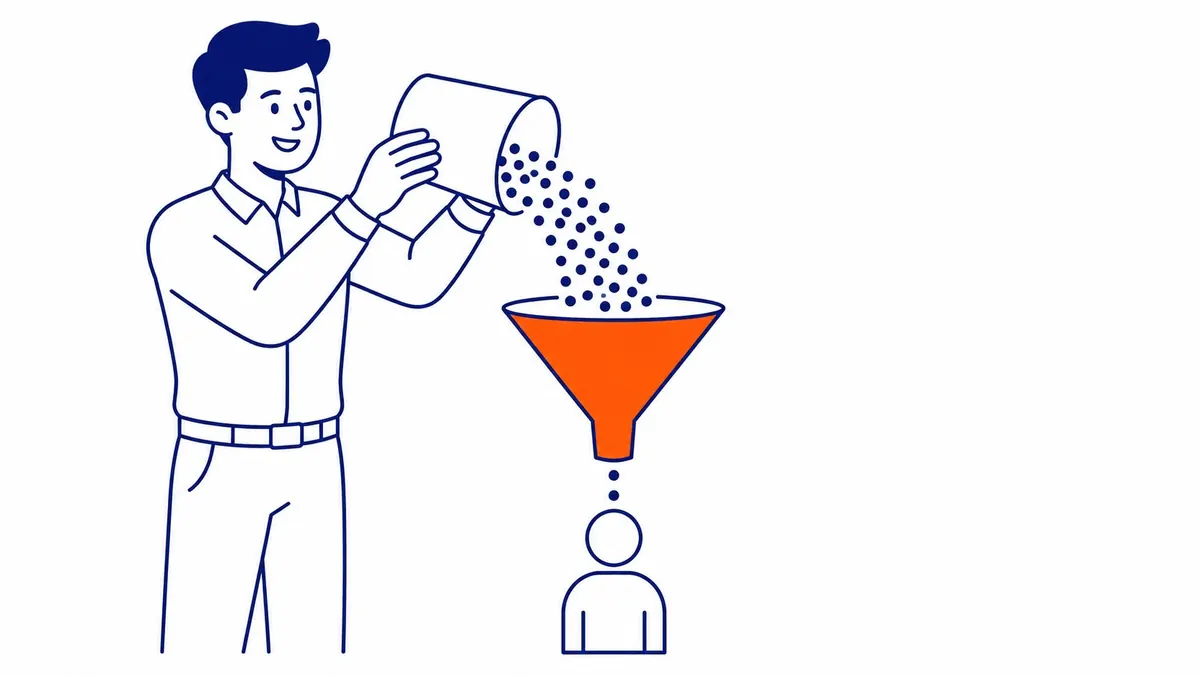
At the bottom, the searcher is ready to act and is choosing who to call. Words such as “hire”, “near me”, “cost”, “book” or a city name usually signal this stage, as in “furnace repair Calgary” or “hire an SEO company in Calgary”. The page that wins here is normally a service page that answers cost, process and timeline directly and makes contact easy, because the visitor already knows what the service is. Individual decision searches often have less volume than broad awareness questions, but each one is much closer to a customer, which is why a site with no decision stage pages can rank well and still produce very little business.
The table below puts the three stages side by side, using an illustrative Calgary furnace company as the example.
| Stage | Example query | Page type that fits | What a good result looks like |
|---|---|---|---|
| Awareness | why is my furnace blowing cold air | Blog post or troubleshooting guide | The reader gets an answer, stays on the site and remembers the name |
| Consideration | furnace repair or replacement | Comparison guide or cost explainer | The reader moves on to a service page |
| Decision | furnace repair Calgary | Service page plus Google Business Profile | A call, a booking or a quote request |
One practical point applies to the decision row in particular. Searches such as “furnace repair Calgary” or “furnace repair near me” have clear local intent, and Google may show local results from Google Maps and Business Profiles for them alongside the regular listings. That is why the decision stage asset for a local business is normally a well-built service page working alongside a complete Google Business Profile, rather than a general blog post.
The Other SEO Funnel: From Crawl to Conversion
Some sources, Botify among them, use “SEO funnel” for a different sequence: crawl, render, index, rank and convert. This version describes what has to happen to a page before any searcher can see it, and it rests on how Google itself explains search. Google’s guide to how Search works says it “works in three stages, and not all pages make it through each stage”: crawling, indexing and serving search results. Google also states that it does not guarantee it will crawl, index or serve any page.
The two meanings fit together rather than compete. The technical funnel decides whether a page is eligible to appear at all, and the marketing funnel decides whether the page that appears matches what the searcher wanted.
| Technical stage | What happens | Where the marketing funnel comes in |
|---|---|---|
| Discovery and crawl | Google discovers the URL and may fetch and render the page | Not yet: an undiscovered page cannot reach any stage |
| Index | Google analyzes the page and stores it in its index | Not yet: a page left out of the index gets no searches |
| Rank and serve | Google shows the page for queries it judges relevant | Here: the query reveals awareness, consideration or decision intent |
| Convert | The visitor takes the next step | The page’s stage decides what that next step should be |
This is why a funnel plan can fail for reasons that have nothing to do with content. A carefully written decision stage page that Google cannot crawl properly, has trouble discovering or leaves out of its index is unlikely to earn useful search traffic, however well it might convert. Crawl access, discovery through links or a sitemap, and index status are separate problems, so it pays to check each one with the URL Inspection tool in Search Console before judging whether a key page converts.

Where SEO and SEM Sit in the Funnel
A question that turns up in search in almost these words is at what stage of the funnel SEO and SEM sit. If it comes from a course, the expected answer depends on that course’s own model, so check its material before relying on any general answer. In practice, organic SEO covers every stage, because informational guides, comparisons and service pages can all rank. Paid search, the part of SEM most people mean, does its most valuable work at the decision stage, where clicks tend to be closest to a sale. The advertiser chooses which keywords to bid on and can use negative keywords to keep the ads off searches that do not fit, although Google can also match ads to close variants and searches with the same meaning, which is why the search terms report is worth reviewing regularly.
That difference is the reason the two channels work well together. Commercial service terms are often competitive, so a decision stage service page can take months to gain visibility, particularly on a newer site. A well-structured Google Ads campaign can show up for those bottom of funnel searches while the organic pages build, and awareness and consideration content keeps adding visitors underneath without a cost per click. Paid ads can also run at the top of the funnel, although they are harder to justify for a small local business, because an informational search sits further from an enquiry. They are worth testing when their role is clear and the conversions that follow can be measured.
How to Measure Each Stage
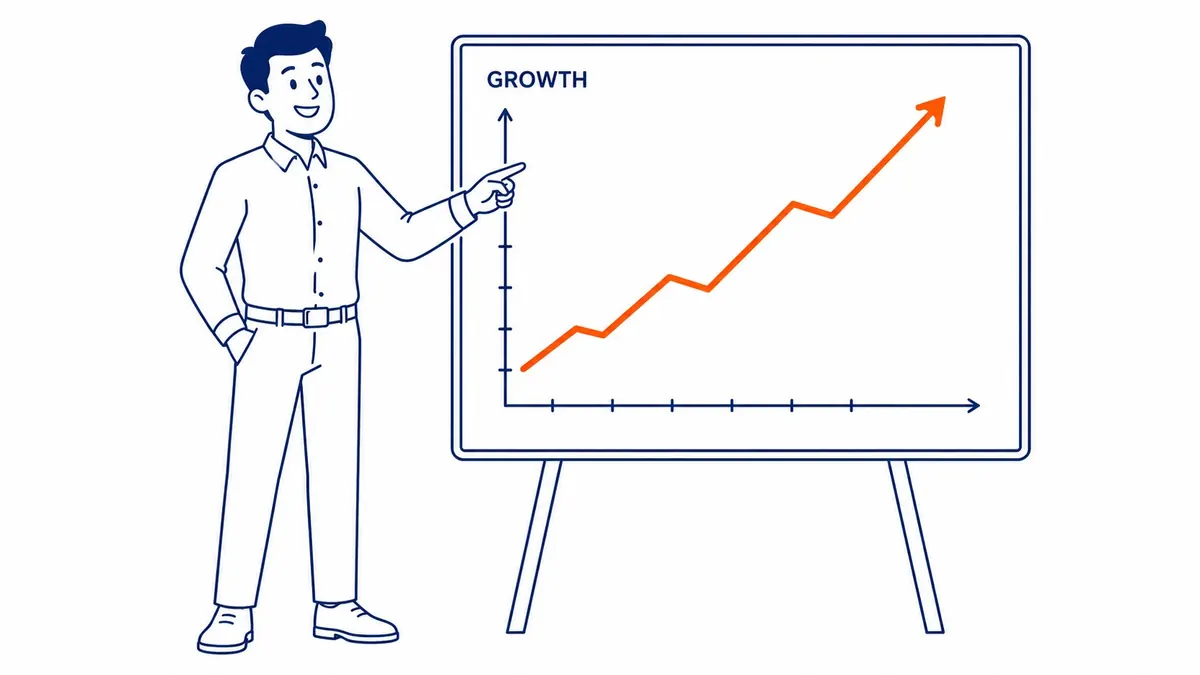
Analytics tools do not label traffic by funnel stage on their own, so someone has to set that up. In Google Analytics 4, Google documents content groups, which “let you categorize pages and screens into custom buckets”. You can set a content group on each page with the content_group parameter in the Google tag, or in Google Tag Manager with a RegEx Table variable that assigns a group based on the URL, and the groups then appear as the Content group dimension in the Pages and screens report.
In Search Console, the Performance report’s query filter does a similar job for searches rather than pages. One regular expression filter per stage is quicker than adding words one at a time: a filter matching “cost”, “hire”, “near me” or your city shows how your decision stage terms are performing, while one matching queries that begin with “what”, “how” or “why” mostly shows the awareness stage. Treat the results as a directional segment rather than an exact total, because Google leaves anonymized queries out of filtered results and the report can also truncate data. The point of the split is that each stage is judged by its own measure, and a blended site-wide conversion rate hides the difference.
| Stage | What to watch |
|---|---|
| Awareness | Impressions and clicks on informational queries, engaged sessions, clicks through to other pages |
| Consideration | Visits that continue to a service page, average engagement time on comparison and cost pages |
| Decision | Calls, form submissions and bookings set up as key events in GA4 |
An awareness post with no enquiries of its own may still be doing its job. Content groups alone will not prove that, but combined with key events in a GA4 path or funnel exploration they can show whether its visitors later return, view a service page or get in touch. A service page with plenty of traffic but no calls, on the other hand, is a real problem worth fixing first.
How to Map Existing Pages to Funnel Stages
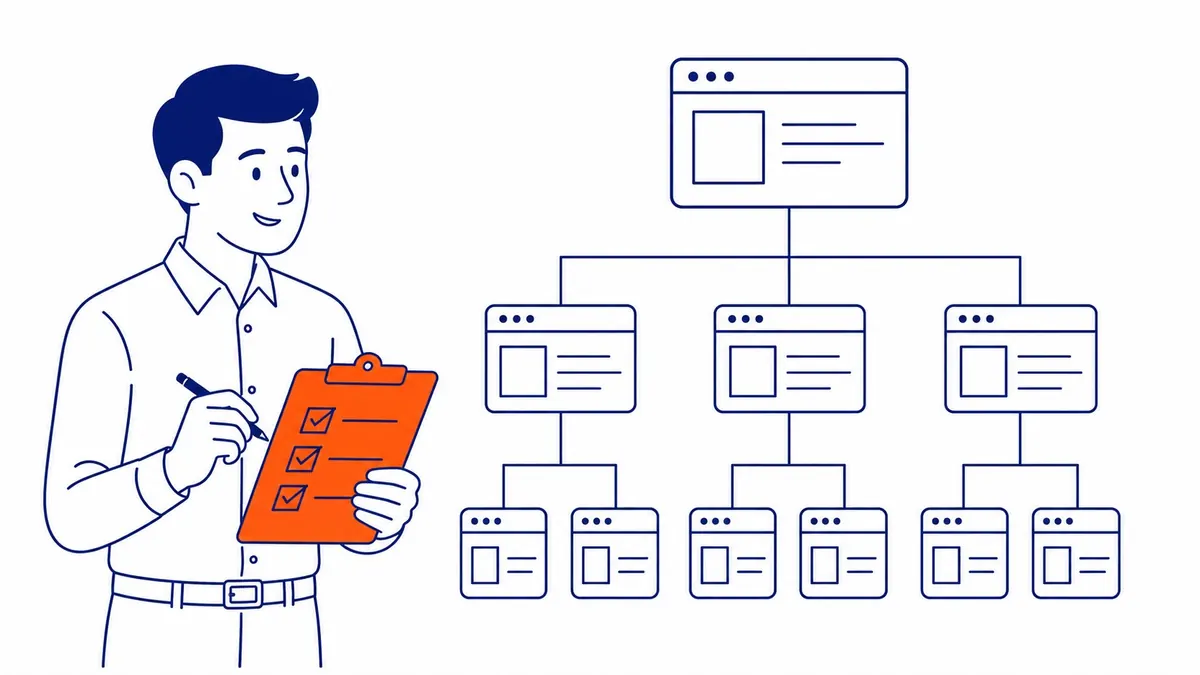
Most sites already have content at all three stages without having planned it that way. The quickest way to see the balance is to list every indexable page, assign each one a single stage based on the query it is meant to rank for, and note whether it has the internal links that move a reader to the next stage. That list is often part of a site audit, and it usually shows a gap at one end: plenty of blog posts and no clear service pages, or service pages with nothing earlier in the funnel feeding them.
Each page should serve one stage well. A page that tries to answer a beginner’s question and close a sale at the same time tends to do both poorly, because the searcher’s intent at each stage is different and Google ranks the page that fits the query best. There is no fixed number of keywords per stage. Awareness terms often outnumber decision terms, while each decision term tends to carry stronger commercial intent, so it is worth confirming the balance with Search Console data for your own market. Targeted keyword research for the missing stage is how the gap gets filled, and for most local businesses the decision stage pages come first, because they are closest to revenue, even though competitive commercial terms can take a while to gain visibility.
Internal links are what turn separate pages into a funnel. Each awareness post should link to the consideration page that covers the next question, and each consideration page should link to the service page that answers “who can do this for me”. Linking down the funnel this way also helps Google discover and understand your most important pages, which ties the marketing funnel back to the technical one.
If you would like a second opinion on which stages your site covers and where the gaps are, a site audit is a sensible place to start, and you can reach To-The-TOP! at (403) 308-5949.
Contact Calgary SEO Company To-The-TOP!
Questions about anything in this article, or about your own rankings? Talk to a Calgary SEO specialist directly.
Phone: (403) 308-5949
Address: 1509 14 Ave SW, Calgary, AB T3C 0W4
Hours:
Monday to Friday: 10:00 am – 7:00 pm
Saturday: 12:00 pm – 4:00 pm
Sunday: closed