Do Subdomains Hurt SEO?
Clients ask about this several times a year. The setup is usually the same: someone moved their blog to blog.theirsite.com thinking it would be simpler to manage separately. Rankings stalled a few months later. Now they want to know why nothing is gaining traction.
Subdomains do not automatically hurt your website. The straight answer depends on what you put on the subdomain and how Google reads the relationship between it and your main domain. To-The-TOP! has been handling this question since 2007. The pattern is consistent: most businesses use subdomains for content that belongs in subdirectories, then wonder why rankings stall.

A question that comes up every few months
Usually tied to a blog decision.
The scenario we see most often: a business launches a blog on blog.example.com instead of example.com/blog. Feels like a simple technical preference. In practice, it has real ranking consequences that surface gradually rather than immediately.

There is also the international version. A site serving users in different countries splits into separate subdomains for each language or region. Or a company runs its store on shop.example.com. These cases do not work the same way. Treating subdomains as one uniform choice leads to the wrong structure decision.
Whether subdomains hurt your website’s rankings is worth answering before you commit to the structure. Undoing it later carries risk and takes months to recover from. Dead URLs raise the same worry, and the answer on broken links follows a similar shape. Any restructure runs on redirects, which is why 301 redirects matter more than the subdomain debate.
Subdomain vs subdirectory: what actually separates them
Simpler than it sounds.
A subdomain sits before your domain name. blog.example.com has “blog” as the subdomain prefix. A subdirectory sits after. example.com/blog puts the same blog in a folder on your main site. Your users may not notice any difference. Google does.

Your main domain is example.com. Subdomains like blog.example.com share your domain name but search engines generally treat each subdomain as a separate website. Equity built on one does not automatically transfer to the other. That is the core issue with subdomains and SEO for most businesses.
URL structure matters beyond crawlability. It determines where ranking equity accumulates. Every backlink, every citation, every link earned by a page sits on whichever URL it points to. Subdomain or subdirectory determines which property benefits from that work.
How Google actually treats subdomains
Separate by default. Not always a problem.
Google has confirmed through public statements, including from John Mueller, that subdomains can be treated as separate sites. Search Console asks you to verify your subdomain as a separate property. That reflects how Google’s systems actually crawl and assess each property independently.

Backlinks pointing to your subdomain do not automatically strengthen your main domain. Content that earns authority on blog.example.com does not pass that ranking power back to your main site the way content in a subdirectory does. Link equity stays siloed between the two.
Search engines are not blind to the relationship between a subdomain and the main site, however. Clearly part of the same brand and structure, the connection can be recognised. Subdomains are not penalised by default. What you lose by not consolidating is the real issue. Subdirectories build authority in one place. Subdomains split it across separate entities that each need to build credibility independently.

This matters most for businesses investing in organic search over months. Link building, outreach, and topical depth all work harder when effort concentrates on your site rather than diluting across a subdomain that does not feed strength back into the root. Server moves raise a similar worry, and what to make of changing website host is a fair question.
When subdomains genuinely cost you search equity
Here is where the real cost appears.
Blogs on subdomains are the main offender we see. A business spends a year building content on blog.example.com. Every backlink to that blog, every piece of topical depth earned through solid writing, every citation from external sources: it accumulates on a separate entity from the main site. Nothing flows back to the root domain.

In some cases, your subdomain and your main domain compete for the same keyword territory. Search engines’ deduplication logic means two properties from the same brand rarely both appear for the same query. The main site usually wins that contest. Your blog is not reinforcing the main site’s rankings either. Split effort. Diluted results from both.
Duplicate posts or pages between your subdomain and main site add another layer of risk. Google has to choose which version to index and prioritise. That choice does not always land on the version you would prefer.
Fragmented equity, keyword competition between the two properties, duplicate page risk: these together are why the industry has consistently pointed businesses toward subdirectories for blog and content sections rather than subdomains.
When subdomains actually make sense
Not always the wrong call.
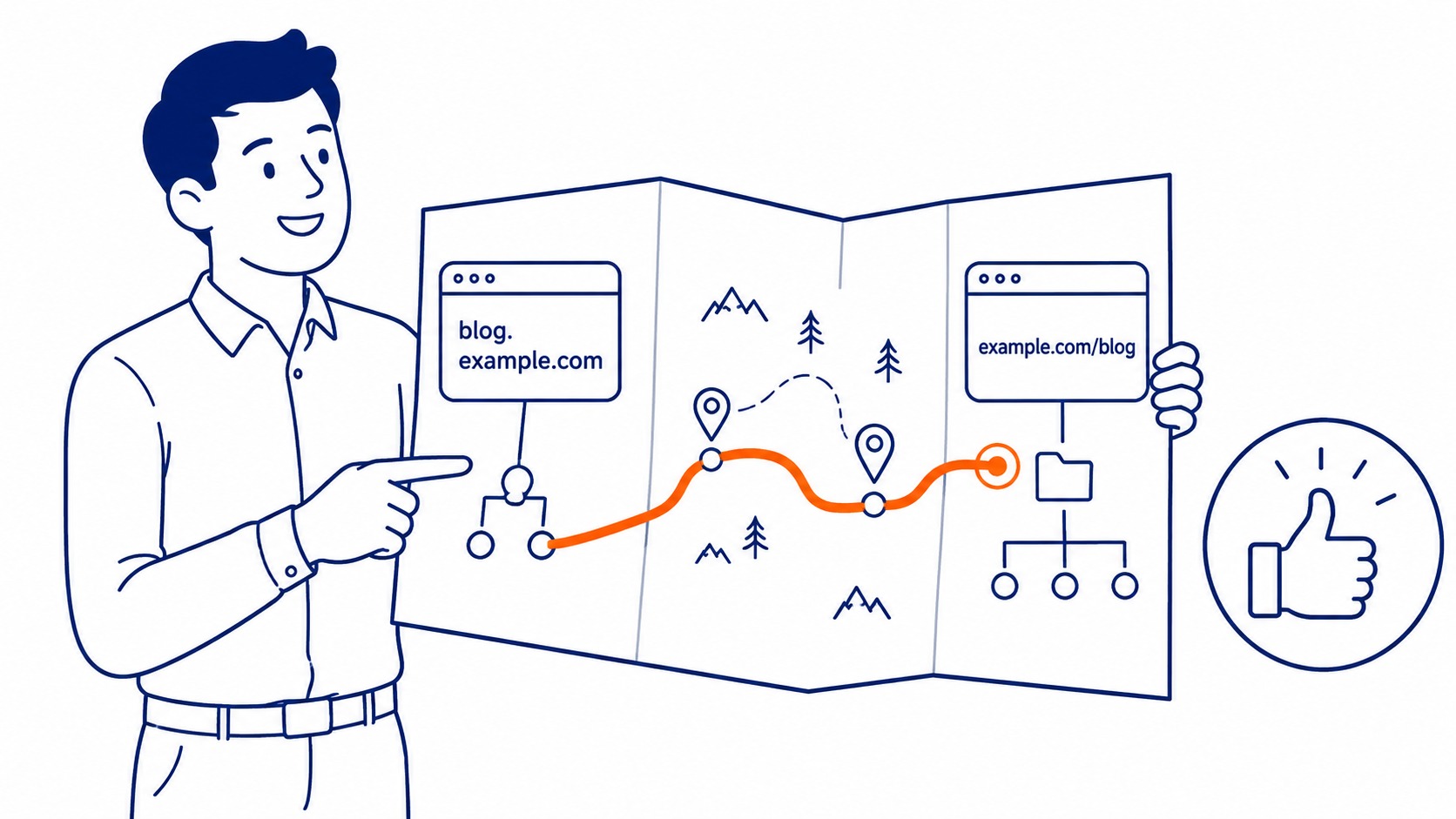
International sites with distinct language versions are a legitimate case. Serving French-speaking users on one subdomain and German users on another maps to genuinely separate audiences with genuinely separate material. Hreflang signals tell Google how the properties relate. The structure works here because the pages on each subdomain target different queries in different markets.
Software companies sometimes run their application or store on a subdomain for technical reasons. Separate hosting, separate deployment pipelines, a CMS that cannot run alongside the main website. Real constraints. When the technical justification is solid, the equity tradeoff may be worth accepting.
Large organisations occasionally use subdomains to separate distinct sub-brands from the main brand. This scenario is uncommon for small and medium businesses. For most local service businesses, the use case simply does not apply.
The default call for most businesses
Subdirectories, almost always.
Everything that belongs to your brand belongs under the same domain. Blog pages at example.com/blog. Resources at example.com/resources. Service landing pages under the same roof. Equity accumulates in one place rather than fragmenting across separate entities.

Internal links between your main pages and your blog content pass ranking strength cleanly through subdirectory structure. Backlinks earned by any page on the site build the whole domain. Topical authority concentrates in a single property. That concentration is what strong organic rankings are built on over time.
Early in a project, our keyword research also informs this structure decision. Mapping your content plan to a subdirectory architecture from the start avoids a costly reorganisation later. Keyword research is part of how To-The-TOP! builds the site foundation before any page goes live, so the structure question gets answered before material exists to migrate.
For tracking purposes, subdirectories mean a single property in both Analytics and Search Console. Subdomains require separate property setup in each tool. That is additional overhead producing no ranking return for most businesses. One clean data set beats two fragmented ones for monthly SEO reporting and decision-making.
Moving a blog from a subdomain to a subdirectory
Worth doing. Plan it first.
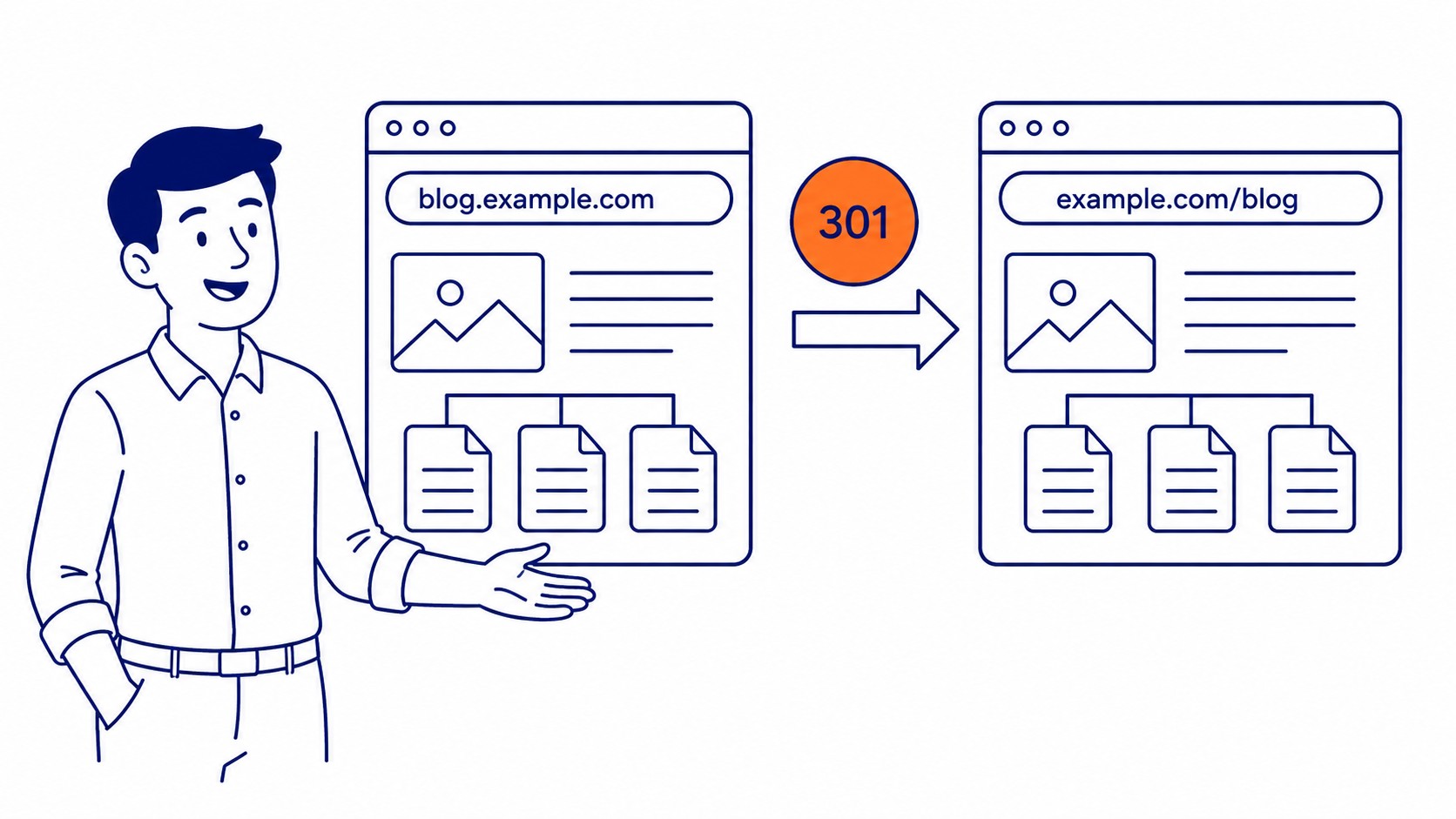
A proper migration from blog.example.com to example.com/blog starts with 301 redirects from every old URL to its corresponding new URL. Miss any of them and you lose the ranking equity those pages built. Performance for the affected pages can drop during the transition.
Export all indexed subdomain URLs from Search Console before anything moves. Map each one to its new equivalent under the main site. Implement the redirects. Submit the updated sitemap. Monitor for crawl errors over the following four to six weeks.
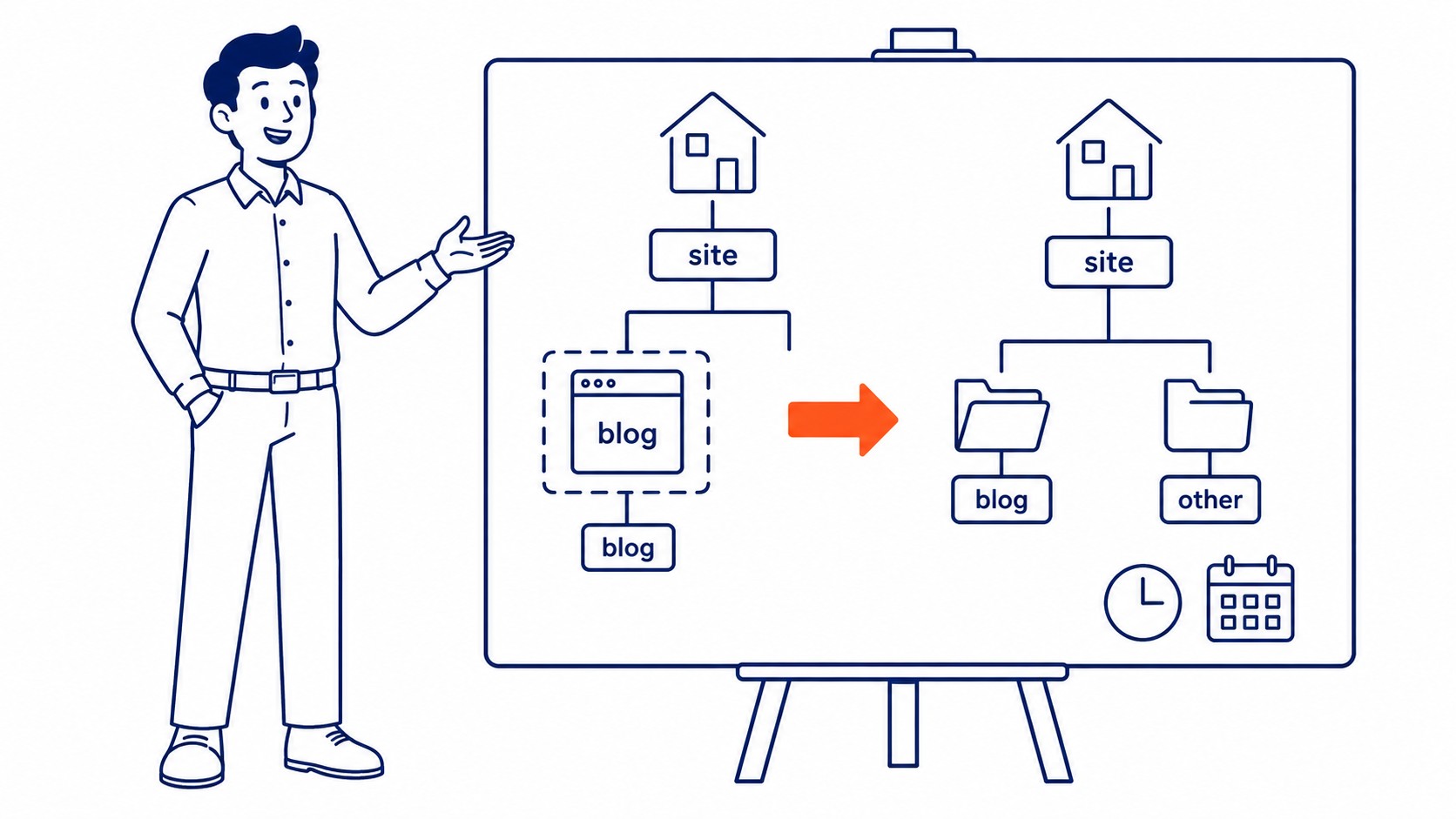
The timeline for equity to consolidate after a migration is not fast. Three to six months before the full benefit shows up is realistic. To-The-TOP! gives the same advice in Calgary and anywhere else: structural changes reward patience. Calgary businesses we have worked through migrations with typically see recovery begin around month two and stabilise through month four or five.
FAQ
Are subdomains bad for SEO?
Not inherently, but most use cases would be better served by a subdirectory. The real risk is that content builds equity on a separate entity rather than reinforcing your main domain. For blogs and content-heavy sections, that cost compounds over time and often is not obvious until rankings plateau.
What are the disadvantages of subdomains?
Ranking equity does not automatically transfer to your main site. Topical depth stays siloed. Managing two separate properties in Search Console and Analytics adds overhead without a ranking return. Your blog posts and your main site can end up competing for overlapping queries. Each disadvantage compounds over months into a meaningful gap between effort invested and organic results produced.
What common SEO mistakes happen with subdomains?
Putting a blog on a subdomain without understanding equity fragmentation is the most common mistake we see. Setting up a subdomain without verifying it separately in Search Console is another. Not configuring Analytics to track your subdomain traffic separately from your main site traffic means your data has a blind spot you may not notice for months.
What impacts SEO the most?
Content quality and ranking signals. Site structure, including the subdomain vs subdirectory decision, matters because it shapes how authority accumulates across your website. Still sits below writing, backlinks, and technical fundamentals in overall impact. Worth resolving, though, particularly if you have been building a blog on a subdomain that is not feeding ranking strength back into your main site.
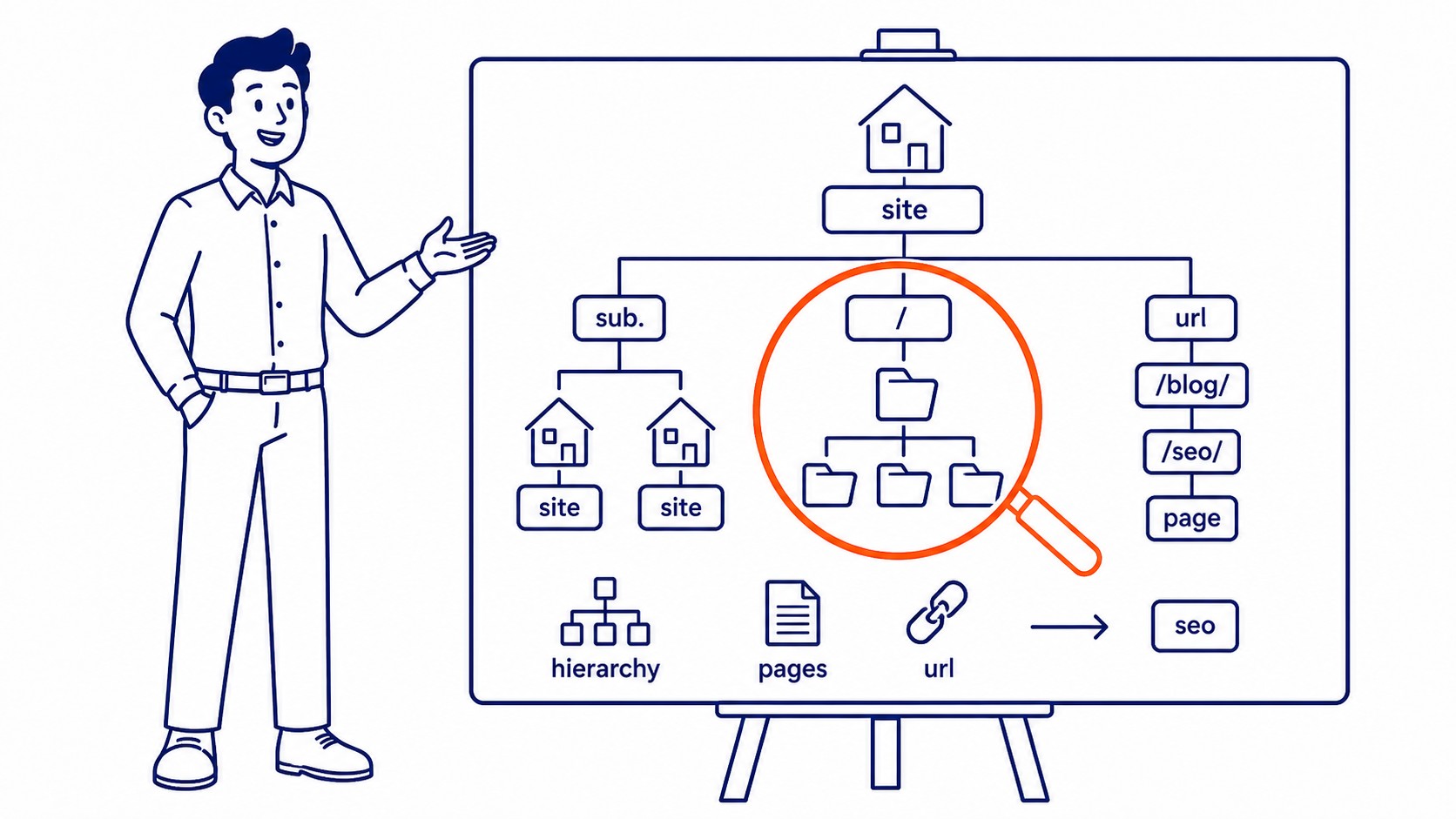
Structure questions surface in almost every website audit for SEO. Subdomains, subdirectories, URL architecture, how your domain name is organised. These come up consistently. To-The-TOP! has been delivering the local SEO services Calgary businesses rely on since 2007, and works with clients across Canada as well. A structural review typically uncovers two or three issues the business had no idea were affecting rankings. The same SEO specialist handles every review. No junior handoffs. Reach out at (403) 308-5949, or review what Calgary SEO looks like before deciding on a next step. We also handle Google Ads management for businesses running paid search alongside organic.
Contact Calgary SEO Company To-The-TOP!
Questions about anything in this article, or about your own rankings? Talk to a Calgary SEO specialist directly.
Phone: (403) 308-5949
Address: 1509 14 Ave SW, Calgary, AB T3C 0W4
Hours:
Monday to Friday: 10:00 am – 7:00 pm
Saturday: 12:00 pm – 4:00 pm
Sunday: closed