
Does SEO Still Work in a Recession?
Yes. Nothing about a slow economy reaches the machinery.
Google has never heard of a recession. Rankings answer to your pages and your links, and neither reads the news. Your positions do not soften because the economy did.
All true. Also nearly useless, since that was never where the trouble was coming from.
The other easy half is the budget argument, about whether to keep paying when money gets tight. That has its own answer elsewhere.
What almost nobody asks is the interesting question. A recession does not change how search works. Instead it changes who is searching. And why. Then how many times.

A Recession Does Not Stop People Searching
Here is what happens instead.
Good year. A furnace fails, and somebody phones the first company they think of. The decision takes a few minutes. One search, perhaps. None at all, quite possibly.
Bad year. Same furnace, same person. Now something different happens. They look up whether it can be repaired. Then what a replacement runs. Whether the budget model is any good. Then they ask a neighbour, and come back to look up the company that neighbour named. Two more quotes after that, which is two more searches.
Same failure, same person, same want. Six searches rather than one.
Nobody stops searching in a recession. They search harder. A decision that used to happen inside somebody’s head now happens on a screen, over weeks. Every stage is typing.
So your traffic can hold through a downturn. It can climb. Organic numbers can rise through the worst quarter a business ever had. Worth knowing how a session gets counted before you read too much into the climb.
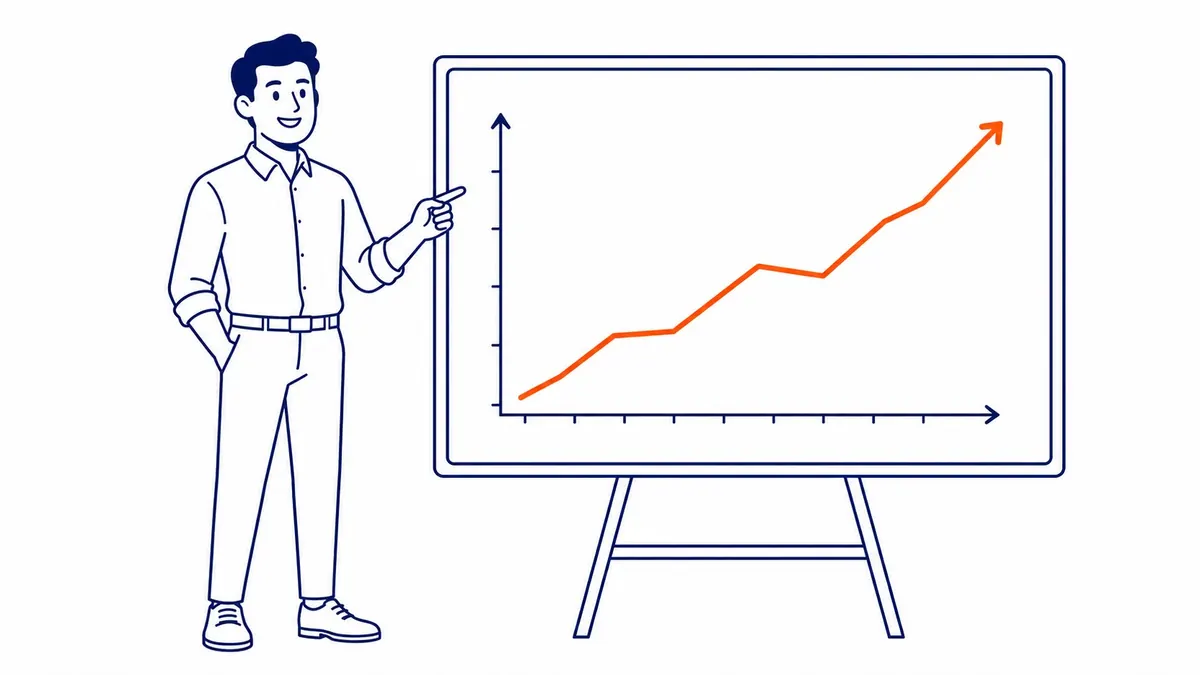
Every Extra Search Is Somebody Who Has Not Decided
The part worth sitting with.
Search volume looks like demand. Reported as demand too, in a column looking exactly like a count of buyers.
It is nothing of the sort. A search is a question. Questions come from people who do not have the answer yet, so a rise in searching is a rise in not-knowing.
None of that hurts in a good year. In a slow one it resolves slowly, or never. The uncertainty that sent somebody to Google is the same uncertainty keeping their card in their wallet. It produced the visit. Then it produced the no.
Your traffic went up for the reason your phone went quiet.
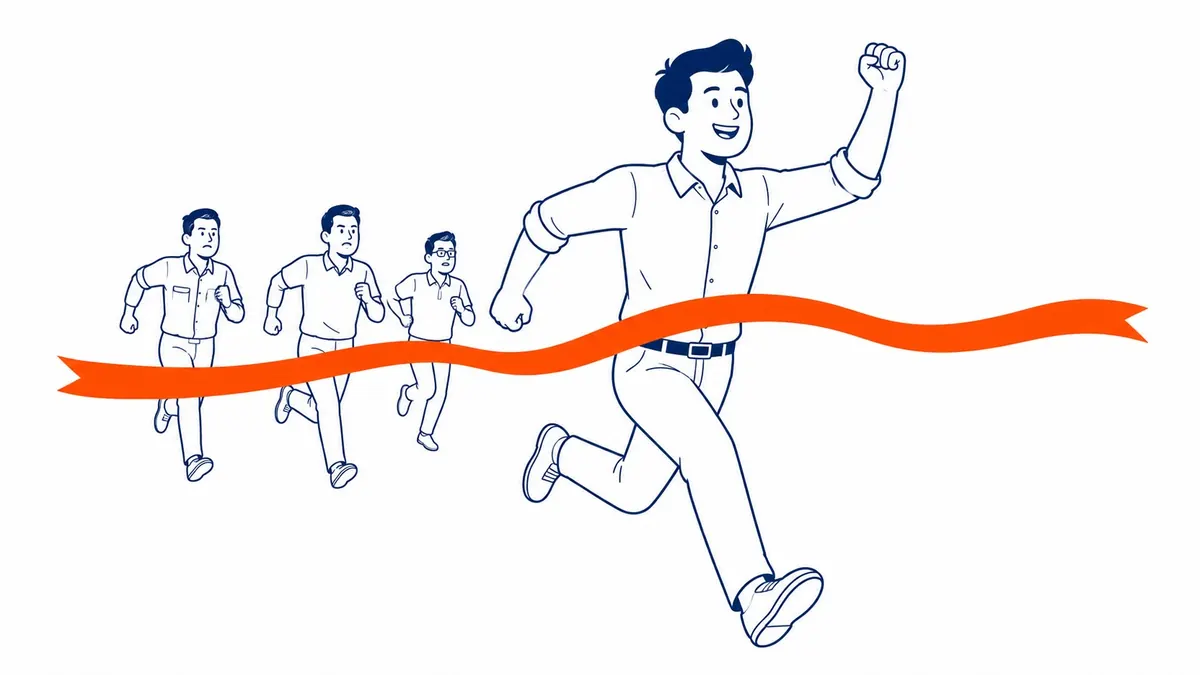
The Number a Recession Actually Moves
Nothing in your reporting shows you this. The reason is structural.
Every number in an SEO report counts arrivals. Impressions. Sessions. Clicks and rankings. Conversions too, once they happen. What no line separates is why the rate moved.
A page that got worse and a visitor who got warier look identical on that chart. So the rankings hold. Traffic holds. The only line falling is the one nobody can explain.
Underneath sits a figure almost nobody tracks, and it is the one a recession moves. Call it clicks per customer. How many arrive before one of them buys.
Thirty, say, in a good year. In a slow one the same business needs eighty, and nothing about it got worse. The offer held. So did the page. More of the arrivals are simply nursing the furnace through one more winter.

That Multiplier Lands on Everything You Pay Per Visit
Here the recession question gets its real answer, and it is arithmetic rather than optimism.
Clicks per customer is a multiplier. It sits in front of whatever a click costs you.
On the paid side you pay for all six of those searches. The repair question. Then the price question. Also the two comparisons where the person was quietly hoping you would lose. Your cost per click never moved an inch. Meanwhile the cost per customer climbed anyway, without one setting changing in the account.
Organic pays none of that. The sixth visit costs what the first one did, which is nothing extra. Your bill never noticed the recession, because your bill was never attached to the visits.
So, does SEO still work in a recession. About as well as it always did. What changed is everything standing next to it.
None of which is a reason to switch the ads off. A well-run Google Ads management campaign still buys customers on a timeline organic work cannot match. Just know what a slow year does to the arithmetic, and go looking before the invoice arrives. That arithmetic is where budgeting for SEO should start, not last year’s total. Longer decisions hit some sectors harder, and SEO for private schools is a case of its own.
What Your Page Has to Do Now
The visitor changed. So the page has to.
A page written for a good year gets away with being a brochure. Somebody arrives already meaning to buy, so it need only avoid putting them off.
That same page in a slow year gets read by somebody hunting for a reason to say no. They will read it beside two competitors. Also beside the option of doing nothing, which is free and quietly a rival you never listed.
Such a reader does not want a list of services. They want the price, or the shape of one. Mostly they want their objection answered out loud, before they have to ask it.
Which makes the recession page a better page. Sharper, more specific, less pleased with itself. Most businesses only write it under pressure. A pity, since it was the page to write all along.
Where the Recession Argument Stops
None of this holds if the recession took the want away rather than the ease of saying yes.
A furnace still fails. Leaking roofs still leak. Somebody still has to do the books. Those needs do not care what quarter it is.
Sell something people can genuinely go without and a downturn does something else. It does not slow the decision. Instead it cancels it. Nobody searched, so nothing was there to rank for.
Open your analytics and settle it yourself. Put organic traffic and enquiries side by side across your worst stretch. Then read the two lines against each other. Both fell together? Then the want went, and that is a business question in a marketing costume. Traffic held while enquiries drained away? You did not lose a ranking. What you lost is the easy yes, and no keyword was going to hand it back.
No statistic about other companies settles that one. Yours is sitting in your own analytics.
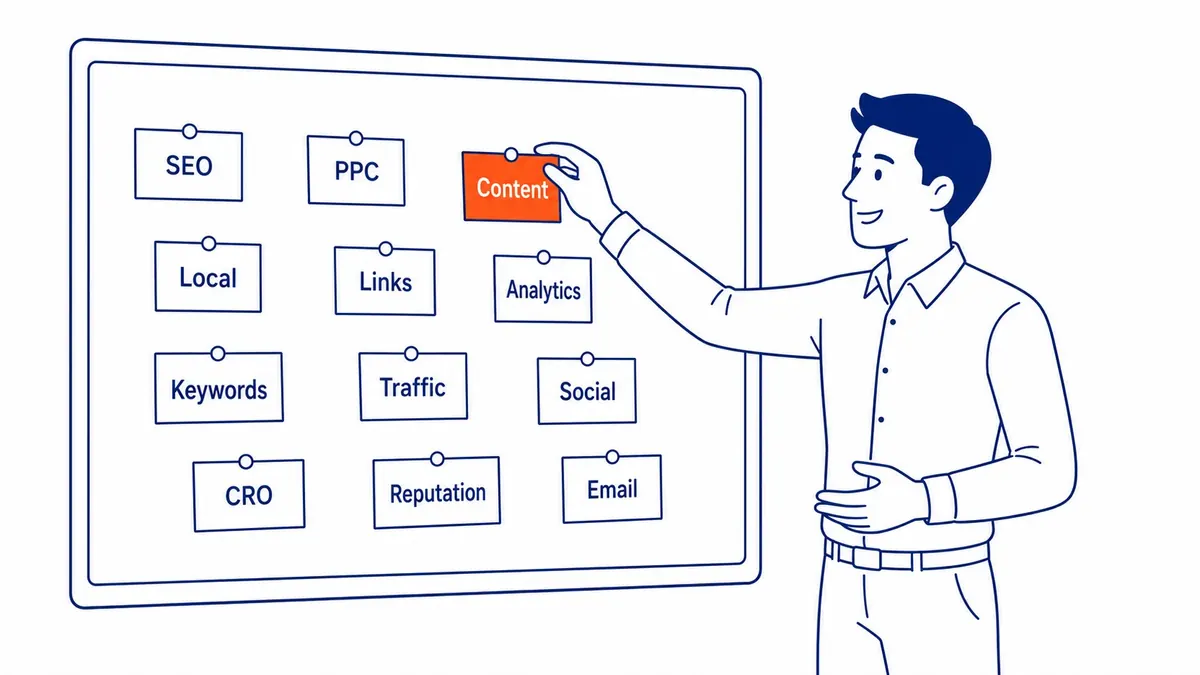
How To-The-TOP! Works Through a Slow Year
SEO Company To-The-TOP! has been doing this since 2007, through more than one bad stretch. The mechanics of SEO in Calgary never change with the economy. What changes is where the work goes.
Our keyword research stops chasing the biggest number and starts hunting the searches a hesitating buyer makes. Content gets rewritten to answer the objection rather than announce the service. In a slow year that is most of what search engine optimization turns out to be. The ads get watched far more closely too, since that is where a bad quarter sends the bill.
No guarantees. Three to six months before organic work moves anything in Calgary, good year or bad. Our portfolio shows what the patient version looks like.
Common Questions About SEO in a Recession
Should I cut SEO in a recession?
That is a budget question rather than a search question, and it has its own answer. The figure worth setting is one you could still pay in a bad month. A budget you cancel is a different outcome from one you keep.
Does organic traffic fall in a recession?
It can do the opposite. A slower decision takes more searches to reach, so traffic can rise while sales fall. Both have the same cause.
Why is my traffic fine but my sales are down?
More of your visitors arrived undecided. No SEO report separates a worse page from a warier visitor, so the two look the same. Your conversion rate carries the whole recession alone.
Is PPC or SEO better in a recession?
Neither wins outright. A recession raises how many clicks it takes to land a customer. That multiplier bills you on the paid side and costs nothing extra on the organic one. Run both, and watch the paid numbers.
How long does SEO take to work in a recession?
Same as always. Three to six months before anything meaningful moves. A recession does not slow the work. It only makes the wait feel longer than it is.
Contact Calgary SEO Company To-The-TOP!
Questions about anything in this article, or about your own rankings? Talk to a Calgary SEO specialist directly.
Phone: (403) 308-5949
Address: 1509 14 Ave SW, Calgary, AB T3C 0W4
Hours:
Monday to Friday: 10:00 am – 7:00 pm
Saturday: 12:00 pm – 4:00 pm
Sunday: closed