
Does Being a Local Guide Help With Google SEO?
No. The level sitting on your account does nothing for where your business ranks.
That answer lands badly with most owners. It sounds like the program is a waste of time. The Local Guides program is not a waste of time. It does something genuinely useful for you. That useful thing simply sits on the opposite side of the map from where you were looking.
You Are Standing on the Wrong Side of the Map

Two different things get called Google Maps by business owners.
One is the map you appear on. Your listing. That pin. The result a customer taps at ten at night, searching for somebody still open.
Underneath sits the map you can write to. Anybody holding a Google account can propose a change to a listing. Hours and address. Category as well. That whole record stays community-editable underneath.
The Local Guides program lives entirely inside the second one. It is the suggested edit interface, dressed up with points.
So the question arrives sounding like a ranking question. It is a permissions question instead. Asking whether being a Local Guide helps with Google SEO is asking the map about visibility while standing at the edit counter.
The Program Rewards Contribution, Never Ownership

Points come from contributing. Write a review, earn points. Post a photo of a restaurant. Answer somebody’s question about a shop you visited. Fix a wrong address on a listing.
Levels stack up from there. Ten of them exist. A badge turns up partway along the ladder.
Notice whose account carries all of it. Yours, personally. Never your business listing.
Google ties the level to a person who visits places. Your company is a place that gets visited. Two different objects. A points total on the visitor has no route to travel to the place.
That is the mechanical answer to the Google SEO question, finished. Everything after this is the part owners actually need.
Three Things Order the Local Results. A Badge Is Not One.

Google publishes what orders the local pack. Relevance comes first. Distance is second. Geography settled that one before you woke up this morning. Prominence finishes the list.
Contributor status appears nowhere in that documentation. There is no fourth signal. No tiebreak line for owners who contribute on the side.
Prominence is where people point when they argue back. Reviews feed it. So do mentions across the web. None of that shifts because the owner happens to hold a level on a personal account. No Google SEO signal attaches to the badge at all.
Somebody Will Say a Level 8 Review Weighs More
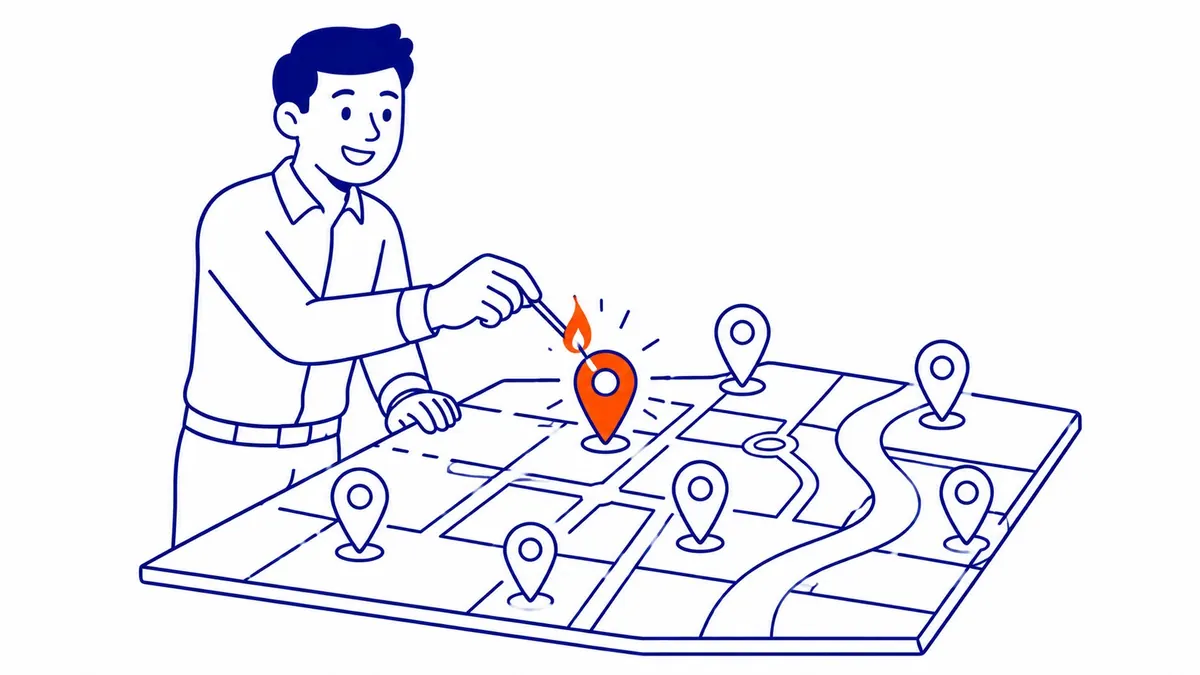
This is the strongest objection, so take it seriously.
The argument runs like this. Google hands out levels to reviewers. Why build a trust ladder and then ignore its own rungs? A five-star review from a Level 8 contributor must therefore weigh more than one from a fresh account.
Grant the whole thing. Say it is true.
Then look at where that leaves you. The badge sits on the reviewer. Never on the review. Not on your business either.
Fully granted, the objection points away from your account and straight at your customers’. You still cannot review yourself. Level might matter on the person holding the coffee. Not on the one holding the keys.
The Badge Makes One Move Worse, Not Better

Owners try it anyway. They set up an account, grind out a level, then leave themselves a glowing review.
Google’s review policy has covered that for years. Reviewing your own business counts as a conflict of interest. Knocking down a competitor counts the same way.
A badge does not help you slip past the rule. It does the reverse. A Local Guide profile is public by default. Your contribution history sits open for anybody to scroll. Every place you reviewed, every photo, in order, with dates.
So a dedicated account carrying one enthusiastic review of a single business reads exactly like what it is.
What the Account Does Buy You Is Write Access

Here is the part worth twenty minutes of your afternoon.
Open any listing in Google Maps. Scroll down the panel. There is a link asking you to suggest an edit. That suggested edit form covers hours and address. Categories too. Somebody can even drag your pin across the street.
Google reviews those suggested edits before publishing them. What Google has never published is the threshold. How much a contributor’s track record shortens that review is not documented anywhere I can point you to. Anybody selling you a number for it is guessing.
A contribution history exists, though. Something reads it. Nobody outside Google can tell you how much weight it carries.
Strangers Are Already Editing Your Listing

Now turn the question around.
You asked whether joining helps your rankings. The more useful question runs the other way. Who joined already, and what have they done to your listing?
Someone walked past your shop on a Sunday. Door locked. They tapped the suggestion form and reported your hours as wrong.
Someone else nudged your pin sixty metres, because a delivery app had sent them to the loading bay.
A third person edited your primary category into the one they thought fit better.
None of those people were malicious. All three contributed in good faith. That program worked exactly as designed.
The Edit That Costs the Most Says Permanently Closed

Maps carries a flag for a business that has shut down. Anybody reaches it through the same suggestion form.
A closed flag does not merely look bad. It pulls you out of consideration for the local search results that matter. Somebody searching for what you sell simply stops seeing you there.
Restaurants get hit with this after a renovation. Trades get it when the van is out all week and the office windows look dark. A Calgary retailer who closes for two weeks in July can come back to a listing announcing the closure was permanent.
Nobody Sends You a Receipt

Google does notify owners about some changes to a profile. Some. That notification is not a guarantee. It also fails to reach every inbox reliably.
So the practical rule is an unpleasant one. Assume nobody will tell you. Check the profile yourself on a schedule. Monthly suits most businesses. Weekly during a renovation or a move. Same through a seasonal shutdown.
That single habit is worth more than any level you could grind out. It costs four minutes. To-The-TOP! folds that check into the monthly SEO support cycle for clients.
The Q and A Box Answers Itself If You Do Not

Your Business Profile carries a questions section. Customers ask things there. Anybody at all can answer.
Read that again. Anybody.
A Local Guide who visited once can answer a question about your pricing. Or your parking. Whether you take walk-ins on a Thursday. Their answer sits underneath your business name. Google displays it whether you ever saw it or not.
Wrong answers age well, which is the whole problem. A four-year-old reply saying you close at five keeps costing you evening calls long after you started staying open until nine.
So answer first. Post your own questions. Answer those. It is permitted. Also the only real control you have over what sits in that box.
Read the Program Instead of Joining It

Local Guide profiles are public. That cuts both ways, which is what makes them useful to you.
Open the reviews on a competitor’s listing. Click a reviewer carrying a high level. Their entire contribution history opens up. Every business they reviewed in your city, every photo, sorted by date.
Fifteen minutes of that tells you which businesses in your category attract the same handful of reviewers. Sometimes it tells you something uglier. A cluster of accounts reviewing the same four businesses and nothing else is a pattern worth writing down.
That is competitive local SEO research, free of charge. No level required to look.
Where This Lands for a Calgary Business

SEO Company To-The-TOP! has been sorting out Calgary listings since 2007. The Local Guide question surfaces two or three times a year, always from an owner who read a post promising an edge.
That edge is not there. What is there is a maintenance job nobody assigned to anybody.
Fixing a wrongly closed listing takes days sometimes. Weeks in the bad cases. Meanwhile the phone stays quiet. The owner assumes the rankings collapsed. To-The-TOP! meets that misdiagnosis every year. The rankings were fine. Only the listing said closed. Calgary SEO work looks nothing like collecting points.
Real local SEO still comes down to the same slow work. Pages that answer questions people actually type. Targets you can genuinely win, picked through keyword research. A website audit when the technical side is quietly holding everything back. Some owners need the phone ringing this month rather than in six. That gap is what Google Ads management covers. None of it is glamorous. All of it is search engine optimization.
Join Anyway. Just Not for the Rankings.

Here is the recommendation, which tends to surprise people after all of the above.
Go and join. Spend a week as a Local Guide, contributing properly.
You will learn the edit surface from the inside. Watch how little stands between a stranger and your posted hours. That knowledge permanently changes how closely you watch your own listing.
Just file the reason correctly. It is training. Not Google SEO.
Twenty Minutes, This Afternoon

Open your Business Profile. Read the hours against what you actually do on a Saturday.
Then open the Q and A box. Read every answer you did not write yourself.
Then search your own business name from a phone that is not signed in to your account.
Most owners turn up at least one wrong thing on the first pass. The interesting part is that nobody can tell you how long it had been sitting there.
Common Questions About Local Guides and Google SEO
Do Local Guide reviews count more than normal reviews?
Google has never published a weighting for contributor level in local ranking. Reviews feed prominence as a body of evidence. Treat a Level 8 review as one review that happens to carry more detail. Detail helps a reader decide. That part is real enough.
Can I become a Local Guide and review my own business?
No. Google’s review policy treats that as a conflict of interest. The public contribution history on a Local Guide account makes the attempt easier to spot, never harder.
Does the Local Guides badge show on my Business Profile?
The badge belongs to a personal contributor account. It appears beside reviews that the account writes. Your business listing displays no badge for its owner.
Will Local Guide points improve my map ranking?
No. Points appear nowhere in Google’s documentation on local ranking. Nothing in it references contributor status at all.
How do I stop a bad suggested edit from going live?
You cannot block a suggested edit in advance. Owners correct a wrong field from inside the profile afterwards. Speed matters more than prevention here, which is why the monthly check earns its place.
Should my staff join the Local Guides program?
Only where they contribute normally, to places they genuinely visit. Staff reviewing the employer is the same conflict of interest as the owner doing it.
What actually moves a local ranking instead?
Accurate categories do. Proximity does, though you cannot change it. Genuine reviews accumulating from real customers over months. Plus the ordinary unglamorous SEO work on the website itself. That is where To-The-TOP! puts a client’s budget. Phone (403) 308-5949 to have somebody read your listing before a stranger edits it.
Contact Calgary SEO Company To-The-TOP!
Questions about anything in this article, or about your own rankings? Talk to a Calgary SEO specialist directly.
Phone: (403) 308-5949
Address: 1509 14 Ave SW, Calgary, AB T3C 0W4
Hours:
Monday to Friday: 10:00 am – 7:00 pm
Saturday: 12:00 pm – 4:00 pm
Sunday: closed