
Where to Find ROAS in Google Ads
The Short Answer, Then the Part Nobody Mentions
It is a column. Switch it on and it appears beside the others, often labelled conversion value over cost rather than ROAS. Nothing about it is buried.
So the finding was never the difficult part. Then it gets switched on and a zero is sitting there. Sometimes a dash. Or a figure nobody in the building recognizes.

What ROAS means. How it differs from ROI. What a decent one looks like in your trade. How the bidding strategy of that name works. Other pages here answer all of it. This one asks a narrower question. Where does that number come from before it reaches your account? ROAS answers one part of that math, while the steps to calculate PPC ROI cover the rest of it.
Nearly Every Figure in That Account Is Something Google Watched

Go down the columns you already read. Impressions. Clicks. Cost.
Nearly every one records something inside Google’s own machinery. An ad got served, so a number went up by one. Somebody clicked, and Google was the thing they clicked.
Even conversions mostly work this way. A tag fires and reports a form got submitted. Google did not see the customer. It did see the tag.
Then look at where ROAS comes from. It is a division. Ad spend sits on the bottom, and Google knows that figure exactly, since it charged you. Meanwhile the top half is revenue.
Revenue is not a fact Google is in any position to witness.
Nobody at Google Ever Saw the Money

A customer phoned you. A quote went out. Three weeks later a contract came back signed, and the money moved between your bank and theirs.
Not one part of that touched Google.
So a value had to be sent. Typed in, more likely. Somebody at your end decided what a conversion was worth, then put that decision into the account. Perhaps it came off a checkout. Or somebody typed fifty dollars into a box during a setup call, and nobody has looked since.
The account did not measure it. Rather it received it.
Which is why the column comes back empty so often. There is no missing report. Instead there is a missing number, and it was yours to supply.
The ROAS Column Tells You What It Is Doing
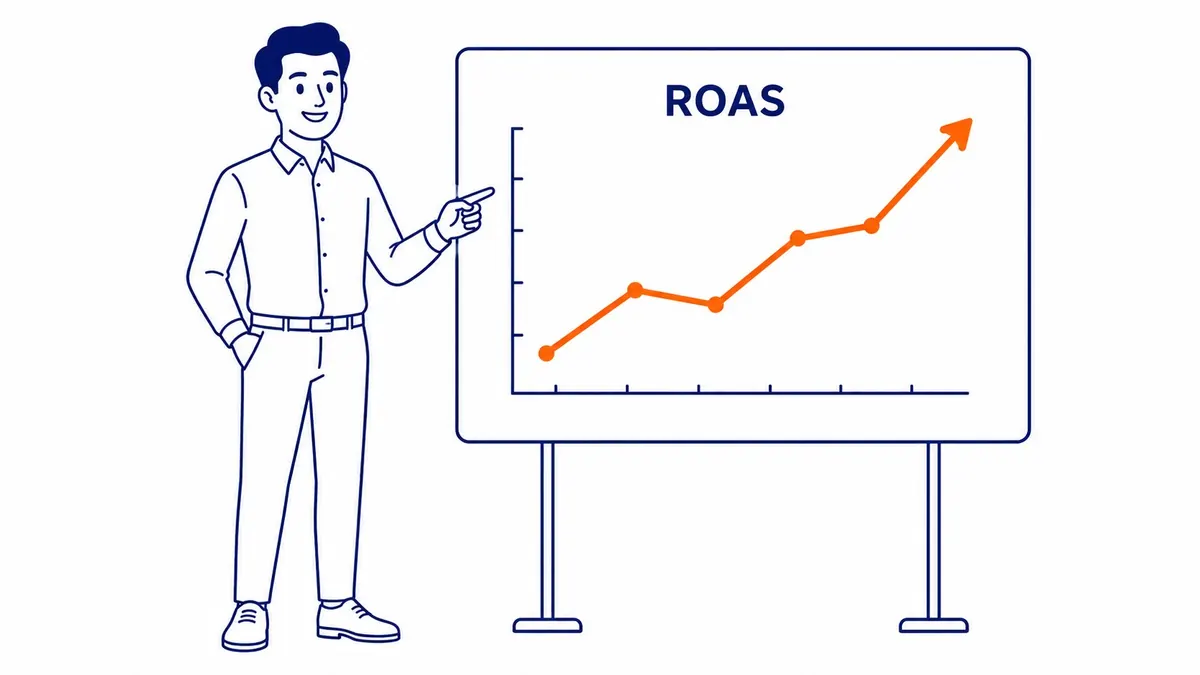
Read the label again. Conversion value over cost.
That is no measurement. Rather it describes a division, in the order it happens. Two numbers, one above the other.
Google supplied one. You supplied the other.
Nothing about that is a trick. Only notice what it means for the answer coming back. A ratio is exactly as sound as the shakier of its halves, and one half is a spend nobody disputes. Which actions count toward that number matters just as much, and an introduction to conversion on Google Ads lays it out.
Somebody Will Point at the Shop

Plenty of accounts do carry real revenue. An online shop sends the order total the moment somebody checks out. So the number arriving is a transaction rather than an estimate.
Fair enough, and look at why. The sale happened on the website, where the tag could reach it.
So the shop is no exception. It is the argument, running where money and tracking sit in one place.
Where the Sale Closes Decides Whether ROAS Is Real
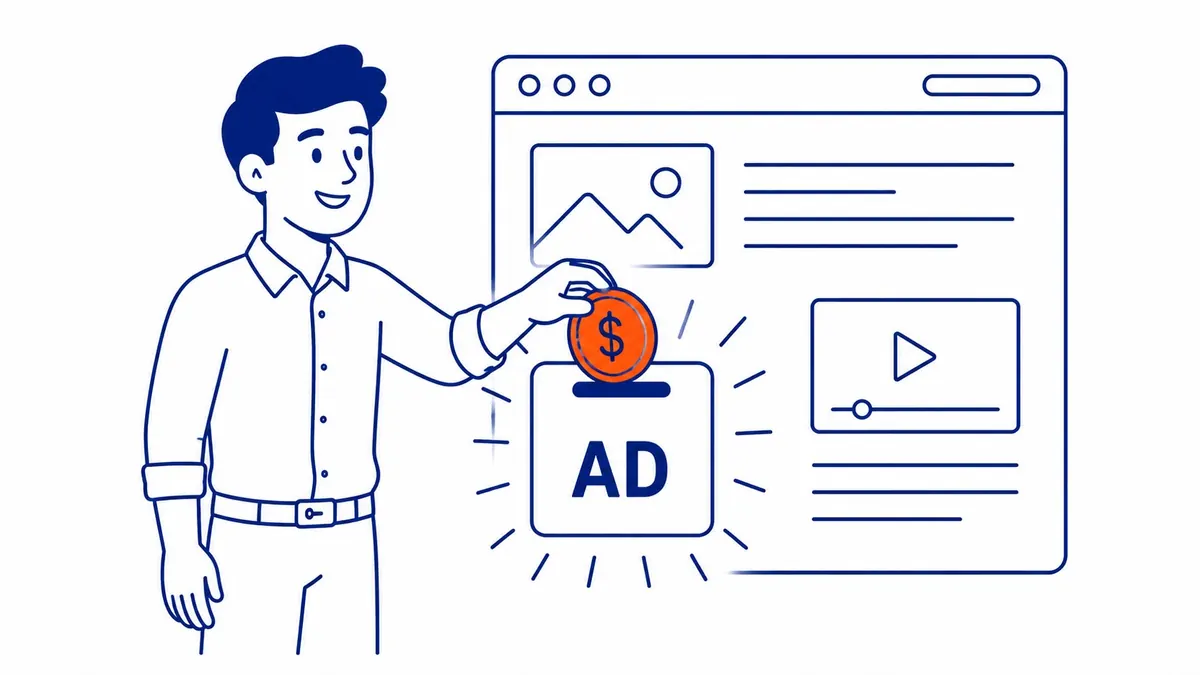
Two businesses can run identical campaigns and read that column with entirely different faith in it.
One sells through a cart. Money changes hands on the page, and the value goes back automatically. So the ROAS on screen sits close to something you could reconcile against a bank statement.
The other takes enquiries. Somebody fills in a form. A person phones them. Then a job gets quoted, and weeks later some turn into money. Nothing in that sequence happens where a tag is watching. So the value on that form got set once, by somebody guessing at what an average enquiry is worth. Then the ROAS reported afterwards is that guess, restated with more decimal places than it deserves.
Same column. Identical software. Two very different things being reported.
You Can Do This Arithmetic Without the Account

Here is the part worth knowing. The calculation never needed a dashboard.
Take what the campaign spent last month, which sits in the account and is beyond argument. Then take what search advertising brought you, sitting in your own books. Divide the second by the first.
That is your ROAS. Nobody had to configure anything.
The version inside the account is worth having too, since it works at a level your books cannot reach. Only remember what you are reading when the two disagree, since one was built out of a figure somebody typed.
Where the ROAS Argument Stops

None of this says the number is worthless. A rough value applied consistently still shows which campaign is pulling ahead of which. That comparison holds even when the level underneath it is invented.
Nor is any of it a complaint about Google. The company charges for clicks and reports the clicks it charged for. Asking it to know what a signed contract was worth asks for something it never saw.
And where the value arrives automatically, the argument shrinks to almost nothing. Read that ROAS with confidence.
Read the Value Before You Read the Ratio

Try this before going back to the column.
Open your conversion actions instead. Find the value sitting against each one. Then ask one question. Where did that figure come from?
Sometimes the answer is a checkout, sending the real total. Then your ROAS is as good as anything in the account.
Other times nobody knows. A round number is sitting there, unexplained, older than anybody working on the account. That is the whole answer to where your ROAS is. It has been in that box the entire time, waiting to be divided by.
No statistic about other advertisers settles which of those you hold. Yours is one screen away.
What SEO Company To-The-TOP! Checks First in Calgary Accounts

An account arrives with a poor ROAS often enough. The first hour at To-The-TOP! rarely goes on the campaigns.
It goes on the conversion actions, since a ratio built on a value nobody set is not reporting a poor month. Rather it is reporting a blank. To-The-TOP! has been doing SEO work in Calgary since 2007. Running a Google Ads campaign for a business that also wants patient search engine optimization means both halves get the same treatment. Nobody here optimizes toward a number until somebody can say where it came from. The portfolio shows the keywords this work has reached.
No guarantees. Three to six months is the usual SEO range before organic movement means much. Paid moves faster, though only once pointed at something true. That first fix is often a definitions problem rather than a bidding one, for businesses across Calgary. Everything else waits, including the keyword research. Google Ads is not the only paid channel worth checking, and the verdict on Facebook ads PPC covers the other one. Conversion actions that never fire point to a broader problem, and a definition of friction explains where it starts.
Common Questions About Finding ROAS in Google Ads
Why does my ROAS column show zero?
Check whether a conversion value has been set. The column divides value by what you spent, so with nothing on top the answer is nothing. Nobody told the account what a conversion is worth to you.
Is ROAS the same as the conversion value over cost column?
It is the same calculation. The label varies. Arguably the wording spelling out the division is more useful, since it says what happens.
Should I estimate a value if my sales close offline?
Yes, and be deliberate about it. An estimate applied consistently makes campaigns comparable. Just write down who chose it and when. In two years nobody will remember, while the figure carries on doing arithmetic.
Can I trust ROAS for a lead generation business?
Trust it as a comparison rather than a verdict. It tells you which campaign brings better customers for the money. What it cannot tell you is your true return, since the value on top was an assumption before it was a number.
Where does ROAS live if I use offline conversion imports?
Those send real closed-deal values back into the account. So a lead generation business ends up closer to where an online shop already sits. The column stops reporting an estimate and starts reporting your own records. Setting it up is real work. It is also the only route to a ROAS you can defend.
Contact Calgary SEO Company To-The-TOP!
Questions about anything in this article, or about your own rankings? Talk to a Calgary SEO specialist directly.
Phone: (403) 308-5949
Address: 1509 14 Ave SW, Calgary, AB T3C 0W4
Hours:
Monday to Friday: 10:00 am – 7:00 pm
Saturday: 12:00 pm – 4:00 pm
Sunday: closed