How Can an AI Search Monitoring Platform Improve SEO Strategy?
Clients started asking about this last year. Not in those exact words but close enough. “We rank in Google, so why does our competitor keep showing up when I ask ChatGPT about the best local SEO company?” That question does not have a clean answer inside Google Analytics or Search Console. Traditional SEO dashboards track clicks from organic search. They do not track citations in AI-generated answers, and that gap has become real for any business competing on branded or commercial queries. To-The-TOP! has been the SEO agency Calgary businesses have turned to since 2007, and the question now comes up on almost every client call.
Search behaviour has been splitting for a while now. Google AI Overviews appear on a large share of commercial queries. Perplexity, ChatGPT, and Gemini field brand comparison searches daily. An AI search monitoring platform tracks where your brand surfaces in those answers and, more usefully, where it does not. For any Calgary SEO strategy built before 2024, that blind spot is worth addressing.

The Blind Spot in Traditional SEO Reporting
Rankings dashboards miss an entire channel.
Google Search Console shows which queries drive impressions and clicks. SEMrush tracks position movement over time. Neither tool tells you whether ChatGPT recommends your business when someone asks which SEO company to hire, or whether Perplexity cites your service pages when a buyer compares options. AI-generated answers draw from sources that do not always match organic ranking position. A page at position four can pull regular source appearances. That top-ranked page might never appear in AI answers at all.
Traditional SEO data leaves that entire layer invisible. Generative engine optimization, sometimes called answer engine optimization, addresses this directly. The discipline is still developing, but the data it produces is already useful for refining what you do in search engine optimization today. Businesses noticing this gap earliest are the ones whose rivals have already quietly picked up AI source share. Worth reading the idea behind AEO vs SEO before buying another tracking tool. It helps to start from a definition of generative SEO before deciding how much of it applies.

What an AI Search Monitoring Platform Actually Tracks
The data runs deeper than rankings.
An AI search monitoring platform submits prompts that match how real buyers search, logs which sources get pulled into answers, records how often your brand appears, captures the sentiment around each mention, and identifies which rivals appear alongside you. Source patterns across ChatGPT, Gemini, Claude, and Perplexity often diverge sharply from organic rankings.
Running these queries once is interesting. After two or three months of weekly checks, patterns emerge. Which pages get sourced consistently. Some AI systems ignore your site entirely. Others pull references on topics where you rank but your rivals do not. Sentiment matters here too, not just frequency. A brand appearing five times in ChatGPT answers but always framed cautiously converts differently than a brand appearing twice with clear endorsement. That divergence is the output most worth acting on. Doing this manually across four or five AI platforms daily is not sustainable. The automation is the main reason to use a dedicated tool.
Brand Mentions Across AI Platforms and What Sentiment Reveals
Harder to track than rankings. More revealing.
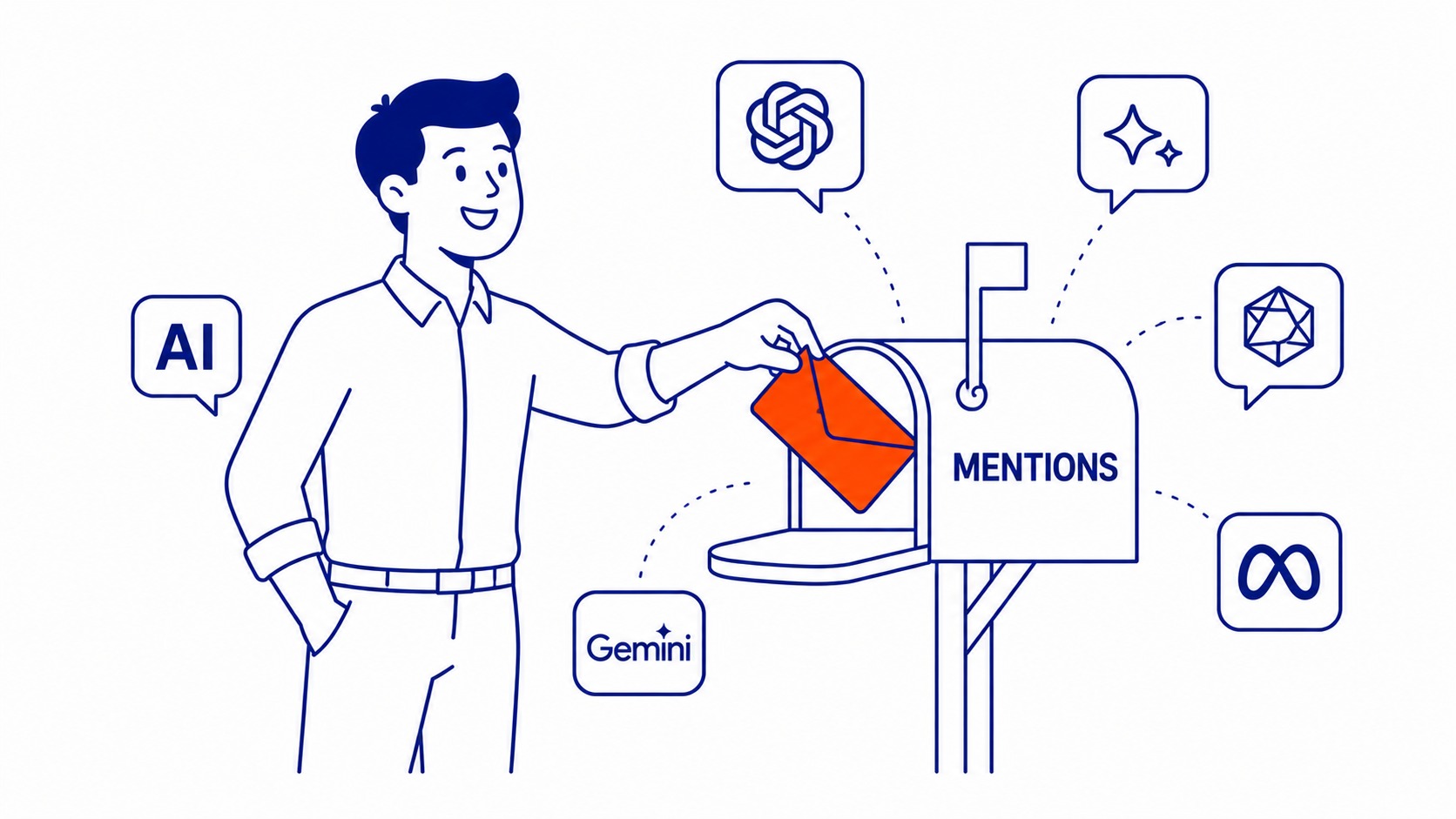
Sentiment shows up in AI responses in ways traditional analytics cannot capture. Your brand can appear in an AI-generated answer as a trusted source, as a cautionary example, or in an ambiguous framing that gives the user no real signal either way. Tracking platforms record that context alongside mention frequency. Positive sentiment tends to correlate with higher source selection rates. Ambiguous or negative framing suppresses appearances even when the underlying content quality is solid.
That data feeds directly back into how you revise messaging and structure existing pages. If your brand keeps appearing in answers without a recommendation, the issue is usually content depth or framing on specific pages, not the absence of coverage. The fix is revision, not new content creation. Brands that surface in answer engine results on high-intent topics, even without a direct click, build recall among buyers who later search more specifically. That downstream effect is difficult to quantify but shows up consistently in conversion patterns.
Competitor Citation Gaps Worth Knowing About
Worth checking before your rivals do.
A solid keyword competitive analysis tells you which terms your competitors rank for. It does not tell you which conversational prompts get them sourced in ChatGPT or answer engines. Tools like SE Ranking’s AI search tracker and SEMrush’s AI toolkit pull competitor data at scale. That data reveals content topics where rivals receive AI source appearances and your site does not. These are not the same gaps that keyword research surfaces. Not a missing keyword cluster. Missing depth on a topic that AI systems have decided a rival covers more thoroughly.
Pairing thorough SEO auditing with this data tells you which pages to update and in what order. Pages where you rank well but get no AI references are almost always missing structured data, FAQ sections, or content depth on the specific sub-questions AI systems are being asked. Finding these gaps through standard rank tracking alone is not possible. The signal only appears when you look at what AI systems are actually pulling in response to real buyer prompts.

How AI Search Monitoring Reshapes SEO Strategy
Content gaps look different here.
Standard SEO content gaps come from keyword analysis. A rival ranks for a term you do not cover. You write a page targeting that term. AI visibility gaps are different. They appear on topics where your content exists but AI systems decide it is not thorough enough to source. The fix is rarely a new page. More often it is depth on something already published: stronger FAQ sections, better schema markup, cleaner structured data so AI crawlers can parse what the page actually answers.
Your SEO strategy shifts from coverage to depth once this data enters the picture. Page authority and backlinks still matter. They are part of the foundation AI systems draw on when selecting sources. Topical depth and structured answers carry more weight in AI source selection than they do in traditional rankings, however. That shift changes where content effort goes. It also changes how you brief content creation: the target is not word count, it is the number of sub-questions a page answers clearly. A Google Ads management agency benefits from this too, because pages with stronger AI visibility often carry the authority signals that lift Quality Score. The same data also reopens an older question about how keyword strategy shapes what AI systems surface.

Connecting AI Visibility Data to Traditional SEO Metrics
Both data sets belong together.
AI search visibility and standard SEO work from the same inputs: page authority, backlinks, content depth, schema markup, and site speed. An AI search monitoring platform adds a reporting layer on top of standard SEO metrics rather than replacing them. Businesses doing this well feed AI source data into their monthly reporting alongside rankings, impressions, and clicks. They look for correlations: which pages are climbing in traditional search and also getting sourced more often in AI answers? Those pages reveal what AI systems reward.
Conversely, pages that rank well but get zero AI appearances are worth auditing to understand why. That pattern appears consistently in longer-term tracking data. It almost always points to a specific page-level issue, and no clean diagnostic signal surfaces it without dedicated tracking in place. Proper SEO services built around this kind of data are still uncommon. Most reporting stacks have not caught up yet, which means there is still an early-mover advantage for businesses that add it now.

Practical Steps for Adding AI Search Monitoring to Your SEO Strategy
Start narrow. Build from there.
Pick 20 to 30 prompts that match how buyers in your category actually search. Not keyword phrases. Conversational queries typed the way someone enters them into an AI platform. Run them through your platform weekly. Track which sources get selected consistently. Note which rivals appear alongside or instead of your brand.
Cross-reference that against your existing search engine optimization data to find the overlap. Pages that rank well and get sourced in AI answers are your current strongest performers. Prioritise those for internal link reinforcement. Pages that rank well but get no AI appearances are your next update targets. Pair this with a proper website audit before deciding where to invest content effort. One caution worth naming: Google Ads performance is sometimes used as a proxy for page quality. It is not a reliable signal here. A page that converts well in paid search can still get ignored by AI systems if the content depth is not there. That distinction matters when allocating time between paid and organic work.

Frequently Asked Questions
How to improve SEO for AI search?
Depth over coverage. AI systems pull sources that answer questions thoroughly at the sub-topic level, so pages covering topics at surface level rarely get selected. FAQ sections, structured data, and clear entity relationships all help. Google Search Console still matters for the underlying authority signals. A tracking platform tells you which prompts generate source appearances for your competitors so you know which topics need deeper treatment on your own pages. Pair that data with solid keyword research to prioritise which updates to make first.
How does AI help with SEO?
Two ways, though they are easy to conflate. AI tools speed up research tasks: keyword clustering, competitor gap analysis, content briefs. That is one use. The second is different: AI search platforms including ChatGPT, Perplexity, and Gemini are now a visibility channel separate from traditional blue-link results. An AI search monitoring platform addresses the second. Worth being specific about which kind of AI you mean before deciding which tool to add to your process. Conflating the two leads to adding tools that solve the wrong problem.
Which AI tool is best for SEO optimization?
Depends on the task. Standard SEO data: SEMrush and Ahrefs still lead. AI visibility tracking specifically: SE Ranking’s AI tracker, SEMrush’s AI toolkit, and dedicated tools like Sintra and Siftly are worth evaluating. Most businesses do not need custom enterprise pricing to start. A mid-tier plan covering several AI systems and tracking competitor mentions handles most Calgary SEO budgets. Worth a free trial before committing to a long contract. The data you collect in the first 30 days usually clarifies whether the investment makes sense.
Why use AI search monitoring tools?
Search behaviour shifted and traditional analytics did not catch up. Google Analytics and Search Console measure clicks from standard search results. Neither measures how often your brand appears in an AI-generated answer that never sends a click at all. AI answers suppress click-through rates on queries they cover directly. Traffic figures undercount your actual presence in AI answers by default. Monitoring platforms close that gap. Worth adding to your reporting stack before your rivals do. Businesses already using these tools have a cleaner picture of where they stand in the AI search landscape, and that matters for every content and SEO decision going forward.
Contact Calgary SEO Company To-The-TOP!
Questions about anything in this article, or about your own rankings? Talk to a Calgary SEO specialist directly.
Phone: (403) 308-5949
Address: 1509 14 Ave SW, Calgary, AB T3C 0W4
Hours:
Monday to Friday: 10:00 am – 7:00 pm
Saturday: 12:00 pm – 4:00 pm
Sunday: closed
