
How to Change Your Domain Without Losing SEO
Map every URL on the old site. Point a redirect at each one. Tell Google the address changed. Resubmit the sitemap. That is the whole procedure, and it works.
Done properly, done once, nothing drops. Rankings wobble for a few weeks. Then they come back, usually inside three to six months. The switch itself is routine. Search engines have followed this kind of move for twenty years, and they follow it well.
So this page is not the checklist. Other pages walk you through the redirect map and the launch-day checks, and they do it thoroughly. This one is about the part nobody warns you about. The part that shows up later, long after launch day went fine.
A domain change does not usually fail on the day you make it. It fails quietly, months or years on, when somebody forgets it happened.
The Half You Can Fix in an Afternoon
Two kinds of link point at your website. One you own. The other you do not.
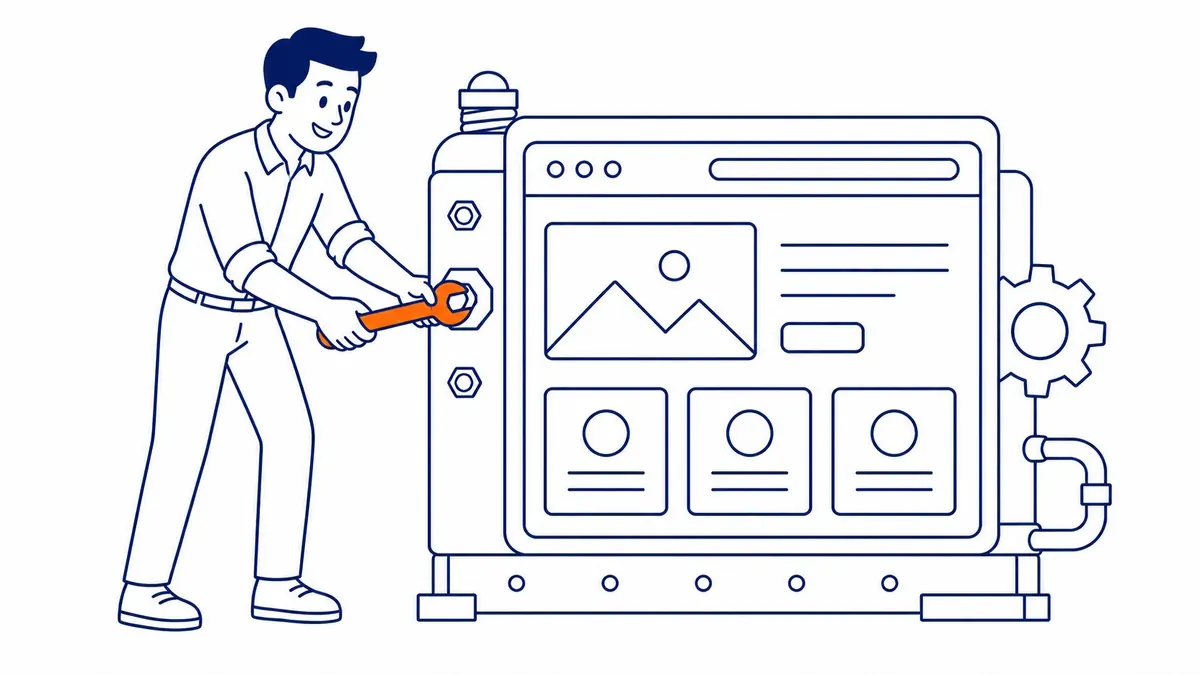
Your own links live on your own pages. Menus, buttons, links inside your own copy. Change the domain and you change every one of them yourself. An afternoon of work, maybe less.
Then there is everything else. A supplier who listed you years ago. Some local paper that covered you once. A directory. That blog post a customer wrote. Every mention you ever earned. Those links carry most of your ranking strength, and not one of them sits on a page you can open.
Open your own backlink list. A good website audit will pull it, or the free tools will show you the biggest ones. Now count the links you could change yourself. The number is zero.
You can email the people who own them. Some will update the link. Most will not answer, and a few of the sites will not even have anyone left to ask. That is not a failure of effort. It is just how it works. Your most valuable links are the ones you control least. Which is why 301 redirects carry the weight instead. Plan the whole SEO migration around that fact, not around the afternoon of easy edits.
The Move That Never Actually Happened
Here is the part that changes how you think about the whole thing.
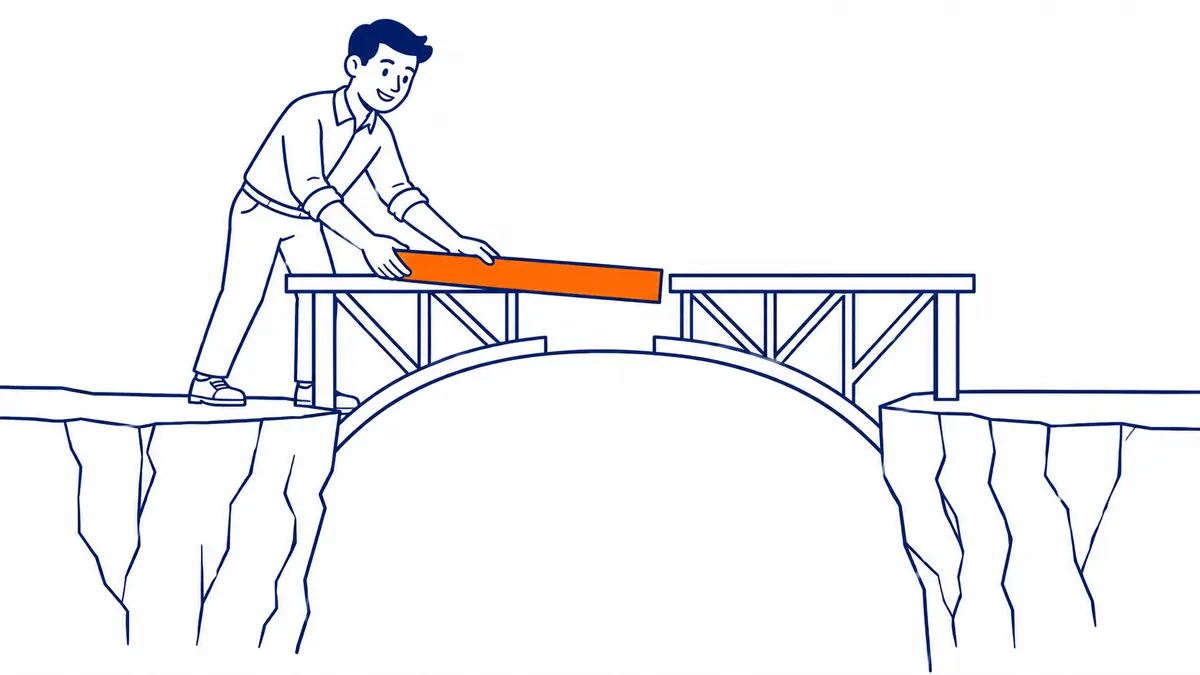
Somebody else’s site still links to your old address. A redirect quietly sends that visitor to the new one. The strength attached to that link never moved. It still arrives at the old address. Every single time. The redirect catches it and forwards it along.
So the authority you spent years building does not simply relocate to the new domain. It keeps reaching you through the redirect. Take that redirect away and the flow stops.
A redirect is not a transfer. It is a promise, and you have to keep it going forever.
Which means the old domain is not the address you left behind. It is the address everyone else still uses. That address has a job now, and the job never ends. Keep it registered. Leave the redirects alive. The day either one stops, every link still pointing at the old name goes nowhere. Whatever strength it carried is simply gone. Same arithmetic applies when you redesign a website and change every address at once.
Why the Loss Shows Up Late
Nobody loses rankings the afternoon they change domains. The redirects are fresh. Nothing has lapsed on the old domain. Launch day went to plan.
The loss comes later. It comes the year the old domain renewal lands in an inbox nobody reads anymore. Or during the next redesign, when a new team rebuilds the redirect map. Nobody tells them half of it exists to catch traffic from a name the company dropped three years ago. It comes again when the hosting moves and the redirect file gets left behind.
None of that is a technical problem. Every one of those failures is a memory problem.
The skill on launch day is real, and the checklist matters. Yet the thing that actually protects your rankings over the long run is not skill at all. It is making sure the next person who touches this site knows the old domain is load-bearing. Nobody can be allowed to quietly switch it off.
That is the whole risk in one sentence. Not the change. Forgetting the change.

What This Actually Costs You to Get Right
Almost nothing, which is the frustrating part.
A domain registration runs a few dollars a year. The redirects are set once. There is no monthly fee and no ongoing labour. No reason on earth to let it lapse, except that everyone stopped thinking about it. The failure is never the budget. It is attention.
There is one more thing the old domain quietly holds up. Run Google Ads and every ad points at a destination URL. Those URLs sit on the old name until somebody updates them. Let the old domain stop resolving and the ads break the same hour, spending money to send clicks nowhere. So the ad URLs move on switch day, not after.
SEO Company To-The-TOP! has watched Calgary businesses do the hard part flawlessly. Then lose the ground two years on, over a renewal notice that went to a former employee’s address. Good search engine optimization is patient work, and none of that patience survives a lapsed domain. So the advice is dull and it is the whole game. Register the old domain for the longest term you can buy. Put its renewal on a calendar that belongs to the business, not a person. And write down, somewhere the next redesign will actually read, that those redirects are not clutter. The ranked pages in a real portfolio are worth protecting for exactly this reason.
There is one case where none of this applies. Say the old domain carried a real penalty. A spam history, something you are changing names to escape. Then forwarding all of that strength is the last thing you want. That is a different job, and a rare one. For almost everyone, the old strength is worth keeping. Keeping it is nearly free.
A domain change is one of the safest big moves in SEO, right up until the moment you treat it as finished. It is never quite finished. The move you made keeps needing you to remember you made it.
Frequently Asked Questions
How long until my rankings recover after a domain change?
Usually three to six months, assuming the redirects are clean and every old URL points at its match on the new site. A dip in the first few weeks is normal. One that keeps going past a few months usually means a broken redirect somewhere, not a lost cause.
Do I really need to keep the old domain forever?
Yes. Keep it registered and keep the redirects live. Most of your ranking strength comes from links on other people’s sites, and those links still point at the old name. The redirect is the only thing carrying that strength to your new address, and it only works while the old domain exists.
Will a redirect pass all of my link strength to the new domain?
Most of it, when it is set up correctly. The mechanics of which redirect to use, and the chains that quietly leak strength, are worth reading up on separately. In short, one clean redirect per old URL, pointing straight at its new home, with nothing in between.
Should I contact the sites linking to my old domain?
Ask the big ones, yes. Some will update the link and that is the cleanest outcome. Just do not build your plan around it, because most people never get around to it. The redirect is there precisely because you cannot count on other people editing their pages for you.
Is changing my domain worth the SEO risk?
For a rebrand or a genuine reason, usually yes. The switch is well understood and the recovery is predictable. Your real risk is not the change itself. It is forgetting, years later, that the old domain still has a job to do.
Contact Calgary SEO Company To-The-TOP!
Questions about anything in this article, or about your own rankings? Talk to a Calgary SEO specialist directly.
Phone: (403) 308-5949
Address: 1509 14 Ave SW, Calgary, AB T3C 0W4
Hours:
Monday to Friday: 10:00 am – 7:00 pm
Saturday: 12:00 pm – 4:00 pm
Sunday: closed