How to Check Keyword Difficulty
During our Calgary SEO work, a client once asked me why a keyword his competitor ranked for kept refusing to budge for his own site. Same phrase. Comparable effort, near enough. The answer was sitting in a number neither of us had bothered to read first. Keyword difficulty. It tells you, before you write a word, how hard it will be to crack the first page for a given term.
So this is the practical version. How to check keyword difficulty, what the score actually means, and why the same number can be a green light for one site and a brick wall for another. I have been doing this since 2007, and I still run this check on every term before those keywords go anywhere near a content plan.

What keyword difficulty actually measures
Keyword difficulty is an estimate of how hard it is to rank on the first page of Google for a specific target term. Most tools express it as a score from 0 to 100. Higher means tougher. A keyword scoring 12 is something a new site might rank for in a few months. Push it to 78 and the first page is usually locked up by established sites with deep backlink profiles.
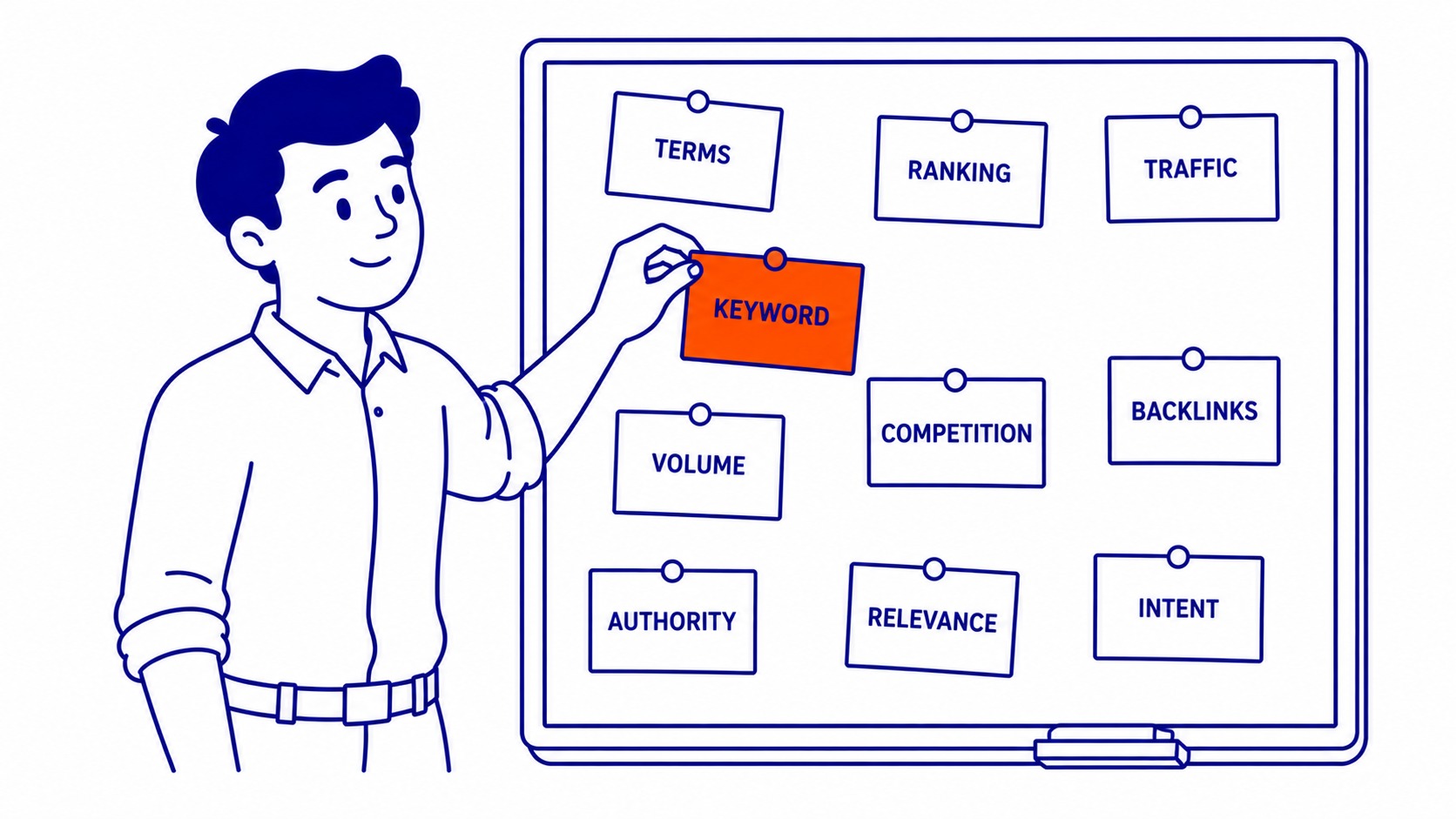
That number is mostly built from one thing: the pages already ranking. Tools look at the top results, count the referring domains pointing at each one, weigh the domain authority behind them, and roll that into a single difficulty score. Some add search volume and the strength of the content into the mix. The exact recipe is different for every tool, which is why two checkers can hand you two different difficulty scores for the same keyword.
That is the part people miss. Difficulty is not a fact about the keyword. It is a read on the competition currently holding those spots.
Why the same score means different things for different sites
Here is the thing the checkers never tell you on the surface. A difficulty score is calculated against the open field, not against you.
Picture a term sitting at 45. For a site with hundreds of quality links and ten years of history, that is an easy afternoon. A brand-new local business with three backlinks faces a year of work for that same 45. The number did not change. Your starting position did. So when you check keyword difficulty, read it next to your own site’s ranking strength, not in a vacuum.
This is why I tell newer sites to ignore the headline number at first and chase a band instead. Hunt for the easier, low-competition keywords in the 0 to 30 range, build a track record, earn some links, then climb. Difficulty is relative. Treat it that way and you stop bashing your head against terms you cannot win yet.

How to check keyword difficulty with a tool
The fastest route is a keyword difficulty checker. You type the keyword, it returns a number. A handful worth knowing:
- Ahrefs Keyword Difficulty. Free version, no account needed for a basic check. It leans heavily on the number of referring domains the top pages carry.
- Moz Keyword Explorer. Gives a difficulty score plus organic click-through estimates, which matters more than people think.
- Semrush Keyword Overview. Bundles difficulty, search volume, and SERP competition in one screen.
- SE Ranking and SEO Review Tools. Both let you check several keywords at once, which saves time when you are sorting a long list.
If you want the formula behind the number, there is no single one. Each tool guards its own. Most blend the backlink strength of the ranking pages with their domain authority, then normalise the result onto that 0 to 100 scale. Ahrefs weights links the hardest. Moz folds in its own Domain Authority metric. The takeaway is simple: pick one tool and stay with it, because comparing a 40 from Ahrefs against a 40 from Moz tells you nothing.
How to check keyword difficulty by reading the SERP yourself
You do not actually need a paid tool to gauge keyword strength. Google the term and read the first page of search results like an analyst. This is slower, and it is often more accurate than the number.
Look at who is ranking. Are the top results massive brands and Wikipedia, or smaller blogs and local sites? Brands on page one is your warning sign. Pages that have held the search engine results for years carry the heaviest backlink profiles, and they are expensive to outrank. So check the backlinks behind those pages with any free link checker. Then read the content itself. If the ranking pages are thin and dated, there is room. When every result is a thorough, recently updated guide, the bar is high.
And read the search intent while you are there. Sometimes a keyword looks competitive only because you misjudged what the searcher wants. Match the intent the search results are rewarding and a “hard” keyword can soften considerably. That read tells you which keywords you can actually win. It is the same judgment behind how to choose keywords in the first place.
What counts as a good keyword difficulty score
People ask whether 75 is a good SEO score. For difficulty, no. A 75 means the term is hard, not good. The difficulty scores that are friendly to most sites sit lower. Under 30 is approachable for newer sites. The 30 to 50 band is workable once you have some authority and decent content. Above 50, expect a real campaign and patience. Plenty of useful keywords sit in that friendly lower band.
But “good” depends entirely on what you are matching it against. A 60 with strong buyer intent and a site that can compete might be worth chasing over a 20 that nobody searches with their wallet open. Difficulty is one input. Search volume and intent are the other two, and solid keyword research weighs all three rather than worshipping a low number. So a good keyword difficulty score depends on the site asking the question. Scores get over-read in general, which the basics of SEO score make fairly obvious.
Where the difficulty check fits in keyword research
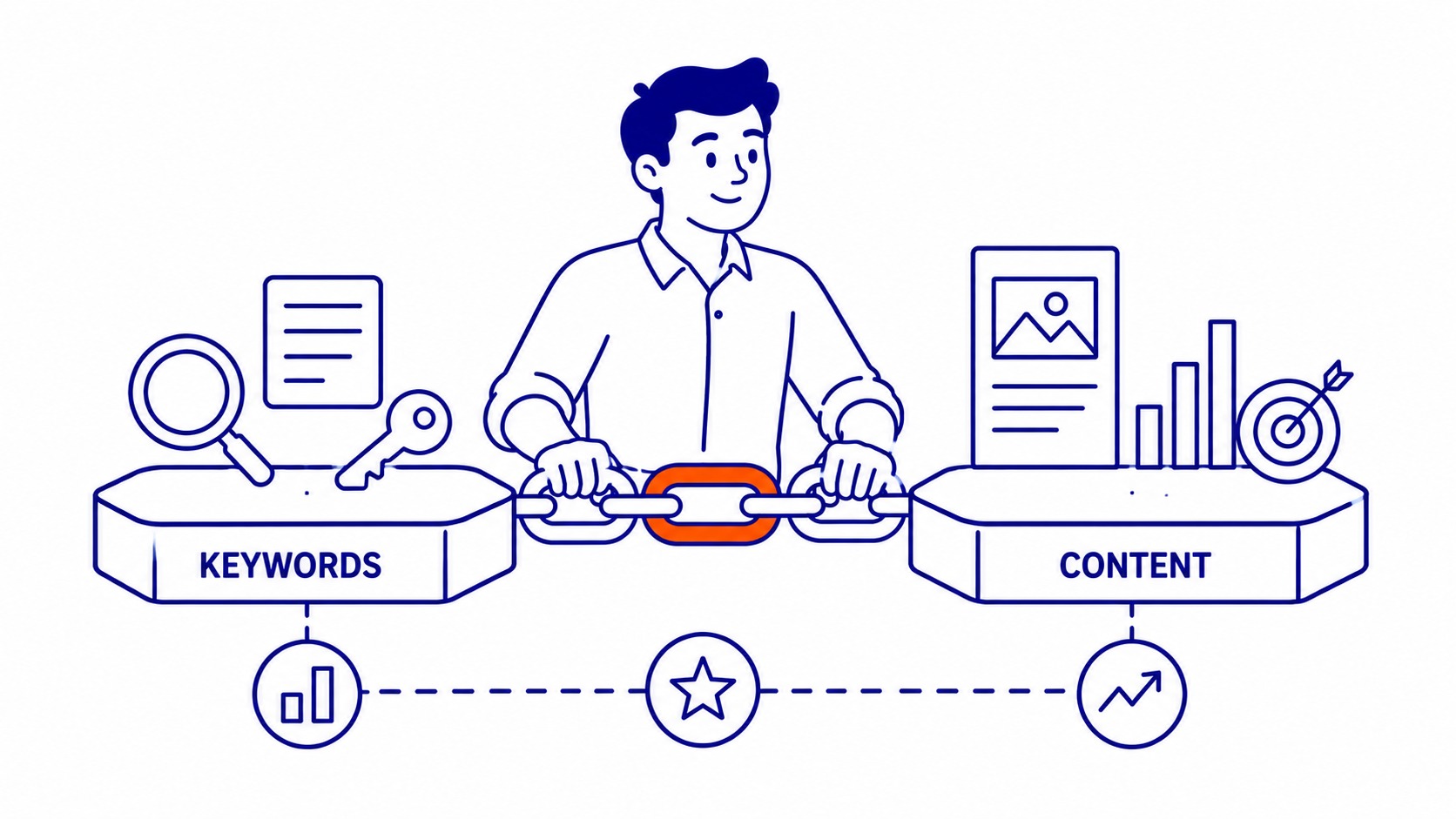
Checking difficulty is not the whole job. It is one gate inside picking which keywords actually fit your site. The order I use: gather the candidate terms, pull search volume, check difficulty against my site’s link profile, then judge intent. That volume step has its own method, which a guide on how to find search volume for keywords covers properly. Only the keywords that clear all four make the list. The whole point is to end up with a short list of keywords you can realistically rank for, not a wish list of terms that were never within reach.
That filtering is exactly how you decide which keywords to target first. Skip it and you end up writing for terms you were never going to rank for, which is the most common waste of effort I clean up for new clients. Difficulty checking also feeds the paid side. The same competition read shapes our Google Ads management, because a term that is brutal to win organically is sometimes cheaper to simply buy while the rankings build. Keywords that survive this whole filter are the ones worth your time, and worth building content around.
Want help picking which keywords actually fit your site? That is the part most businesses get wrong, and it is the work worth getting right before any writing starts. The full picture lives in the process of doing keyword research from the ground up.
Frequently asked questions
What is keyword difficulty?
Keyword difficulty is a 0 to 100 estimate of how hard it is to rank on the first page of Google for a given keyword. It is based mostly on the backlink strength and authority of the pages already ranking. Higher numbers mean tougher competition.
What is the formula for keyword difficulty?
There is no single public formula. Every tool uses its own. Most combine the number of referring domains pointing at the top-ranking pages with the domain authority behind them, then scale the result to 0 to 100. Ahrefs leans on links, Moz folds in its Domain Authority metric, and Semrush blends competition with volume.
How to check keyword strength?
Use a keyword difficulty checker like Ahrefs, Moz, or Semrush for a quick number. Or read the first page of Google yourself: check who ranks, how many backlinks their pages carry, how deep the content is, and whether you match the search intent before committing to those keywords. The manual read is slower but tells you more.
Is 75 a good SEO score?
Not for keyword difficulty. A 75 means the keyword is very hard to rank for, with the first page held by strong, well-linked sites. Newer sites should target lower numbers, generally under 30, and work up as their ranking strength grows.
Contact Calgary SEO Company To-The-TOP!
Questions about anything in this article, or about your own rankings? Talk to a Calgary SEO specialist directly.
Phone: (403) 308-5949
Address: 1509 14 Ave SW, Calgary, AB T3C 0W4
Hours:
Monday to Friday: 10:00 am – 7:00 pm
Saturday: 12:00 pm – 4:00 pm
Sunday: closed
