
How to Find Low Competition Keywords
A low competition keyword is a search phrase where the pages already on page one are weak enough that a smaller or newer site can realistically outrank them. To find one, gather candidate phrases from Google’s own search features, from Search Console and from a keyword tool, filter them by the tool’s difficulty score, and then open the actual results page for each one before deciding. The difficulty score is useful for building a shortlist, but the results page is where the decision gets made, because it shows who you would really be up against.
What makes a keyword low competition
Competition in SEO means the strength of the pages you would have to displace. A phrase can have plenty of searches and still be low competition if the pages ranking for it are thin, out of date, off topic or published on sites with very few links. The reverse also happens: a phrase with tiny volume can be locked up because large, well-linked sites happen to rank for it. Low competition keywords are usually longer and more specific than the head term they relate to, since fewer sites have written a page aimed squarely at that exact question, although length on its own proves nothing.
The trouble is that three different numbers all get called “competition,” and they measure different things. Mixing them up is the most common mistake people make with this task.
| Number | Where you see it | What it actually measures |
|---|---|---|
| Keyword Difficulty (KD%) | Semrush | An estimate, from 0 to 100, of the effort needed to reach the organic top 10, based on the median referring domains, dofollow ratio and authority score of the ranking pages, plus features of the results page |
| Keyword Difficulty (KD) | Ahrefs | An estimate, from 0 to 100, based on how many websites link to the current top-ranking pages |
| Competition (low, medium, high) | Google Keyword Planner | How many advertisers showed ads on the keyword relative to all keywords on Google, for the location and network you selected |
Semrush publishes its own bands for reading its score: 0 to 14 is “very easy”, 15 to 29 is “easy”, 30 to 49 is “possible”, and anything from 50 up needs backlinks as well as good content. Those bands belong to Semrush. Ahrefs points out that almost every tool uses the same 0 to 100 scale while calculating it differently, so a 20 in one tool is not a 20 in another, and the same phrase can look easy in one and middling in the next. Pick one tool and read its scores against each other rather than against a rule of thumb from somewhere else. There is a fuller look at how much keyword difficulty is reasonable for sites at different stages.
Keyword Planner’s column is the one that misleads most often. Google Ads Help defines it as “the number of advertisers that showed on each keyword relative to all keywords across Google,” which is a measure of paid demand, not of how hard the organic results are. A phrase marked “Low” can have a page one full of national brands, and a phrase marked “High” can have weak organic results simply because many businesses bid on it. Keyword Planner is still worth opening for its search volume ranges and its keyword ideas, and it is the planning tool for Google Ads campaigns, but its Competition column should not be used to judge an organic opportunity.

The reason to bother is practical. A new site or a small business site rarely has the links to compete with established pages for a broad term, so a page aimed at a narrower phrase it can win will usually bring more visitors than a page stuck on page three for a phrase it cannot. Several of those pages together can add up to steady, well-matched traffic, and the work of earning links and building content continues alongside them. None of it is fast: even on an easy phrase, a new page can take months to settle into its position.
Where to find candidate keywords
Google’s own search features
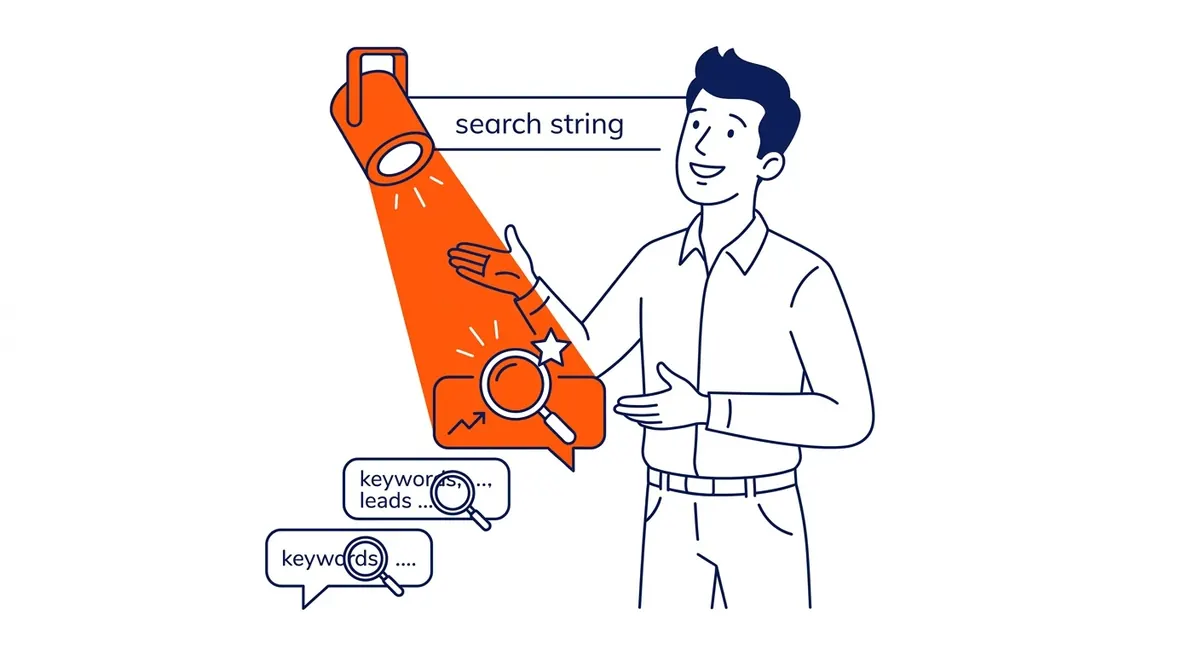
Start with Google itself, because it costs nothing and shows phrasing that real people use. Google’s help page on autocomplete says that once you start typing, “autocomplete predictions reflect real searches that have been done on Google.” Type the main topic followed by a word such as “for”, “without”, “vs” or a question word, and note the longer predictions, which tend to be the specific questions that fewer sites have answered directly. The “People also ask” box and the related searches at the foot of the page add more. For this very topic, the Calgary results on 2026-11-07 showed “What are low competition keywords?” and “How to find keyword difficulty?” in the question box, and related searches for free methods, Reddit and YouTube. Every one of those is a candidate in its own right.
Search Console
If the site already has some history, Google Search Console is often the best source of all, since it shows the searches where Google already considers your pages relevant. In the Performance report, look at the queries tab and sort by impressions, then pick out queries where the average position sits roughly between 8 and 30. Search Console defines average position as the position of the topmost result from your site, so these are phrases where a page is close to page one or just on it. A query with steady impressions and a position in the teens is often easier to win than a brand new phrase, because a page that targets it properly may only need a better section or a dedicated article. There is more on working through Search Console for this kind of improvement elsewhere on the site.
Keyword tools and competitor gaps
A keyword tool earns its cost by speeding up the shortlist. Enter a seed term, filter the ideas by the tool’s difficulty score at the low end of its scale, and set a minimum volume so the list is not full of phrases nobody searches. Most tools also have a gap report that lists keywords a competing site ranks for and yours does not. Run it against a site of similar size to yours rather than a national giant, since a peer’s rankings show what a site like yours can realistically hold.
Forums and communities
Reddit threads, Quora answers, Facebook groups and industry forums show questions in the words people actually use, including questions too new or too niche for keyword tools to report any volume. Treat these as ideas to test rather than proven demand. If a question keeps coming up and Google’s results for it are mostly forum threads, that is a strong hint that no good article exists yet.
How to check whether a keyword is really low competition
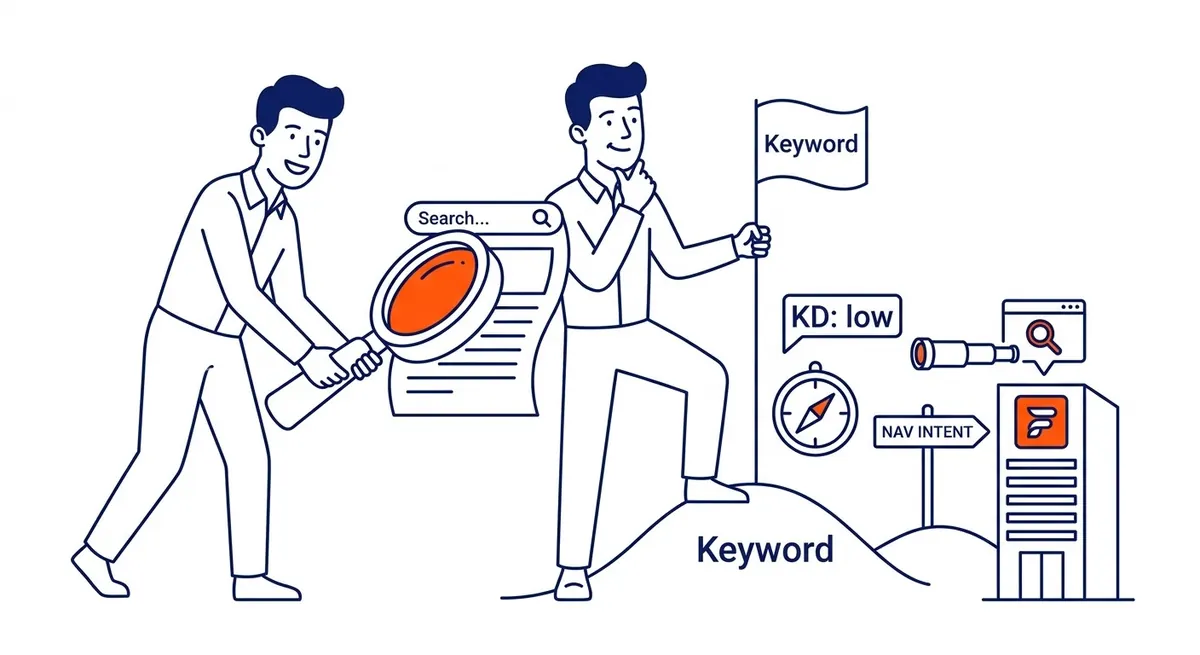
The score narrows the list, and the results page makes the call. Search each candidate in a private browser window, set to the location your customers search from, and look at the first page with a few questions in mind.
- Do the results match the intent you have in mind? If the top results are product pages and you plan an article, or the phrase is a brand name and every result belongs to that brand, the keyword is not open to you whatever its score says.
- Who is ranking? User-generated pages (Reddit, Quora, LinkedIn posts), small blogs and pages that only mention the topic in passing are good signs. A page one made entirely of large brands, government sites or well-known publishers is a bad one.
- How good are the ranking pages? Look for pages that are old, thin, answer a slightly different question or never get to the point. A page that answers the query better than anything on page one has a real chance.
- What else is on the page? A map pack, video results, shopping results or a long run of ads push organic results down, so a first-page ranking may bring fewer clicks than the volume suggests.
As a worked example, here is what the search “how to find low competition keywords” showed from Calgary on 2026-11-07. The top seven organic results were a LinkedIn post, a Reddit thread on r/SEO, guides from Surfer, Zapier (published in 2021) and Rank Math, a Quora page and a Semrush blog post. Semrush rates the phrase 26 on its US database, which sits in its “easy” band, and the results page agrees in part: three of the top six are forum or social posts, which suggests the published guides do not fully satisfy the question. The other four in the top seven, though, are on very strong software domains, so a newer site could realistically aim for the positions the forum pages hold rather than for first place.
Low competition keywords for local businesses

For a business that serves one city, adding the place usually shrinks the field a great deal. A search for a service on its own competes with every site in the country, while the same service with “Calgary” or a neighbourhood name competes mostly with the businesses that actually serve that area. That is why local phrases are often the most realistic starting point for a small firm.
Two cautions apply. First, keyword difficulty scores look only at the organic top 10, and for many local service searches the map pack appears above those results. Google’s Business Profile help says local results “are mainly based on relevance, distance, and popularity,” so a low KD score tells you nothing about how hard the map pack will be. Second, keyword tools often show no volume at all for city or neighbourhood phrases. No volume in a tool does not mean nobody searches. Keyword Planner can be set to a specific location such as Calgary, and Search Console will show the local phrases a site already appears for. The process is covered step by step in the guide to local keyword research.
When a low competition keyword is not worth targeting
Low competition is only useful when the phrase is also worth winning. Some phrases are easy because nobody searches for them, and a first-place ranking for a phrase with no searches brings no one. Others are easy because the searchers would never become customers, such as students looking for definitions when you sell a service. A third group is easy only on paper, because the results page shows the intent is something you cannot serve.
It is also worth checking your own site before writing anything new. If one of your pages already ranks for a close variant, strengthening that page is usually better than adding a second one that competes with it. A short list of phrases that are open, wanted and relevant will do more for a site than a long list of easy phrases nobody needs.
Getting help with keyword selection
Finding these phrases is mostly patience and a careful look at each results page, and the methods above work with free tools. If you would rather have someone else build the list, SEO Company To-The-TOP! has offered keyword research for Calgary businesses since 2007, and the person who reviews your market is the same person who does the work. To talk about your site, call (403) 308-5949 or visit the To-The-TOP! home page.
Sources
- Google Ads Help, About Keyword Planner forecasts
- Google Ads Help, Use Keyword Planner
- Google Search Help, How Google autocomplete predictions work
- Search Console Help, Performance report (Search results)
- Google Business Profile Help, Tips to improve your local ranking on Google
- Semrush Knowledge Base, What is KD%
- Ahrefs, Keyword Difficulty (updated 2025-12-15)
Contact Calgary SEO Company To-The-TOP!
Questions about anything in this article, or about your own rankings? Talk to a Calgary SEO specialist directly.
Phone: (403) 308-5949
Address: 1509 14 Ave SW, Calgary, AB T3C 0W4
Hours:
Monday to Friday: 10:00 am – 7:00 pm
Saturday: 12:00 pm – 4:00 pm
Sunday: closed