
SEO Keyword Selection: How to Choose the Right Keywords
The most common mistake in keyword research is choosing keywords by volume alone. High-volume keywords look attractive in the data. They also tend to be the most competitive, the vaguest in user intent, and the slowest to move. Targeting them without understanding what ranks and why leads to months of effort on content that never reaches page one.
Choosing the right keywords requires four assessments before any content gets written. Search intent. Traffic potential against ranking difficulty. Business relevance. Competitive landscape. Each one on its own is incomplete. All four together produce a shortlist worth building content around. Here is the process To-The-TOP! uses across every SEO campaign in Calgary and the other markets we operate in.
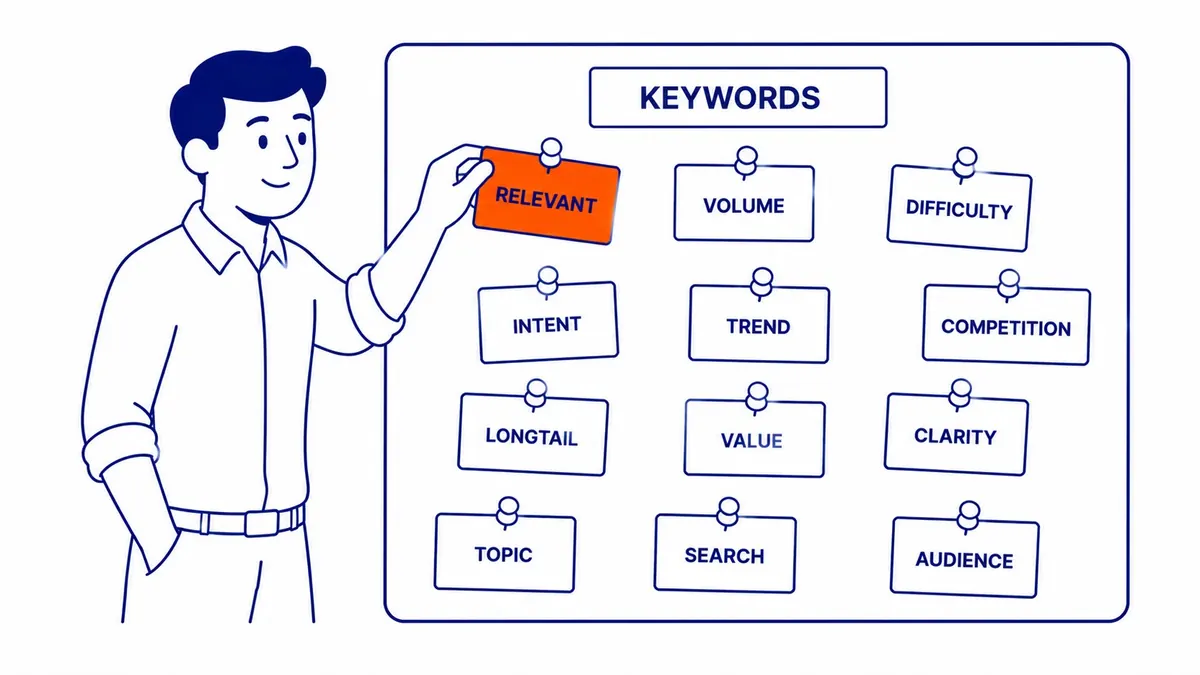
Start with Search Intent, Not Volume
Search intent is the most important filter. A keyword can have 10,000 monthly searches and still be worthless if the content Google rewards for it does not match what the business is selling.

Four intent categories sort most queries:

- Informational: The user wants to learn. “What is SEO” or “how does Google rank pages.” These build topical authority but rarely convert directly.
- Navigational: The user is looking for a specific site or brand. Targeting competitor brand names here rarely converts.
- Commercial investigation: The user is comparing options before a decision. “Best SEO company Calgary” or “Ahrefs vs SEMrush.” High intent, worth targeting.
- Transactional: Ready to act. “Hire SEO consultant Calgary” or “buy SEO services.” These are the closest to revenue.
Before building a page around any keyword, search it yourself. Look at the top five results. If Google is serving blog posts and tutorials for a query you thought was commercial, that is the intent signal. Trying to rank a service page against informational content fails because the content types do not match the intent Google has inferred from the query. Intent mismatch is one of the most common reasons pages plateau at position 12-20 and never move. Understanding what SEO keywords are before beginning selection prevents this problem from the start.
Evaluate Traffic Potential and Keyword Difficulty Together
Volume is only half the picture. Traffic potential is what a page realistically earns if it ranks in the top three results for a keyword. These two numbers diverge because of zero-click searches, featured snippets, and People Also Ask boxes that absorb clicks before they reach organic results.
The Ahrefs method of checking the top-ranking page’s total traffic (not just the single keyword) gives a more accurate estimate of what ranking for a term is actually worth. A keyword with 500 monthly searches where the top page earns 4,000 monthly visits has strong traffic potential across long-tail variations. That 5,000-search keyword is less attractive than it appears when the top page earns only 1,100 visits.
Keyword difficulty scores (used by Ahrefs, SEMrush, and other tools) estimate how hard it is to rank based on the backlink profiles of current page-one results. A difficulty score of 20 means a new page with minimal links has a realistic path to ranking. Score-70 keywords are dominated by established sites with strong domain authority. Matching difficulty to your site’s current authority level is the most practical filter for avoiding wasted effort. If you already rank for related keywords, that signals your domain has enough authority to compete in the same topical cluster.

Assess Business Relevance
Not every rankable keyword is worth ranking for. Business potential is the filter that connects keyword rankings to actual client enquiries or sales. That connection is the whole reason keywords are important in the first place.
A simple scoring approach: can the page ranking for this keyword naturally mention your product or service? Keywords where the answer is no, or where mentioning it feels forced, produce traffic that does not convert. Informational terms at the top of the funnel can still be worth targeting if they build the topical authority that lifts commercial pages in the same cluster. But the allocation of effort should reflect the expected conversion path.
For local service businesses, business relevance also includes geographic specificity. A Calgary plumber ranking for “how to fix a leaky faucet” reaches a national audience of DIYers. Ranking for “emergency plumber Calgary” reaches people ready to make a call that day. Both have a place in the content strategy, but the effort and priority they receive should reflect the commercial distance from conversion.
Use Competitor Keyword Research
Competitor keyword gaps are the fastest source of qualified targets. Enter any direct competitor’s domain into a tool like Ahrefs Site Explorer or SEMrush’s Organic Research and look at which keywords that domain ranks for that yours does not. These keywords are already validated: another site is getting traffic from them, which confirms there is real search demand and that Google accepts the content type your competitors are producing.
The most valuable gaps are keywords where the competitor ranks at position 5-20. Their ranking confirms the keyword is reachable. That they sit below the top three, however, confirms the results are not locked by a dominant authority the market can’t displace.
Competitor research also surfaces keyword clusters you may not have thought to target. A cluster of five related keywords all ranking for a single competitor page often points to a content gap: a topic the competitor covers that your site does not, where a single well-built page could capture the entire cluster. Identifying those gaps is part of what any serious SEO audit covers before a campaign begins.

Building Your Final Keyword List
Start with seed keywords, the core topics the business needs to rank for. Expand each seed using keyword tools: Google Keyword Planner, Ahrefs Keywords Explorer, or SEMrush’s Keyword Magic Tool all generate related keyword variations. That expansion is the core mechanic in how to do keyword research from a standing start. Group the outputs by intent. Within each intent group, filter by difficulty against your site’s current authority level. From what remains, apply the business relevance filter.
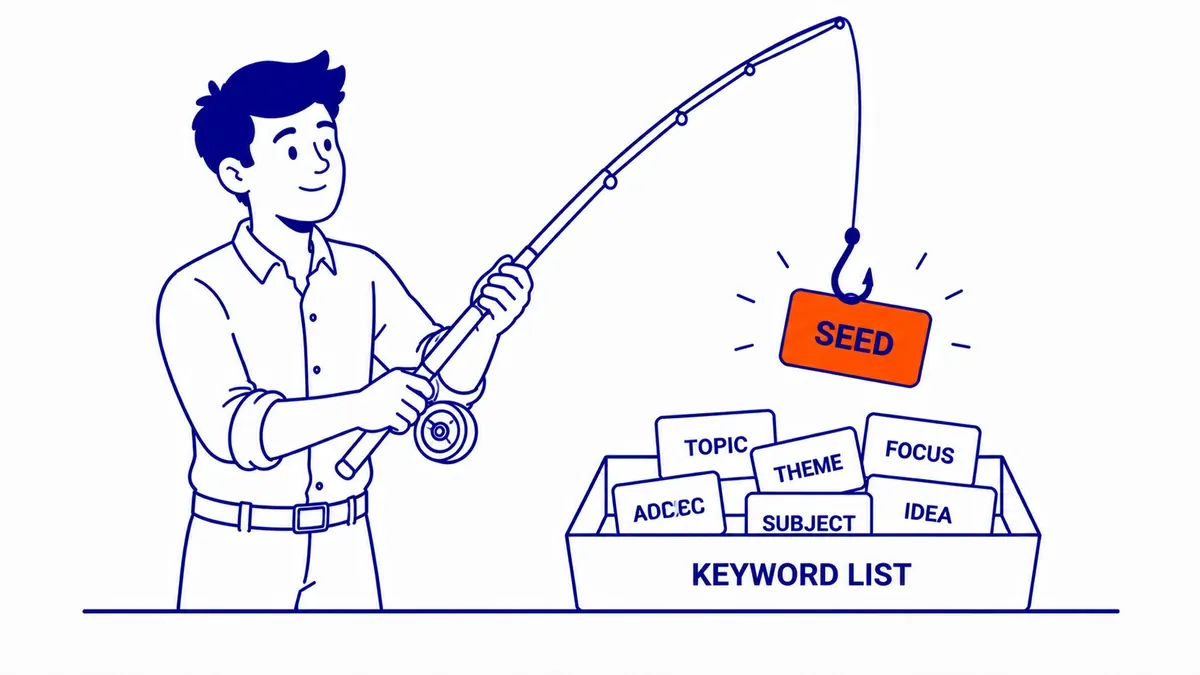
What you are left with is a prioritised list: commercial-intent keywords at the difficulty level your site can compete at, with enough traffic potential to justify content investment.
Assign one primary keyword per page. Related secondary keywords and long-tail variations belong on the same page, not separate pages. Creating separate pages for near-identical keywords causes keyword cannibalization: multiple pages competing for the same query, splitting the ranking signal. One page, one primary intent, multiple supporting terms. The SEO services component of a well-run campaign revisits this list quarterly as rankings shift and new search data emerges from Google Search Console.
Frequently Asked Questions
What makes a keyword worth targeting for SEO?
Four things together: search intent that matches what the page delivers, sufficient traffic potential to justify the content investment, keyword difficulty the site can realistically compete at, and genuine business relevance. Volume alone is not a useful filter. High-volume keywords that fail the intent or difficulty test waste content budget on pages that plateau outside the top 10 and earn almost no clicks.
How do I know if a keyword is too competitive?
Compare the keyword difficulty score (from Ahrefs or SEMrush) against the domain authority or domain rating of your current site. If the top-ranking pages for a keyword all have DR 60+ and your site is at DR 25, that keyword is not a near-term realistic target regardless of how attractive the volume looks. Start with keywords at a difficulty level that matches your current authority, earn rankings there, and move into harder keywords as the domain’s link profile grows.
How many keywords should one page target?
One primary keyword, supported by several closely related secondary terms and long-tail variations. The primary keyword defines the page’s intent and drives the title tag, H1, and meta description. Secondary keywords and variations appear naturally throughout the content without forcing them. Trying to target multiple distinct primary keywords on a single page dilutes the intent signal and typically results in the page ranking weakly for all of them instead of strongly for one.
How often should I revisit my keyword list?
Quarterly at minimum. Rankings shift as competitors publish new content, earn new links, and update existing pages. New keyword opportunities surface as the site earns authority and becomes competitive in clusters it was previously too weak to target. Google Search Console surfaces new queries the site is generating impressions for but not directly targeting, which are often worth turning into dedicated pages or section additions to existing content.
Contact Calgary SEO Company To-The-TOP!
Questions about anything in this article, or about your own rankings? Talk to a Calgary SEO specialist directly.
Phone: (403) 308-5949
Address: 1509 14 Ave SW, Calgary, AB T3C 0W4
Hours:
Monday to Friday: 10:00 am – 7:00 pm
Saturday: 12:00 pm – 4:00 pm
Sunday: closed