
How to Increase Organic Keywords on Your Website
We have seen sites stuck at 40 or 50 organic keywords for months at a stretch. No penalty. Nothing obviously flagged technically. Just stalled.
The pattern behind most of those cases is the same. No structured plan for expanding the keyword footprint. The site published content sporadically, hoped it ranked, and moved on when it did not.
Growing your keyword footprint requires a different approach. More systematic. Data-driven, and built on what is already showing traction. Focused on what already shows signals of ranking before creating anything new.
To-The-TOP! has been doing the local SEO Calgary businesses rely on since 2007. The approach works the same across industries: local services, e-commerce, professional services. What follows is what we apply when a site’s keyword count needs to move.
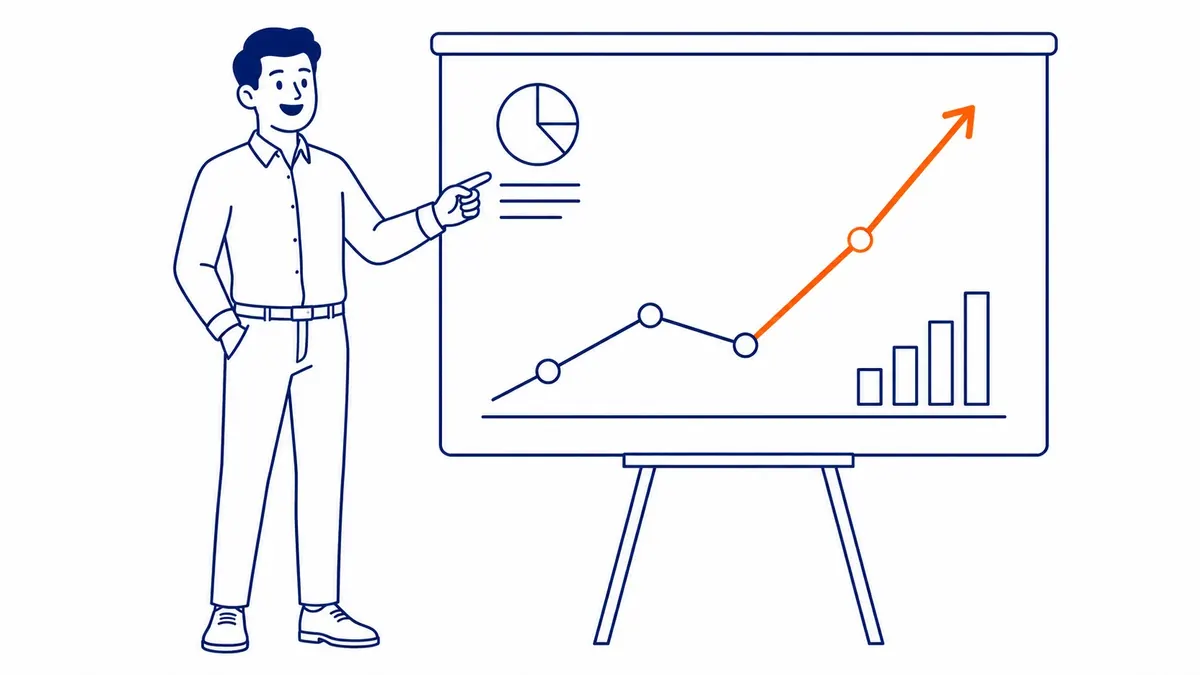
Pull the Data Before Touching Anything
Start here. Not with new content.
What Google Search Console Shows You
Google Search Console surfaces organic keyword data for free. Open the Performance report. Set the date range to 90 days. Click Queries. Sort by impressions.
What you will find is usually this: URLs ranking between positions 4 and 15 on real queries, pulling impressions but generating almost no clicks. Those positions already represent some level of trust the algorithm has granted. The page has relevance. It just needs help getting past the threshold where clicks actually happen.
A page ranking at position 8 for a real query already has a track record. Moving it to position 3 through targeted improvements can triple or quadruple the keyword traffic it generates. That is faster than ranking a brand-new URL from scratch.
Which queries are generating impressions. Posts that earn clicks are the smaller group. Where those positions fall in the 4 to 15 range. Search Console answers all three for free. Check it before doing anything else. Most sites that struggle to expand their keyword count have not yet run this report seriously. Once the report is in front of you, building a topical map is the natural next move.
Expand Existing Pages to Rank for More Organic Keywords
Updating beats adding. Every time.
How to Find the Content Gaps
Pull the top three results already ranking for any query you want to improve. Read what they cover that yours does not. Their H3 subheadings are the clearest signal. Those subheadings indicate which sub-questions the algorithm considers part of the topic. If your page skips them, it reads as incomplete by the algorithm’s measure.
Add what is missing. Keep what is already there. Extend it with the depth competitors demonstrate is expected for that topic. A post at 900 words ranking eighth can move to third with 500 additional words addressing the specific gaps.
New URLs compete from zero authority. Existing content has history. Link equity. A ranking foothold. The math almost always favours expansion over creating something new.
Clients who ask why their content is not ranking often find the answer here. Posts updated thoroughly rather than replaced from scratch tend to move faster. Your content competes harder when it is the deepest treatment of the topic on its URL, not a thin version that predates a stronger competitor.
This pattern applies across every topic cluster the site covers. Update first. Publish second.
Long-Tail Keywords Are Where Volume Hides
Three to five word queries. That is the target.
Here is where most real organic keyword opportunity sits for any site that is not already a dominant domain. “Calgary SEO” is competitive, held by established players with years of authority. A query like “how long does SEO take for a small business” is not competitive in the same way. Both attract the same audience at different points in the decision. One is actually winnable without a domain authority in the high fifties.
Long-tail keyword analysis for SEO starts with a tool. Ahrefs and SEMrush both surface related queries and long-tail variations on any seed keyword. Keyword difficulty scores matter here. Under 20 is a realistic target for a site that does not yet have a large backlink profile.
One well-structured page can rank simultaneously for five or six related long-tail queries. That count compounds the same way. A single post targeting a cluster of related questions generates impressions across all of them as authority accumulates. Cover a subject thoroughly and search engines begin associating your domain with the full topic, not just individual terms. That is the mechanism behind topical authority.
Your content strategy for long-tail keywords should prioritize questions your audience actually types into search engines. Look at the People Also Ask results for your target query. Those are real searches. Each one is a potential H3 in your next piece of content.
Your website will accumulate more keyword rankings faster from a dozen targeted long-tail posts than from one post chasing a high-competition head term. That is not a guess. It is what the data shows across the client sites we have worked on since 2007. Building that dozen starts with a walkthrough for finding long-tail keywords worth the effort.
Internal Links Accelerate Organic Keywords Rankings
Overlooked by almost everyone.
Authority flows from your strongest pages to weaker ones through internal links. If your homepage and your most-linked service page both link to a blog post targeting a specific new query, that post starts ranking faster. Search engines read those internal signals as a measure of importance within the site.
Practical implementation. Pull your highest-traffic pages. Look at what they currently link to. Then identify which pages you want to rank but are currently stuck at position 10 or lower. Connect them. Anchor text matters: use the actual keyword phrase in the link, not “click here” or “learn more.”
An SEO web audit of any established site almost always surfaces this: pages targeting competitive queries with zero internal links pointing at them. There is no internal signal that those pages matter. The fix takes an hour. Search rankings can start moving within weeks.
Your pages need internal links to be treated as authoritative within your own site. Without them, your content competes at a disadvantage regardless of how well-written it is. The portfolio of ranked terms we have built for clients demonstrates this pattern repeatedly: pages with strong internal link structures outrank thinner pages even when the thinner pages have more external backlinks.

Backlinks Still Move the Needle
Authority accumulates from outside.
Where to Find Link Opportunities
A backlink from a relevant, established website tells search engines your page deserves to rank for the queries it targets. That signal still matters in 2026. Quality over quantity has been the rule for years. A single backlink from a relevant industry publication outweighs dozens of directory submissions.
Guest posts on industry-relevant blogs still build quality backlinks effectively. Original research attracts links naturally. Other writers and journalists cite primary sources. A survey, a proprietary data summary, an industry report on your domain; these earn links over time without aggressive outreach.
Broken link building works too. Find a resource page in your niche with a dead external link. Produce the replacement content. Ask the site owner to update the link. Success rate is modest but the links that come through are relevant and clean.
Ahrefs makes both sides of this visible. The Backlink profile report shows which sites link to you and which posts carry the most link equity. Competing domains view shows what your competitors carry that you do not. That gap is your target list.
A link gap audit is part of the SEO work we do on every engagement. No keyword growth plan holds without understanding where the link profile stands against the pages you are trying to outrank.
Match Search Intent or Rank for Nothing
Intent is what search engines read first.
A page targeting “how to increase organic keywords” structured like a service pitch will not rank. Search engines distinguish between informational, commercial, and transactional intent with reasonable accuracy. Match the wrong type and the page stalls regardless of how technically clean it is.
Informational queries need thorough guides. Commercial queries expect comparison. Transactional queries expect conversion paths with clear calls to action. Mixing these up is one of the more common reasons pages fail to rank even when the keyword targeting is right.
Read the search engine results pages for your target keyword before writing anything. Look at what is actually ranking. Content type, length, format. That is what the algorithm has already decided the searcher wants. Match it.
Featured snippets are a specific keyword visibility opportunity worth targeting deliberately. A query showing a snippet box means the algorithm is extracting a direct answer from a ranking page. Structure your answer content to match what snippets pull: a two-to-four sentence direct response, or a short numbered sequence where the query asks for process steps. Winning a snippet places your content above position one in the search results. More organic keyword visibility without needing to outrank every competitor by domain authority alone.
Schema markup adds explicit signals. FAQ schema generates rich snippets that expand your result in the SERPs. Structured data on how-to content makes content eligible for voice search pulls. Voice queries tend to be longer and more specific, which is exactly the shape of long-tail queries voice search targets. Twenty minutes per page to implement. The visibility payoff in organic rankings compounds over months.
Your content, properly structured and marked up, earns more surface area in the search results even at the same ranking positions.

Track Your Organic Keywords Every Month
Measurement drives improvement.
Which Metrics Actually Matter
Without tracking, there is no way to know which changes moved the needle. Organic keyword growth is slow. Monthly reporting is the minimum interval for seeing meaningful signal.
Google Search Console is the primary source. Pull total organic queries each month. Track impressions, clicks, average position, and click-through rate. Growing impressions with flat clicks signals a title or meta descriptions problem. Flat impressions signals a content gap or indexing issue. These two patterns produce different fixes.
Ahrefs and SEMrush add what Search Console cannot. They show organic keywords ranking on page two and page three, queries where your site has a foothold but not enough position to generate clicks yet. Those are the targets for your next round of content updates or internal link additions.
Monthly reporting also catches losses early. Algorithm updates happen without notice. A ranking drop caught in month one is fixable. Caught in month four, after traffic has already declined, recovery costs significantly more time and effort. Early detection is the whole point of monthly tracking.
To-The-TOP! sends monthly position reports as part of every engagement. That data is what determines which posts to update next, which queries to target next, and where the link gap is growing against your competitors. Watch it long enough and the shift in competitors traffic starts showing up early.
Frequently Asked Questions
How to get more organic keywords?
Google Search Console first. Positions 4 through 15 on existing queries are the fastest path to more organic keywords. Those pages already have relevance established with Google. Depth improvements, better title tags, and linking to them push rankings higher without the months a new URL requires to gain traction. New content targeting long-tail terms with low difficulty adds to the count over time. Both approaches together compound your keyword footprint fastest.
What is the 80/20 rule in SEO?
Roughly 80% of organic traffic comes from 20% of your search terms. Worth identifying which 20%. Most sites have a small cluster of posts doing nearly all the ranking work. Those pages deserve the most attention: stronger on-page links, fresh updates, and more backlinks. The other 80% of those keywords still matter for topical authority and for covering the full search landscape your audience uses. Fast traffic gains concentrate in the top-performing tier, however.
Is SEO dead or evolving in 2026?
Evolving, not dead. The fundamentals hold. Content that genuinely answers what searchers are looking for ranks. Backlinks from relevant sites carry weight. Technical performance matters. What has shifted is the surface: AI Overviews appear above organic results for many queries now. Featured snippets absorb clicks that once went to position one. Ranking across a diverse keyword footprint is arguably more important now than chasing a single primary term. Search engine optimization adapts; it does not disappear.
The Google Ads management side of paid acquisition can cover you while organic builds. Paid traffic stops the moment spending stops. Organic keywords, done right, compound instead. Rankings earned through quality work and link authority continue sending traffic long after the initial effort.
If keyword counts are stagnant on your site, the data is almost certainly already sitting in Search Console. Pull the Queries report. Sort by impressions. URLs sitting at positions 4 through 15 on real queries are where to start. The opportunity is usually already there.
Contact Calgary SEO Company To-The-TOP!
Questions about anything in this article, or about your own rankings? Talk to a Calgary SEO specialist directly.
Phone: (403) 308-5949
Address: 1509 14 Ave SW, Calgary, AB T3C 0W4
Hours:
Monday to Friday: 10:00 am – 7:00 pm
Saturday: 12:00 pm – 4:00 pm
Sunday: closed