
What Keywords Do I Rank For? How to Find Your Google Rankings
Most site owners have no idea what their site actually ranks for. They know which keywords they targeted. What Google ended up indexing them for is often a completely different list. The two rarely match. Queries you never optimised for can drive more traffic than the ones you spent months building. Meanwhile, pages you thought were locked up appear nowhere in Google’s results.
Finding out what keywords your site ranks for is one of the first moves in any website keyword analysis. The data lives in a few tools. Google Search Console is free and reports directly from Google’s own index. Third-party platforms like Ahrefs and SEMrush add competitive context. Together they give a complete picture of where your site stands, which pages are driving organic traffic, and where keyword opportunities are sitting untouched.

Google Search Console Is the Right Starting Point
No third-party tool estimates keyword rankings as accurately as Google Search Console. The data comes directly from Google’s index. Not sampled or estimated from clickstream data. Exactly what Google reports about your site’s appearance in its search results.

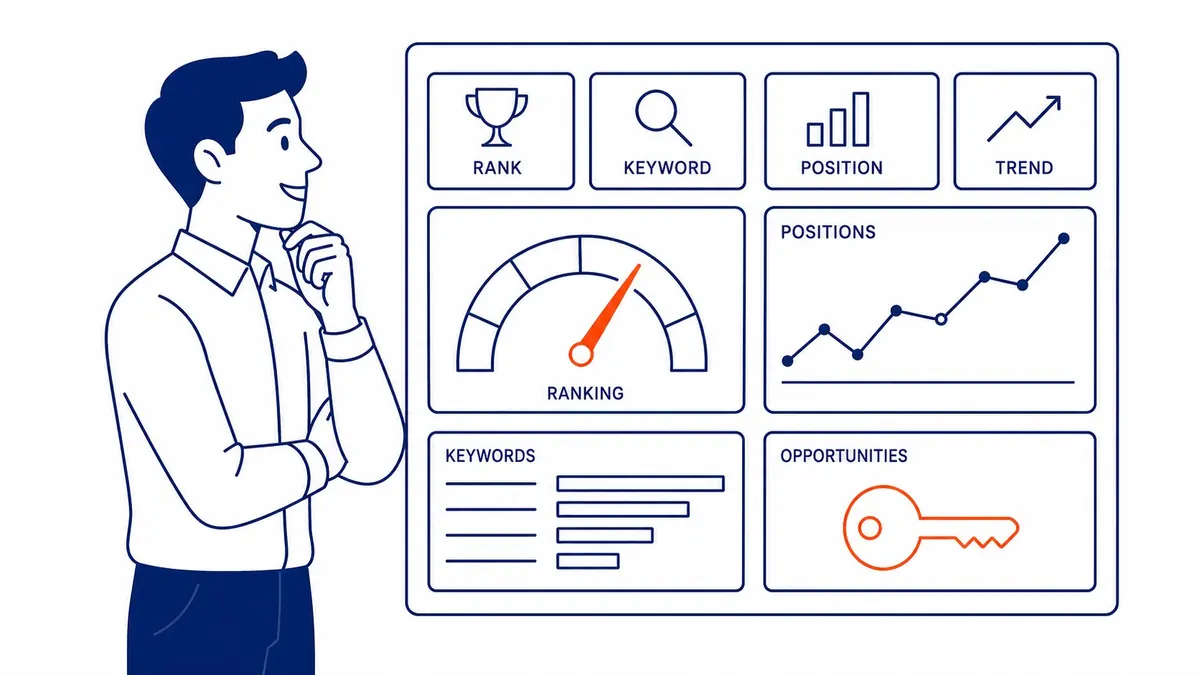
The Performance report in Search Console is where keyword data lives. Pull it up, set the date range to at least 90 days, and you see a full list of every query that triggered your site in Google’s results. The table shows:

- Clicks: How many users actually clicked through to your site
- Impressions: How many times your pages appeared in results for that query
- CTR: Click-through rate, calculated as clicks divided by impressions
- Position: Your average ranking position for that query over the selected period
Sort by impressions first. High-impression, low-click queries at position 8-15 are the fastest wins in SEO keyword work. Those pages are already visible. Improving the title tag and meta description often lifts clicks without any content change. Position 1-3 on a query with zero impressions is also worth flagging. That page may have a crawlability or indexation issue, not a ranking issue.
Filter by page to see which specific URLs are ranking and for what queries. A single page often ranks for dozens of keyword variations. Some of those variations have far more commercial intent than the primary target keyword the page was built around. Deciding which to build around is the same call as how to choose keywords. Those variations are usually the fastest route to more organic keywords on your website. Sorting through those variations is also where the answer on competitors traffic starts to appear.
SEO Tools That Show Your Full Ranking Profile
Search Console shows what Google reports. Third-party tools add context Search Console does not provide: competitive position, keyword difficulty, volume estimates, and historical ranking trends.
Ahrefs: Enter your domain in Site Explorer, go to Organic Keywords. You see every keyword Ahrefs tracks your domain ranking for, with estimated volume, ranking position, traffic contribution, and which URL is ranking. Historical view shows when positions changed and by how much.
SEMrush: Similar view in Organic Research. Strong on competitive gap data: keywords your competitors rank for that your site does not. Useful for finding the keyword opportunities sitting just outside your current content footprint.
Free options: Ahrefs Webmaster Tools (the free version) shows your site’s ranking data without paid access to competitor data. Search Console is entirely free. For most businesses running a local SEO Calgary campaign, Search Console plus Ahrefs Webmaster Tools covers the essential ranking picture before a paid tool subscription becomes necessary.

What to Look For in Your Ranking Data
Three things worth flagging on any first review:
Keywords at position 11-20. These are the page-two rankings. Google already knows your content is relevant. The page just needs a stronger signal: more internal links pointing at it, a better title tag, additional content depth, or more authoritative backlinks. Small improvements here produce the fastest measurable ranking movement.
High-volume keywords with low CTR. A query with 5,000 monthly impressions and a 1% CTR is sending fifty visitors per month. The same query at 3% CTR sends 150. Re-examine the title tag and meta description. Does the snippet answer the intent of the query better than competing results? Often not. That gap is fixable without touching the page content itself.
Unexpected ranking queries. Pages rank for terms no one deliberately targeted. Some of these are valuable. A service page ranking for a high-intent query tangentially related to its primary topic may deserve its own dedicated page rather than continuing to share ranking strength with the original. Identifying those opportunities is part of what a thorough site SEO audit surfaces.
Using Your Ranking Data to Drive Keyword Strategy
Ranking data is not just a report card. It is a roadmap. It is also a concrete reminder of why keywords are important to track.
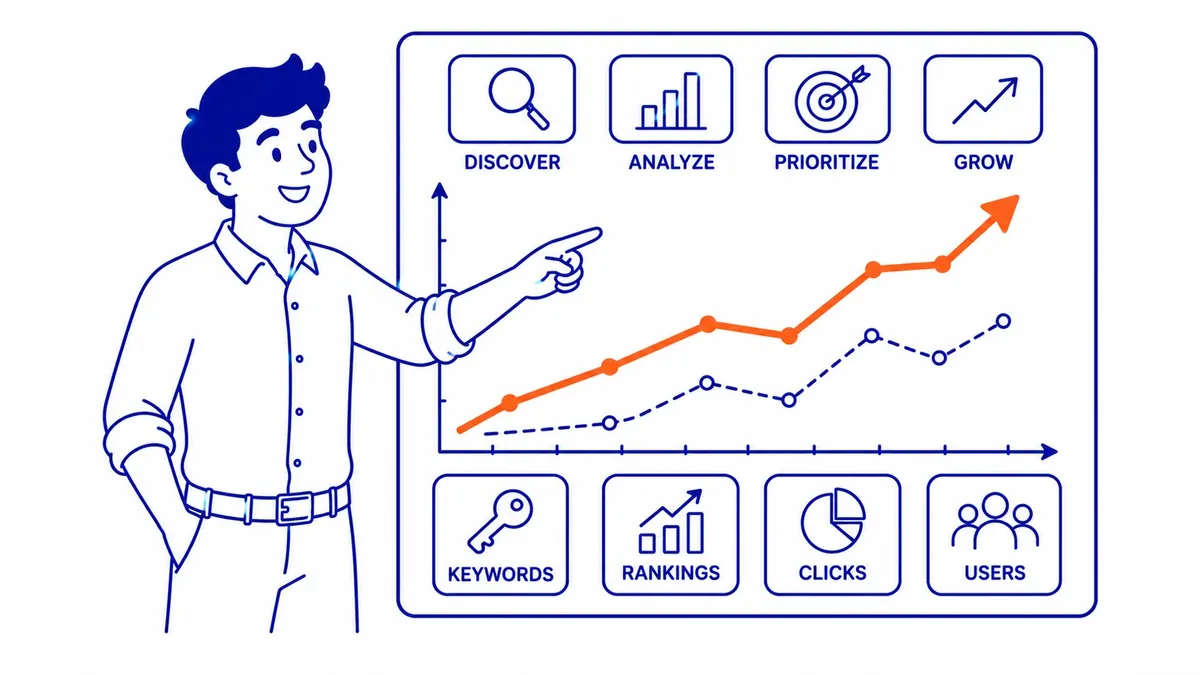
Pages ranking at position 5-10 for a high-volume keyword are close enough to materially improve with targeted effort. Additional content depth, better on-page signals, and a handful of relevant internal links from strong pages often move those rankings to the top three. That is where most of the organic traffic lives. Positions 1-3 typically capture over 60% of clicks for a given query. Adding a video to those pages can claim a second slot in the results, which is what YouTube SEO does.
Pages with strong impressions but no clicks across any query suggest a crawlability or indexation gap. Before investing in new content, confirm those pages are indexed and check for any technical barriers. A page that appears in results but earns no clicks often has a title tag or meta description that does not match the intent of the queries triggering it.
Keyword data also shapes the content calendar. Queries your site generates impressions for but no page is directly targeting are candidates for new spoke posts. Turning those into a plan is part of how to do keyword research. Those queries already have some topical association with your existing content. Building a focused page around them capitalises on momentum already in place. Consistent SEO services in Calgary include this kind of ranking audit on a monthly or quarterly basis, not just at setup. All downstream of what a keyword ranking actually measures.
Frequently Asked Questions
What does it mean to rank for a keyword?
Ranking for a keyword means one of your pages appears in Google’s results when someone searches that query. Position 1 means your page is the first organic result. A position-20 result sits on page two. Ranking for a keyword does not guarantee traffic: a position-15 result on a high-competition query earns almost no clicks regardless of how relevant the page is. The combination of ranking position and search volume determines whether a given keyword is actually driving visitors to the site.
What are the 4 types of keywords?
Informational keywords target users researching a topic. Navigational keywords target users looking for a specific brand or website. Commercial investigation keywords target users comparing options before a purchase. Transactional keywords target users ready to buy or hire. Most keyword strategies address all four categories, since organic traffic arrives from each stage of the decision cycle. Informational queries build topical authority; transactional queries drive conversions directly.
How do I rank for a specific keyword?
Build a page that answers the intent of that query better than any page currently ranking for it. That covers content depth, on-page signals (title, headings, meta description), internal links pointing at the page from related content, and ideally external backlinks from relevant sites. Technical SEO health matters too: a page that loads slowly or has indexation issues does not rank regardless of content quality. The competitive difficulty of the keyword determines how much work is required before ranking movement appears.
What are high ranking keywords?
High ranking keywords are queries where your site holds a position in Google’s top results, typically positions 1 to 10. Among those, position 1 through 3 are the high-value slots: they earn the overwhelming share of clicks for most queries. Some practitioners also use “high ranking” to mean keywords with strong search volume. The two overlap but are not the same. High traffic usually requires both: a high-volume query and a strong ranking position for that query.
Contact Calgary SEO Company To-The-TOP!
Questions about anything in this article, or about your own rankings? Talk to a Calgary SEO specialist directly.
Phone: (403) 308-5949
Address: 1509 14 Ave SW, Calgary, AB T3C 0W4
Hours:
Monday to Friday: 10:00 am – 7:00 pm
Saturday: 12:00 pm – 4:00 pm
Sunday: closed