
What Is an SEO Silo?
An SEO silo is a section of your website that links to itself and not to the rest. That is the whole definition.
Half of it is ordinary. The other half is a decision almost nobody examines.
We have been building site structures in Calgary since 2007. Owners raise the silo question most years, usually after reading that their pages ought to sit in themes.
Sort them into themes. Nobody anywhere disputes the sorting.
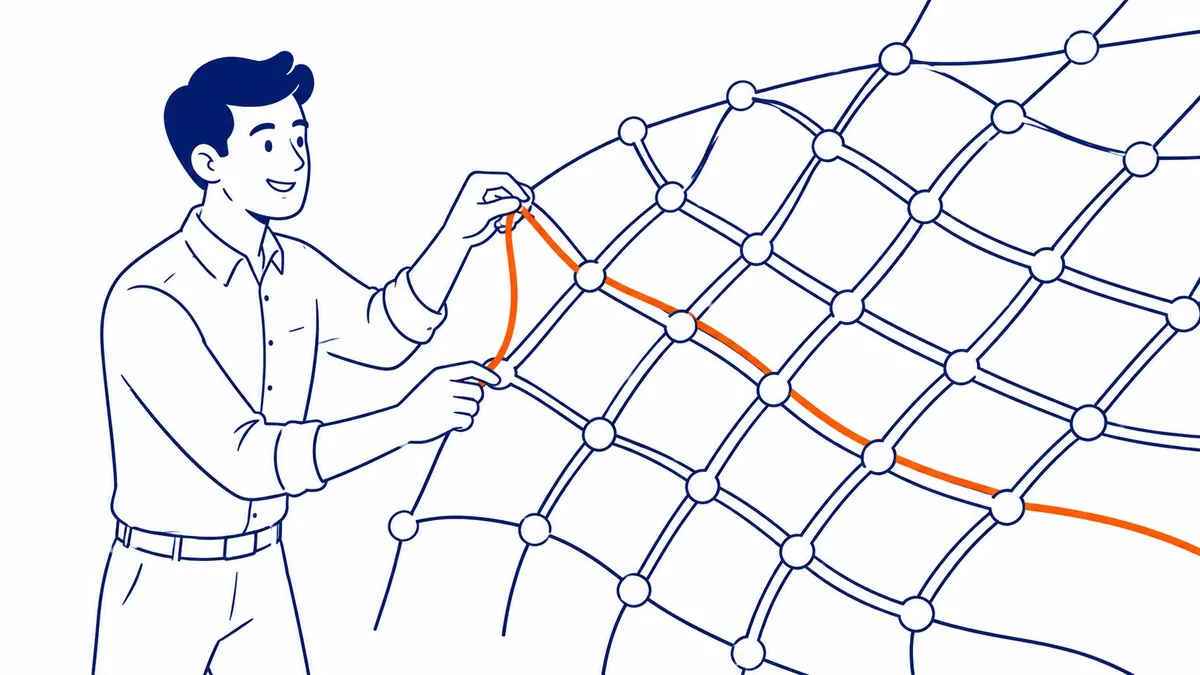
An SEO Silo Is Defined by the Links You Withhold
Put your plumbing pages together. Link them to one another. So far you have done nothing controversial, and nothing that needs a name.
The name arrives with the rule. Drain cleaning may link to water heaters. Neither one may link to the roofing section, ever, for any reason.
That prohibition is the silo. Everything else is a website with tidy sections.
The content does not change. Only the links do.
The diagram usually gives it away. Boxes, arrows curling politely inward, a red X struck through every arrow that tries to leave.
Take the prohibition out and the design does not collapse. Instead it becomes ordinary site structure. Our library covers hierarchy and crawl paths elsewhere, and nobody argues about those. Same shelf holds our note on PAA boxes.
Every Other Industry Treats the Word as a Warning
Silos hold grain. Sealed at the top and shut fast at the base. Built so that air never reaches what is stored inside.
Air spoils grain. The seal is the answer, and nothing about it is accidental.
Then the word left the yard. Sales stops talking to marketing. Support never hears from engineering. Consultants get paid well to break those silos down.
SEO is the only field where somebody sells you one.
Notice, too, that nobody calls it a silo while it is working. They call it a section. Or a hub. Maybe a cluster of related pages.
Watch which word turns up in the sales deck.
Consultants bill by the hour to break silos down everywhere else. Here they bill you to build one.

Grouping Does the Work and Walls Take the Credit
A silo makes two changes at once. Right there the reasoning goes soft.
Change one groups related pages together. The second seals that group off from everything else.
Rebuild a section, then watch rankings climb. Which change did that? You made both of them in the same week.
Nobody running a single website can separate the two. You would need your site twice over, identical, differing only in the seal. That comparison has never been available to you.
Ask whoever sells you the silo what the seal achieved on its own. The answer arrives as a case study where somebody rebuilt an entire website.
Yet the seal keeps collecting the credit. Meanwhile the grouping did what grouping always does. Related pages, close together, easy for a person to find.
Still worth doing. Just not for the reason printed on the box.

Count the Sideways Links on Your Best Page
Open your analytics. Sort every page by entrances, highest first.
Take the top one. Read it the way a stranger would, straight down to the bottom.
Ask what that stranger wants next. Then hunt for the link that takes them there.
Count the internal links on that page leading outside its own section. Whatever number comes back, you now know whether it was a decision or an accident.
Usually it was an accident. A plugin applied the rule. Or a habit did. Maybe advice somebody read in 2013 and never revisited.

The Reader Who Needed a Door
Somebody lands on your emergency drain page at eleven at night. Water is still rising.
Further down they want your after-hours callout policy. That page sits in the roofing section, though, because that is where the service pages ended up.
No link exists. The silo forbade it.
So they go back to Google and search again. Your phone does not ring.
Search delivers people to one page at a time. Never to your structure. The traffic arrived though. It came to nothing.
Nothing here involves a penalty. No algorithm punished anybody. A person wanted a door and met a wall.
Nobody complains about it, either. They leave, and leaving makes no sound.
The visit looked healthy, too. Somebody arrived. They read the page all the way down, slowly. Your analytics called that engagement.
No report has a row for the link that was never there.

Why a Prohibition Is Easier Than a Judgment
Linking well demands a judgment on every single page. What does this reader want next, and where does that thing live?
The question has no shortcut. You answer it once per page, forever. Sometimes you answer it wrong.
A prohibition asks nothing of you. Never link outward. Anyone on the team can follow that without reading a word of the page.
So the rule spreads. It survives staff turnover. Somebody writes it into a style guide, then into a plugin, then into a template nobody ever opens again.
Rules scale. Judgment does not. There sits the entire appeal of the silo, and there sits its whole cost.
Meanwhile the reader still wants what the reader wants. No rule has ever known that.

Two Cases Where Sealing Is Defensible
Sealing earns its keep where two sections have genuinely nothing to say to each other.
One company, two unrelated businesses. Commercial roofing beside residential landscaping, sharing a domain for accounting reasons.
Sealing also helps where a section serves an audience the other would only confuse. A wholesale portal sitting next to a consumer store, for instance.
Both cases share one tell. No reader ever wants to cross.
Test that before you accept it, though. Owners guess about their readers, and the guess tends to flatter the structure they already built.
Watch what people search for before they land. Anyone wanting both things in one visit has answered the question for you.
What We Build for Calgary Clients Instead
Our Calgary SEO work starts by grouping pages that belong together. Then we link across those groups wherever a reader would want to go.
Good internal linking follows the reader, never a floor plan.
No wall gets built on principle. Every project opens with keyword research, which usually shows the sections overlapping.
A website audit turns up the same thing. Pages orphaned by a rule nobody remembers writing.
Meanwhile Google Ads management buys back the click a broken path lost. That is the expensive way to fix a missing link.
Our SEO services treat structure as something you find in the content you already wrote. Rather than a shape you impose on it beforehand.
The overlap is usually where the customers were standing. Grouping pages only works once the definition of a topic is settled.
Common Questions About SEO Silos
Does an SEO silo still work in 2026?
The grouping works. Nobody has yet shown that the seal adds anything on top of it. The seal is the only part unique to a silo.
Is a silo the same as a topic cluster?
No. A topic cluster groups related pages. The silo groups them, then forbids them from linking outward, which is a further step nobody requires of you.
How do I know if my silo is too strict?
Read one page as a customer would. Look for the thing you would want next. That link exists, or it does not.
Will linking between silos hurt my rankings?
That worry is what keeps most silos standing. Links between genuinely related pages help readers find things, and helping readers has been a safe bet since 2007.
Should a small business build SEO silos at all?
Probably not. Small sites rarely hold enough pages for a wall to matter. Link well instead, and the structure you wanted tends to arrive on its own.
Contact Calgary SEO Company To-The-TOP!
Questions about anything in this article, or about your own rankings? Talk to a Calgary SEO specialist directly.
Phone: (403) 308-5949
Address: 1509 14 Ave SW, Calgary, AB T3C 0W4
Hours:
Monday to Friday: 10:00 am – 7:00 pm
Saturday: 12:00 pm – 4:00 pm
Sunday: closed