How to Use AI for SEO | Calgary | SEO Company To-The-TOP!
Knowing how to use AI for SEO comes down to one honest distinction: AI is an accelerator, not an autopilot. It drafts faster, sorts data faster, and surfaces patterns a person would take hours to find. The model does not decide what your business should rank for, and it does not understand your customers the way you do. We sort that line out with Calgary clients almost every week. The owner who expects AI to run the whole strategy ends up disappointed. Treat it as a very fast junior assistant instead, and the time savings are real. Most of what good Calgary SEO looks like in 2026 is a human steering, with AI doing the heavy lifting underneath.
This guide walks through the parts of the workflow where AI for SEO actually pays off. Keyword research. Content. Technical fixes. The tools. And the places it quietly makes things worse, because nobody selling AI tools wants to talk about those.

So here is the practical version, not the sales pitch.

What AI Actually Does for SEO Work
Pattern recognition at scale. That is the real strength. Search engines reward content that matches intent, covers a topic properly, and earns trust over time. AI can read a thousand competing pages and tell you what they have in common in seconds. A person cannot.
What it cannot do is judge whether any of that matters for your specific market. That gap is the whole reason AI SEO stays a human-led discipline. ChatGPT does not know that your best customers are commercial property managers, not homeowners. It does not know which two competitors actually take your business and which ten just rank near you. You bring that. The AI processes it.
There is a second limit worth naming early. AI generates plausible text, and plausible is not the same as accurate. It will invent a statistic with total confidence. Then it cites a study that does not exist. Run anything factual past a human who knows the subject before it goes live. We have caught hallucinated data in client drafts more than once, and a wrong number on a published page costs more trust than a slow week of writing ever would.
Treat AI for SEO as a force multiplier on the parts you already understand. That framing keeps the output useful.
Using AI for SEO Keyword Research
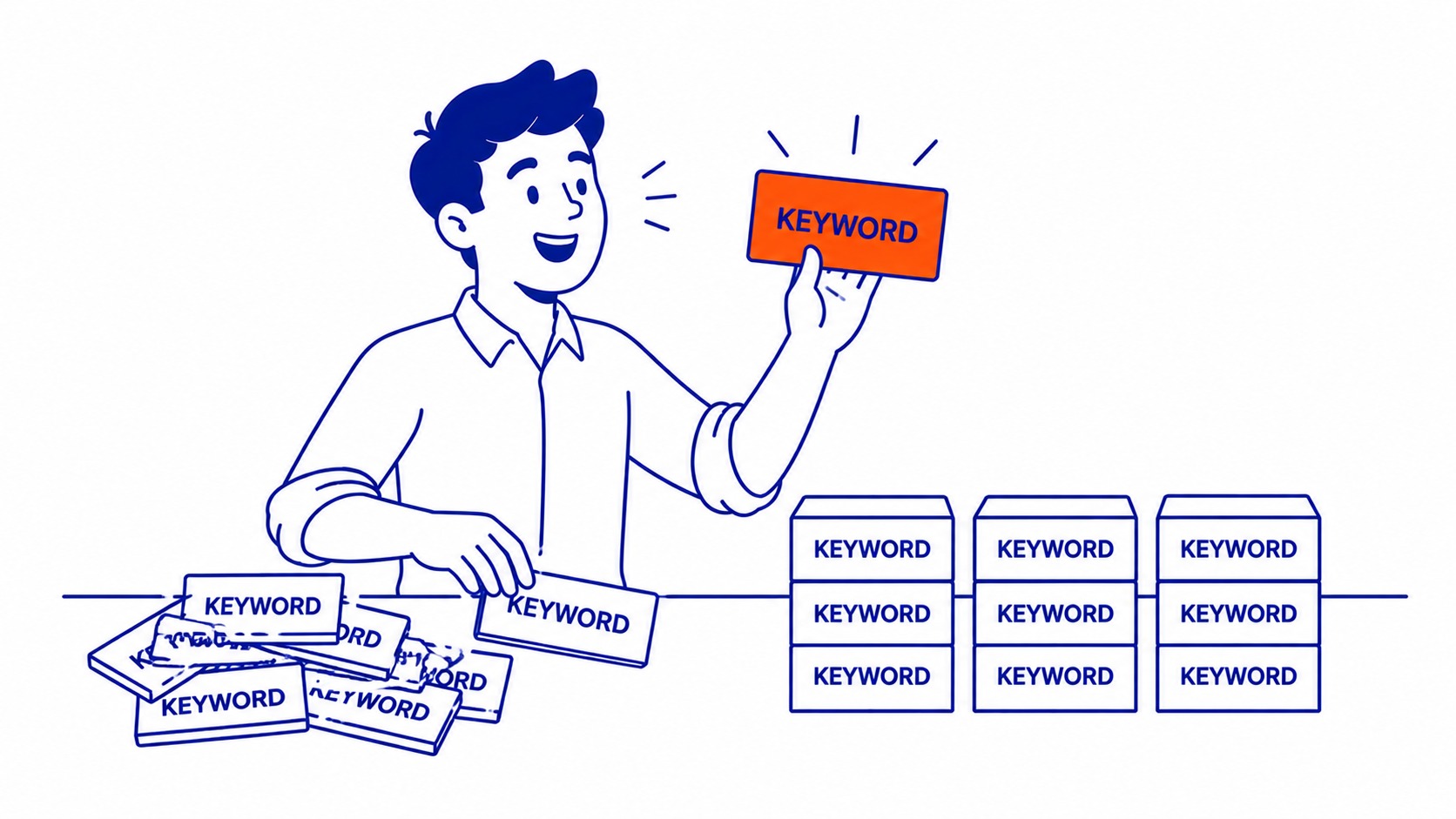
Keyword research is where AI saves the most time, day to day. Feed it a seed topic and it returns dozens of related queries, grouped by the intent behind them. Informational, commercial, navigational: the model sorts a messy keyword list into those buckets in one pass.
The workflow we use looks roughly like this. Start with the services a client sells. Ask the model to expand each one into the questions real searchers type. Then ask it to cluster those questions by the stage of the buying journey they signal. A search like “what is local SEO” sits early. “Local SEO pricing for contractors” sits late, closer to a purchase. Mapping that spread against the audience you actually sell to tells you which pages to build first.
AI also reads competitor content well. Paste in a competitor’s page and ask what subtopics they cover that you do not. The gaps it finds become your content plan. None of this replaces real volume data from a proper keyword tool, though. The model guesses at search demand. It does not measure it. Pair the idea generation with hard numbers from keyword research tools that actually pull search volume, and you get both speed and accuracy.
One caution. AI loves to suggest high-volume head terms because they appear often in its training data. Those are usually the hardest keywords to rank for and the worst fit for a small local business. Push it toward long-tail, lower-competition keywords instead. Ask it directly for the questions your audience asks the week before they call someone.
Using AI to Draft and Optimize Content
Drafting is the use case everyone reaches for first, and it is the one that needs the most discipline. A model will write a full blog post in thirty seconds. That post will read fine and rank for nothing, because it says what every other AI-written page on the topic already says.
Here is the approach that works. Use AI for the scaffolding, not the substance. Have it build an outline from your keyword research. Let it draft the sections you find tedious, the definitions and the background. Then a human adds what the model cannot: the client example, the honest opinion, the local detail, the thing you learned on the job that no training dataset contains. That last layer is what earns rankings now, because it is the part competitors cannot copy from the same prompt.
AI handles the smaller content jobs cleanly too. Meta title and description variations, ten at a time. Alt text for images. FAQ sections pulled from real questions. Refreshing an old page that has slipped down the results, which is a core lever in how to improve SEO. Internal anchor text suggestions. These are the unglamorous tasks that used to eat an afternoon, and the model does them in minutes.
Google has been clear about AI content, and the position matters. The company does not penalize content for being AI-assisted. It penalizes content that is unhelpful, thin, or written for search engines instead of people. The distinction is the whole game. Helpful content built faster with AI is fine. Mass-produced filler is not, and the algorithm has gotten good at telling the difference. Strong on-page search engine optimization still rests on genuine usefulness, whoever or whatever typed the first draft.
Using AI for Technical SEO
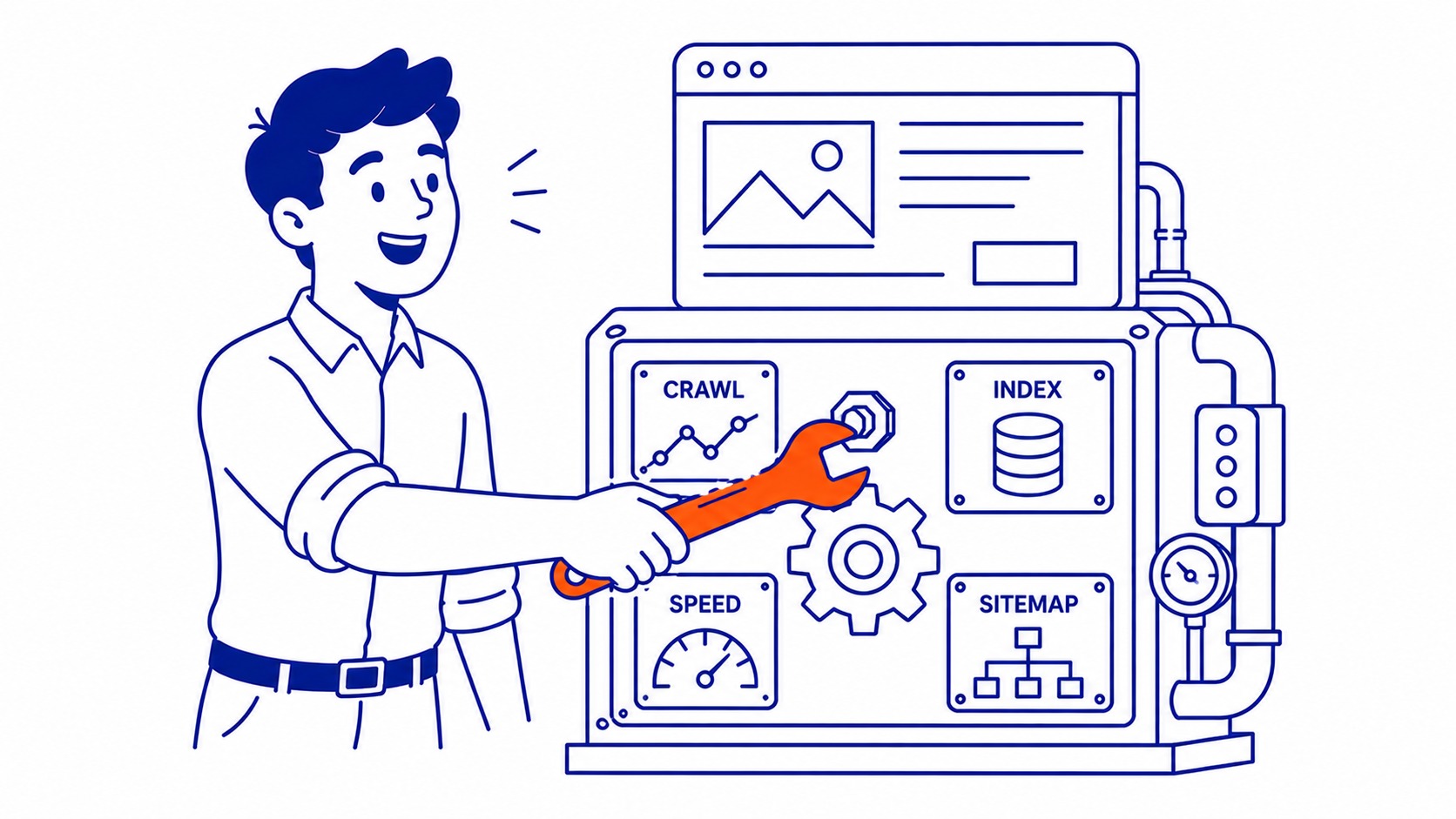
Technical work is where AI quietly shines, and it gets the least attention. Schema markup is the clearest example. Describe a page in plain language and the model writes valid structured data for it: a how-to, an FAQ, a local business listing. What used to mean reading documentation and hand-coding JSON now takes one prompt and a quick validation check.
Audits get faster too. Paste in a crawl export or a list of error URLs and ask the model to group the issues by severity and likely cause. It will not run the crawl. What it does is triage the output, the slow part. Broken canonical tags, redirect chains, duplicate title tags: the model sorts a raw error dump into a prioritized fix list.
Internal linking is another fit. Give it your page list and it suggests where to link, and with what anchor text, based on topical relationship. The same goes for spotting orphaned pages and thin content that should be merged. A thorough SEO audit still needs a human to verify the fixes before they ship, because the model will occasionally recommend something confidently wrong. Used as a triage layer, though, it turns a two-day audit into a half-day one.

AI SEO Tools Worth Knowing
The tool landscape splits into two camps. General models and purpose-built platforms.
ChatGPT and the other general assistants are the Swiss Army knives. Keyword brainstorming, drafting, schema, quick analysis. Cheap, flexible, and the right starting point for most small businesses. The trade-off is that they work from training data, not live search results, so their volume estimates and competitor reads need checking against real numbers.
Purpose-built AI SEO tools sit on top of actual search data. The major platforms now layer AI features over their keyword databases and rank trackers. They will write content briefs scored against the pages currently ranking, flag technical issues from a live crawl, and track your positions over time. More expensive, and worth it once SEO is a real line in the budget rather than a side project.
A practical setup for a small business: a general model for daily drafting and ideation, paired with one paid platform for the search data the model cannot see. Which AI SEO tools you pick matters less than using them for the jobs they each do well. The general model guesses about search. Search demand is what the paid tool measures.
Optimizing for AI Search and AI Overviews
Search itself is changing, and this is the part of AI for SEO that is genuinely new. Google now shows AI Overviews above the standard results for many queries. ChatGPT and similar assistants answer questions directly, citing the pages they pulled from. People are starting to search inside the AI instead of clicking through to ten blue links.
AI search optimization, sometimes called generative engine optimization, is the practice of getting your content cited in those answers. The mechanics overlap heavily with good SEO, which is reassuring. Clear, well-structured content that answers a question directly gets pulled into AI Overviews more often. Structured data helps the machines parse what your page is about. Being mentioned across the web, in directories and on other sites, builds the authority these systems weigh.
One concrete tactic. The “People Also Ask” boxes on Google are a map of the follow-up questions buyers have. Answer those questions plainly on your pages, each under its own heading, and you become quotable to both Google’s AI and the standalone assistants. Brand mentions matter more than they used to as well. AI search optimization rewards businesses that show up consistently across many sources, not just the ones with the most backlinks.
The honest read: nobody has this fully figured out yet, the field is months old. Useful, trustworthy, well-marked-up content remains the best bet.

Where AI for SEO Falls Short
Now the part the tool vendors skip. AI SEO has real failure modes, and pretending otherwise burns clients.
It produces sameness. Ten businesses prompting the same model about the same topic get ten nearly identical pages. Search engines have plenty of that already, and ranking means standing out, which is the opposite of what a model trained to produce the average output does naturally.
It hallucinates facts. Said it before, worth repeating, because this is the one that does real damage. A confident wrong statistic on a published page erodes the exact trust SEO is trying to build.
It cannot replace experience. Google weighs experience, expertise, authoritativeness, and trust, the E-E-A-T signals, and the first E is the problem for AI. A model has never installed a furnace, managed a property, or sat across from a nervous first-time buyer. The lived detail that signals genuine expertise is precisely what it cannot generate. That is also why a real specialist still matters, and why SEO in Calgary done well leans on people who know the local market firsthand.
It needs supervision on volume. The temptation is to publish fifty AI pages a month. That path leads to a bloated, thin site that Google learns to distrust. Fewer, genuinely useful pages beat a content farm every time.
None of this is an argument against AI for SEO. It is an argument for using it with judgment.

How a Specialist Folds AI into Real Work
Here is what the day actually looks like. AI runs the first pass on the slow, repetitive parts, and a person runs everything that requires judgment.
Keyword clustering, draft scaffolding, schema generation, audit triage, meta variations: the model takes the first swing at all of it. Then the human edits hard, adds the local knowledge and the client specifics, checks every fact, and decides what ships. The work gets done in a third of the time. Quality stays high because a person owns the output, not a prompt.
SEO Company To-The-TOP! has run SEO this way since the tools became good enough to trust with the grunt work. The same judgment applies to paid traffic, where Google Ads management uses AI for bid signals and ad variations while a human sets the strategy and watches the budget. That pattern holds across the board: machine speed, human direction.
SEO takes months to compound regardless of how fast the drafts get written. AI shortens the production time, not the timeline for results. Anyone promising instant rankings because they bought an AI tool is selling something. That part has not changed, and it will not.
Frequently Asked Questions
Can you do SEO with AI?
Partly. AI handles keyword research, drafting, schema, and audit triage well, and it does them fast. It cannot set strategy, judge your market, or supply the firsthand experience that earns trust. The realistic answer is human-led SEO with AI doing the repetitive work underneath, not AI running the whole thing alone.
Is SEO dead, or just evolving?
Evolving, not dead. The arrival of AI Overviews and answer engines has shifted where results show up, not whether optimization matters. If anything, getting cited by AI raises the stakes for clear, trustworthy, well-structured content. We dig into this more in our piece on whether SEO is dead, and the short version is that the fundamentals held.
What is the 80/20 rule of SEO?
The idea that roughly 80% of your results come from 20% of the work. In practice that 20% is usually solid technical foundations, content that genuinely matches search intent, and a handful of quality links. Chasing the other 80%, the marginal tweaks, before the basics are right is the most common way small businesses waste their SEO budget.
Which AI tool is best for SEO?
There is no single best one. A general assistant like ChatGPT covers daily drafting and ideation cheaply. Purpose-built platforms built on live search data cover volume, rank tracking, and competitor analysis. Most businesses get the best results pairing one of each, since the general model guesses at search demand while the paid tool measures it. Newcomers learning the ropes should also read our guide on how to learn SEO before spending on tools.
