
How to Improve SEO
The call I get most often is not from businesses starting SEO from scratch. It is from businesses that have been doing SEO for a year or two, have spent real money on it, and still do not see the results they expected. Usually the site is not broken. Rankings exist, some traffic comes in, some content is published. The problem is that nothing is compounding. Gains stall around page two or early page one for low-volume terms, and the high-value keywords keep sitting out of reach. As an SEO company in Calgary, we see this pattern constantly, and it repeats across Canada: a site that has done the basics but missed the details that actually move rankings.
This guide covers what those details are. Not a beginner introduction to what SEO is and how it works, but a working checklist for existing sites: where to audit, what to fix first, and how to build authority steadily rather than in fits and starts. These sections follow the same order we work through when starting with a new SEO client.
Improve SEO: The call I get most often is not from businesses starting SEO from scratch. Illustration for how to improve SEO in Calgary.” src=”/wp-content/images/hero-How-To-Improve-Seo.jpg” style=”max-width:100%;height:auto;display:block;margin:1.5em 0;” width=”600″/>
Find Out Where You Stand First
Skipping the diagnostic and jumping to fixes is how you spend three months optimizing the wrong pages. The diagnostic takes less time than any other step and prevents wasted effort on everything that follows.

Google Search Console is the starting point. Open the Performance report, set the date range to the last 90 days, and sort by impressions. Pages sitting at position 8 to 15 with substantial impressions and low click-through rates are the fastest opportunities on the site. Those pages already rank; they need title tag work and content refinement to push past the click-through cliff. Pages with high impressions and an average position above 20 need more work before the CTR conversation applies.
Check indexation next. Use the Coverage report in Search Console to see what Google has indexed versus what it has not. Pages blocked by noindex directives, pages returning 404 errors, and pages marked as “Crawled, not indexed” all need investigation. If a page was published six months ago and Google has not indexed it, there is a reason. Usually it is a technical issue or a signal quality problem, not a crawl delay.
Screaming Frog handles the technical crawl. Run it on the full domain and look at four columns: HTTP response codes, canonical tags, title tag length, and page depth. Broken internal links, redirect chains, and pages buried more than four clicks from the homepage all show up here. A website audit for SEO at this stage surfaces the issues that undercut every other improvement made later. The complete audit walkthrough covers the full process in detail, including what to prioritize when findings stack up.
One thing the crawl will not surface: keyword cannibalization. Two pages competing for the same search term split the signal. Neither ranks well. Check this manually for your five most important keyword clusters, or use Semrush’s keyword gap tool. Fix it by consolidating the weaker page into the stronger one, or by differentiating intent clearly enough that the two do not compete.

Fix the Technical Foundation
Technical SEO does not generate rankings on its own. It removes the ceiling. A technically healthy website lets all the content work and off-page signal it has already earned go as far as possible. Sites with crawl issues, slow load times, and broken page architecture waste every dollar spent on content and link building.
Page speed first. PageSpeed Insights measures your website’s load time for both mobile and desktop, and the mobile score is the one that matters for rankings. Anything below 50 on mobile is actively suppressing rankings. Common culprits: uncompressed images, render-blocking scripts, third-party chat widgets that add 2 to 3 seconds of load time on every page load, and hosting that cannot handle traffic spikes. Compress every image before upload, switch to a faster host if you are on shared hosting, and audit third-party scripts quarterly.
Core Web Vitals are now a confirmed ranking factor. Three signals matter: Largest Contentful Paint measures how fast the main content loads, Cumulative Layout Shift measures visual stability, and Interaction to Next Paint measures responsiveness. Search Console has a dedicated Core Web Vitals report that shows which URLs are failing and by how much. Fix LCP issues first: they have the largest impact on both rankings and user experience.
Mobile indexing is no longer optional. Google indexes the mobile version of the site, and if the mobile version has thinner content or harder navigation than the desktop version, that is the version being evaluated. Test every important page on an actual device, not just in a browser developer tool. Navigation that requires precise taps, text that overflows, and forms that do not work on mobile all degrade the mobile score and the technical SEO foundation as a whole.
Structured data adds context. Schema markup helps search engines understand what a page is: a local business, a service, an FAQ, a product. It does not guarantee rich results but makes them possible. Add LocalBusiness schema for the website homepage, FAQ schema for FAQ sections, and Service schema for service pages. Validate each URL in Google’s Rich Results Test before pushing live.

Sharpen Your On-Page SEO
On-page SEO is where most existing sites have the most room to improve without creating new content. The pages already exist. Rankings are already partially there. Incremental improvements to page elements lift them further.
Title tags drive click-through rate more than any other on-page element. The current page title is what appears in the search results. If it is generic, keyword-stuffed, or truncated at 60 characters in an awkward way, it is losing clicks to competitors who wrote better titles. Write every title tag as if you are competing for the click, not just the ranking. The best title tags include the primary keyword, a specific benefit or qualifier, and the brand name. Keep them under 60 characters.
Meta descriptions do not directly affect rankings, but they affect click-through rates, which affect rankings indirectly. Google rewrites them about 60% of the time anyway, but providing a well-written description improves the odds of the original showing. Write meta descriptions as a two-sentence pitch: what the page covers and why the reader should click this result over the others.
Heading structure tells search engines and users what a page is about. Every page needs one H1 containing the primary keyword. The H2 headings should cover the main sub-topics a reader searching that keyword would expect. H3 headings go inside H2 sections for additional breakdown. Pages with no heading hierarchy, or headings that are vague labels rather than descriptive statements, miss this signal entirely.
Internal linking is the most underleveraged on-page tool on most sites. Every page passes some authority through its outbound internal links. Pages that have accumulated ranking signals through backlinks can share that authority with newer or weaker pages through deliberate internal links with descriptive anchor text. Run a site search for the target keyword of any underperforming page and find existing pages that mention the topic. Add a contextual internal link from each of them. Understanding on-page optimization techniques in full shows how these elements reinforce each other. The keyword analysis for SEO done before writing a page determines what on-page signals to build. Core Web Vitals sit alongside all of this, quietly deciding whether the page gets a fair shot. Page elements are only part of it; the user experience side of SEO decides whether visitors stay.

Improve the Content You Already Have
Creating new content is harder and slower than improving what already exists. Most sites have dozens of pages that rank on page two or three and have enough authority to move up with targeted updates. That is the faster path to traffic growth.
Google Search Console shows which of your pages are generating impressions without generating clicks. A page at position 12 for a 5,000-monthly-search keyword is one significant update away from page one. Pull those pages and answer: is the content comprehensive, is the search intent fully matched, and are there factual claims or statistics that are now outdated?
Search intent is the decision Google has already made about what a searcher wants when they type a particular query. A page optimized for “how to do keyword research” needs to teach, not to sell. One optimized for “keyword research service Calgary” needs to convert, not to teach. Mismatched intent explains why technically well-optimized pages do not rank. Match the format, depth, and tone to what Google is already ranking for that query.
E-E-A-T signals have become more important. Experience, Expertise, Authoritativeness, and Trustworthiness. The practical translation: pages written by someone demonstrating real working knowledge of the subject outperform pages that synthesize general information from other sources. Used carefully, how to use AI for SEO can speed the work without sinking into that generic synthesis. First-person observations, specific client results, and candid assessments of what does and does not work all contribute to this signal. Removing thin content, those pages under 400 words with nothing original to say, raises the average quality signal across the domain.
Update cadence matters. A post from 2021 citing 2020 statistics signals staleness to both readers and search engines. Refreshing existing content with current data, new examples, and updated internal links is the fastest way to restore rankings that have declined without touching the technical side at all. Refreshed titles on those same pages do double duty, improving CTR while the content catches up.
Earn Links and Build Authority
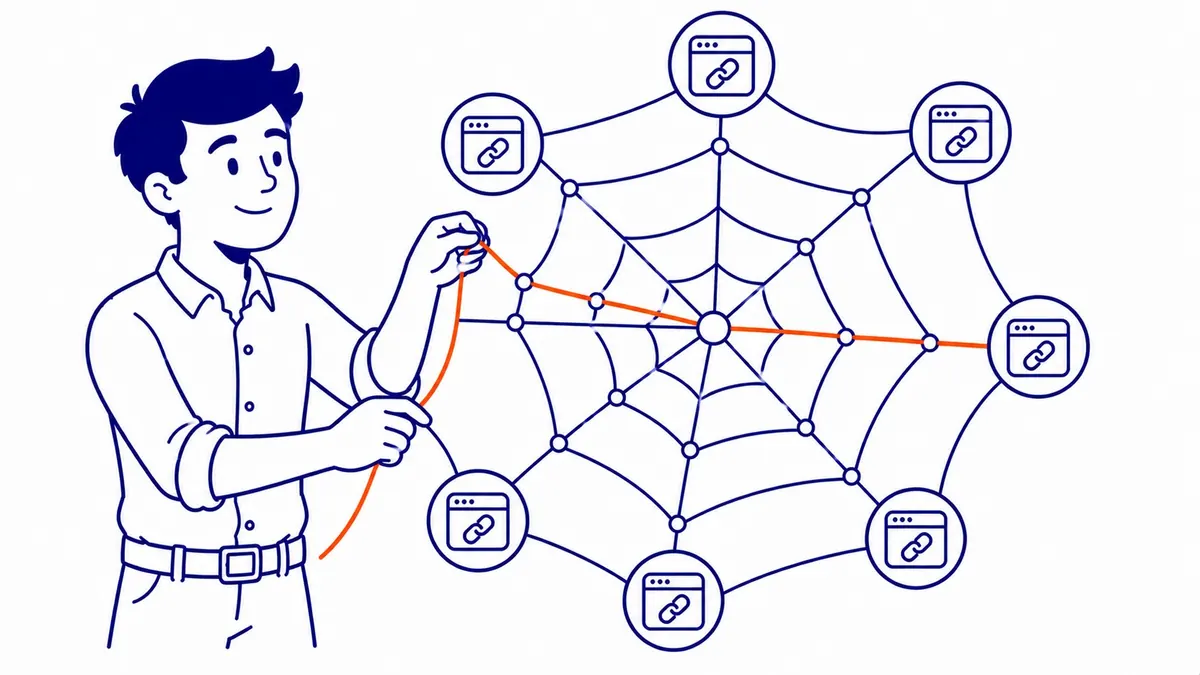
Off-page authority, measured in part by the quality and relevance of backlinks pointing to a domain, remains one of the most durable ranking signals. A page that earns strong links from relevant, authoritative sources ranks above technically equal pages that have not. Building those links is the slowest and most labour-intensive part of SEO. That is also why it creates the most durable competitive advantage.
Original research is the most reliable link magnet. A survey of 200 clients on a specific question, an analysis of industry data that produces a new data point, or a compiled statistics page drawing from authoritative primary sources: all of these attract natural inbound links because journalists and bloggers need citable data. Statistics-based pages on a narrow topic earn more backlinks over time than a well-written service page.
Broken link building is lower effort than original research and works consistently. Use Ahrefs or Semrush to find competitor pages that no longer exist but still have backlinks pointing to them. Build equivalent content and email the sites linking to the dead page with a replacement suggestion. Response rates are low, but conversion rates on responses are high, and the links earned are contextually relevant.
Local link building in particular strengthens local search visibility. Sponsorships with local events, mentions in local news coverage, profiles in local business directories, and links from industry association pages all carry local authority signal. Earning quality backlinks is the subject of its own dedicated guide covering what makes a link valuable and what disqualifies one.
Anchor text diversity matters. A backlink profile where 80% of anchors are exact-match keyword phrases looks manipulated. Natural links use varied anchor text: brand names, URLs, partial keyword phrases, generic phrases. Build links to inner pages, not only the homepage. A backlink profile concentrated entirely on one page creates authority imbalance across the domain.
The Cost of Standing Still
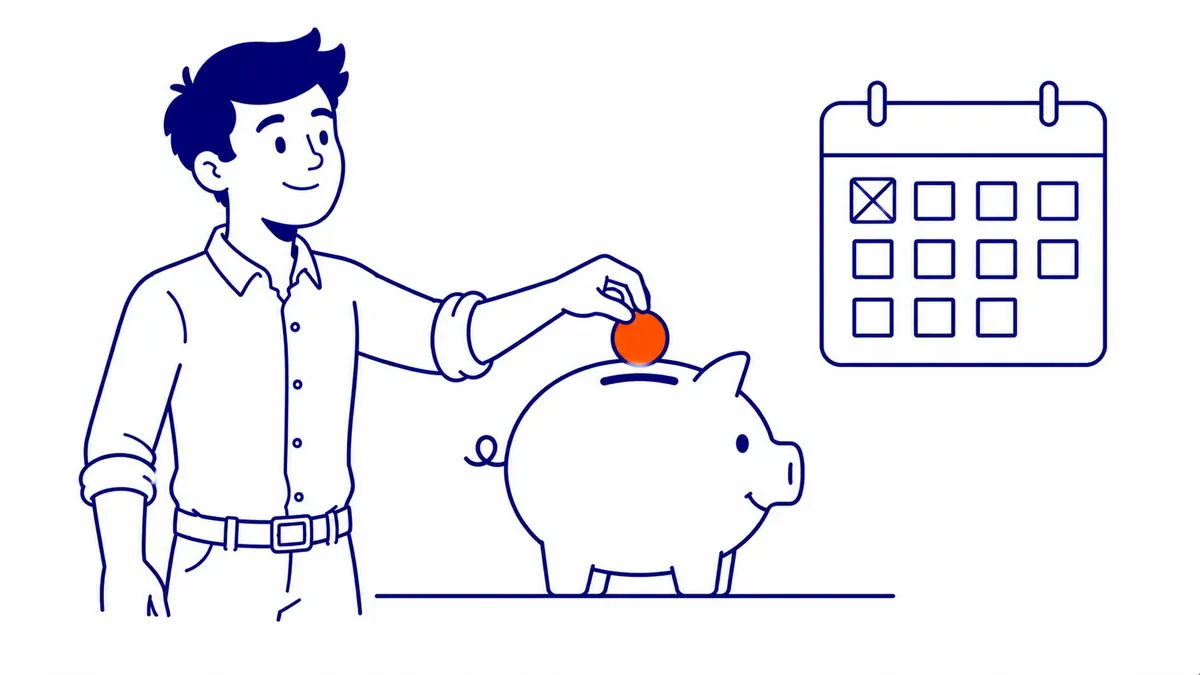
Every month a site delays SEO improvement is a month a competitor uses. That is not a rhetorical point. It is an observable pattern in markets where two or three businesses are serving the same geographic area and search intent.
The mathematics are straightforward. A competitor who earns ten high-quality links per month and makes two content improvements per month will outrank a static site within six to twelve months, regardless of where each started. Organic traffic is not like paid traffic, which stops the moment the budget does. Those gains compound. Falling behind compounds too.
On a $5,000-per-month SEO budget, a six-month delay in beginning improvement work costs roughly $30,000 in investment before any results begin. But the compounding loss is larger: whatever rankings and traffic a competitor locked in during that window become exponentially harder to displace. Page one rankings held for six months attract links and clicks and social signals. Displacing them takes two to three times the effort it would have taken to claim the position first.
The decision to improve your SEO is, in practical terms, a decision about competitive timing. Why organic visibility matters for long-term business growth covers the broader case. For implementation, To-The-TOP! is the search engine optimization company Calgary businesses turn to, and the work follows the same diagnostic and prioritization sequence outlined in this guide. See how results have accumulated across clients in the client keyword rankings portfolio.
Frequently Asked Questions
How can SEO be improved?
Start with the diagnostic before touching anything. Google Search Console and a crawl tool like Screaming Frog surface the actual problem: stalled rankings, indexation gaps, crawl errors, or pages competing with each other for the same keywords. Once the baseline is clear, prioritize technical fixes that remove ranking ceilings, then on-page improvements on the pages with the most traction, then content updates on pages close to page one. Link building runs alongside all of this, not after. SEO monitoring and support over ongoing periods is what translates one-time improvements into sustained ranking gains.
What is the 80/20 rule for SEO?
80% of SEO results come from 20% of the work. In practice: fixing technical issues that block crawling, improving title tags and headings on high-impression pages, and building a handful of high-quality backlinks produce the large majority of ranking movement. The remaining 20% of gains come from the other 80% of possible tasks, detailed schema, perfect alt tags, fine-tuned readability scores. Those matter but should not be the first focus on a site that has not fixed the fundamentals. The 80/20 rule in SEO is an argument for ruthless prioritization, not a reason to skip the other 20% indefinitely.
Is SEO dead or evolving in 2026?
Evolving substantially, not dying. AI Overviews appear above traditional results for a growing share of informational queries, reducing organic click-through rates for some keyword types. That is real. But transactional and local queries still deliver strong click-through rates, and appearing in AI-generated answers depends on the same trust signals that drive traditional rankings: authoritative content, quality backlinks, and technical credibility. Where to start with SEO covers how the fundamentals still apply even as the interface continues to change. The businesses declaring SEO dead are typically the ones who relied on volume over depth and now find their thin content underperforms in both traditional and AI-generated results.
What are the 3 C’s of SEO?
Content, crawlability, and credibility. Content means pages that fully address search intent with genuine expertise. Crawlability means a technically sound site that search engines can discover, index, and navigate without obstacles. Credibility means the external signals, backlinks, brand mentions, structured data, and author authority, that tell search engines the domain is trustworthy. Most sites that struggle with SEO are missing one of the three. Content without crawlability means well-written pages that Google never reaches. Credibility without content means a strong domain wasted on thin pages that do not satisfy queries. A site search on what SEO is and how it works covers how these three elements connect in practice.
Contact Calgary SEO Company To-The-TOP!
Questions about anything in this article, or about your own rankings? Talk to a Calgary SEO specialist directly.
Phone: (403) 308-5949
Address: 1509 14 Ave SW, Calgary, AB T3C 0W4
Hours:
Monday to Friday: 10:00 am – 7:00 pm
Saturday: 12:00 pm – 4:00 pm
Sunday: closed