Learning SEO From Scratch: A Self-Study Framework That Works
Most people learning SEO start in the wrong place. They find a “101 SEO tips” article, spend three hours reading it, and end up more confused than when they started. The tips are real enough. Sequence is the problem: without the underlying model, individual tactics do not connect into anything useful.
This is the framework worth following if you are starting from scratch. Not a course list. No glossary. A sequence that builds the right mental model before layering on technique. Nineteen years of delivering the local SEO Calgary businesses need means watching a lot of learning approaches fail. A few consistently work. Knowing why SEO is important in the first place keeps the study pointed at the right outcome.
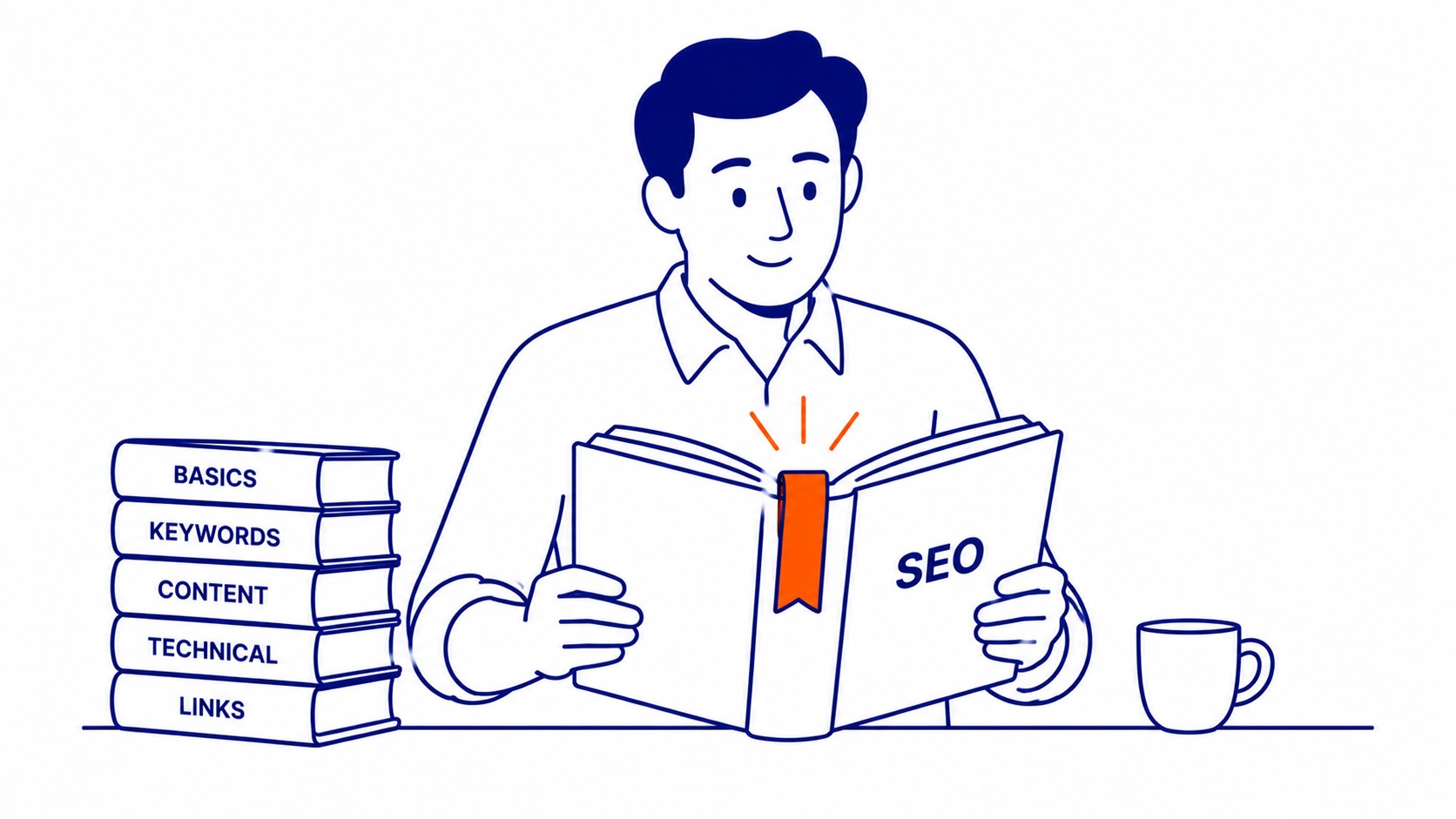
Start with the Fundamentals, Not the Tactics
SEO has one underlying goal: help Google understand what a page is about, who it is for, and why it deserves to rank. Everything else is execution of that goal. If even that is new ground, start from what SEO is.

Before touching a tool, understand three things clearly.
How search works at a basic level. Google crawls pages, indexes their content, and ranks results based on hundreds of signals. Crawling and indexing are preconditions. A page Google cannot crawl will not rank regardless of how good the content is. Most beginners skip this entirely, then wonder why their changes have no visible effect.
What search intent means. Every query has an intent: informational (learn something), navigational (find a specific site), commercial (compare options), or transactional (buy something). A page that does not match the dominant intent for its target keyword will not rank even with perfect on-page execution. Google measures this through engagement signals and adjusts rankings accordingly.
The difference between content signals and authority signals. Content signals (keywords, headings, structure) tell Google what a page is about. Authority signals (links from other sites, entity associations, site history) tell Google whether that page deserves to rank over competitors with similar content. Both matter. Neither alone is sufficient.
Get these three ideas solid before touching any tactics. They are the frame everything else fits into. Most of the confusion beginners run into comes from learning tactics without the frame: you end up with a bag of tricks and no way to decide which one to use.

The Core Areas to Study
SEO divides into four areas. Study each in order, not because you will master one before touching the next, but because each builds on the previous.
Keyword research. The foundation. Understanding SEO keywords, meaning not just what terms people search but what the volume, competition, and intent look like, shapes every decision downstream. A technically perfect page targeting the wrong keywords is still a failure. Most beginner guides underweight this area. Spend more time here than you think you need to.
On-page SEO. How to structure a page so it clearly signals topic relevance. Title tags, headings, content structure, internal linking, image alt text, URL format. None of it is complicated in isolation. The skill is applying it consistently and understanding why each element matters. Reading about on-page factors takes an afternoon. Applying them well takes months of practice on real pages. Producing the copy itself is its own craft, covered in what SEO writing is.
Technical SEO. Site speed, crawlability, indexability, structured data, mobile usability, Core Web Vitals. Most beginners avoid this longest. It requires understanding how websites work at a structural level. Worth learning early regardless. Technical problems block everything else. A slow site with crawl errors will underperform even with great content and strong links. Read through the technical side of SEO before assuming it does not apply to your site.
Link building. Earning inbound links from other sites signals authority and trust. This is the hardest area to learn through reading alone because the tactics depend entirely on industry, content type, and existing site authority. Start by understanding what makes a link valuable before studying how to get them. Some tactics cross a line, so knowing what white hat and black hat SEO means matters before you chase any.
Free Resources Worth Your Time
No shortage of free SEO content exists. Quality varies widely. These are the ones worth reading systematically:
Google Search Central documentation. Directly from the source. Not always beginner-friendly, but authoritative on every technical question. Read the fundamentals guides before anything else. Google explains how it treats content, structured data, and site quality better than any third-party summary of the same material.
Moz Beginner’s Guide to SEO. The best structured introduction available. Covers all four core areas with enough depth to build a real foundation. Free. Updated periodically. Read it cover to cover before moving to anything else.
Search Console documentation. Google Search Console is the first tool you should learn. It shows what Google actually sees on your site: crawl errors, index coverage, which queries are driving impressions and clicks. The documentation teaches you to use it properly. No other tool replaces it.
Ahrefs Blog and Backlinko. Both produce research-backed, practical content. Better for intermediate learners than beginners, but both sites have foundational articles worth reading. Filter for pieces that explain why something works, not just how to do it.
One resource most beginners miss: practitioner-written content from agencies and consultants who publish consistently. The SEO blog output from working specialists tends to carry more context than platform-level guides written for mass audiences. Not all of it is high quality, but the good stuff is usually more actionable than a general intro guide.

Tools to Practice With
Do not spend money on tools until you understand what you are trying to measure. The expensive platforms surface data faster once you know what to look for. Starting there before you have the model just produces faster confusion.
Free tools that cover the essentials for learning:
Google Search Console. Non-negotiable. Every site should have it connected from day one. Shows ranking queries, click data, crawl issues, and index coverage. Start here.
Google Analytics 4. Traffic patterns, engagement data, conversion tracking. The interface takes time to learn. Worth it.
Google PageSpeed Insights. Core Web Vitals performance by page. Free. Tells you what to fix on the technical side without requiring any paid tools.
Ahrefs Webmaster Tools (free tier). Backlink data for your own site, a basic site audit, keyword ranking overview. The free tier has limitations but covers enough for learning the fundamentals of the process.
Paid platforms (Ahrefs, Semrush, Moz Pro) become genuinely useful once you are doing competitive research at scale, the kind of work behind our keyword research service. Most beginners add them too early and end up paying for data they are not yet ready to use.
The practical loop: pick a keyword, run a site SEO audit starting with the page targeting it, make changes based on the findings, track rankings in Search Console. Repeat. Reading without applying produces knowledge that evaporates. The loop is where the learning actually compounds. A start-to-finish view of how to do SEO maps that loop onto a real site.
How Long Does It Take to Learn SEO?
To understand the fundamentals well enough to apply them: three to six months of focused self-study combined with hands-on practice on a real site.
Genuine competency takes one to two years. That is the timeline where pattern recognition develops: where you start seeing why a ranking change happened rather than just what changed, and where you can diagnose a site you have never touched before.
Proficiency is not a destination. The algorithm updates. Search behaviours shift. New technical requirements emerge. Practitioners who stay sharp treat it as ongoing education, not a course they completed.
That 80/20 pattern: keyword research, on-page structure, and technical basics account for the majority of ranking gains on most sites. Mastering every corner of SEO is not required before producing results. Get those three areas right consistently and you will outperform most of the competition in most markets. What actually improves rankings is usually less complicated than the volume of SEO content online suggests.

Self-Study vs. Working with a Specialist
Self-study makes sense if you are managing your own site, want to understand what a specialist is doing on your behalf, or are building toward an in-house SEO role. Knowledge is accessible and the free resources are good enough to get there.
The limit of self-study: it takes time you may not have, and mistakes on a live site cost rankings that can take months to recover. Getting on-page structure wrong on a competitive page is not always fixable with a quick edit.
Working with a specialist is the faster path to results. The knowledge transfer also happens if the relationship is structured well. The best of the local SEO services Calgary has to offer comes from someone who explains what they are doing and why. That produces results and a better understanding of the process, not just rankings without context.
The question is not really self-study versus specialist. It is: what do you need by when? If the site is generating revenue and visibility is urgent, a specialist produces results faster. Those with more runway and a genuine interest in building the skill internally find self-study viable. Most serious site owners eventually do both. Worth knowing that some specialists also manage paid search alongside organic, and the Google Ads data on which keywords convert is useful context for organic keyword targeting too. How the two channels fit together is the subject of what SEO and SEM marketing is.
Frequently Asked Questions
How can I teach myself SEO?
Start with Google Search Central documentation and the Moz Beginner’s Guide. Connect Google Search Console to a site you can practice on. Pick one keyword, audit the page targeting it, make changes, and track what happens over thirty to sixty days. Repeat. Reading without practice produces theoretical knowledge that does not transfer to real rankings. The audit-change-measure loop is what actually builds the skill.
Is SEO dead or evolving in 2026?
Evolving continuously. The core mechanics (relevance, authority, user experience) have not changed in fundamentals since the early 2000s. That execution layer changes constantly. AI-generated content raised the floor on quality requirements. Using these tools well is a skill in itself, which how to use AI for SEO walks through. Google’s AI Overviews shifted how some informational queries surface results. Sites that built real content and genuine authority have adapted. Those relying on technical shortcuts have not. The practitioners saying SEO is dead are usually the ones who were relying on tactics rather than fundamentals.
What is the SEO job salary in Canada?
Entry-level in-house SEO roles typically run between $45,000 and $60,000. Mid-level specialists with three to five years of experience: $65,000 to $90,000. Senior SEO managers and directors in larger markets: $90,000 to $130,000+. Agency roles tend to pay below in-house at the junior level and converge at the senior level. Freelance and consulting income varies widely based on specialization, client base, and market. Calgary and Vancouver typically pay above national averages for comparable roles.
What is the 80/20 rule of SEO?
The idea that 80% of ranking results come from 20% of the effort. In practice: solid keyword research, clear on-page structure, and a technically healthy site account for most of what moves rankings on most sites. Advanced link building strategies, schema markup beyond the basics, and entity optimization matter at competitive levels, but they are not where most sites lose rankings. Fix the fundamentals first. The margins are worth studying eventually, but not before the core is in place.
Contact SEO Company To-The-TOP! in Calgary
Questions about anything in this article, or about your own rankings? Talk to a Calgary SEO specialist directly.
Phone: (403) 308-5949
Address: 1509 14 Ave SW, Calgary, AB T3C 0W4
Hours:
Monday to Friday: 10:00 am – 7:00 pm
Saturday: 12:00 pm – 4:00 pm
Sunday: closed
