How to Use Keywords for SEO
Keywords. Every one a phrase someone typed. Get them right and Google routes traffic your way. Miss and the content sits invisible, ranking for nothing anyone actually searches.
This is the practical version.

What Are Keywords in SEO
Every search starts with a phrase. Someone types “emergency roof repair Calgary” or “best local plumber” into Google. That phrase is the keyword. Google scans its index and decides which pages match. Which ones rank is determined by how well the content covers the topic behind the phrase, not just whether it repeats the words. More on that in what SEO keywords are.

Good keyword research is about finding the phrase that person actually typed. Not the polished version your marketing team prefers, not the industry term that makes sense inside your company. The real phrase a customer uses at 9pm when the situation is urgent.
That was 2010. Phrase stuffing stopped working around 2012. Google now reads topical context and related terms. A website page about “Calgary emergency plumber” might rank for “best plumber available now” if the content is thorough. Relevance matters more than exact repetition.

How Google Uses Keywords
Two separate systems use keywords differently.
Organic search: Google crawls your content, pulls keywords, reads site structure. Rankings follow. Organic rankings are not bought. They are built through relevance and topical authority, accumulated over time. The keyword signals the topic, and depth of coverage determines the ranking.
Google Ads management works by selection instead. You build a keyword list. When a search matches something on that list, your ad is eligible to appear. The list is the switch. Nothing on it means no ad, regardless of how relevant the page might be.
Both systems punish the same mistake. Chasing broad, vague terms instead of specific ones. “Plumber” as a keyword attracts people who want to hire a plumber, people studying for their trade exam, people looking up a specific company. “Emergency plumber Calgary south 24 hour” attracts someone with a burst pipe right now. Specific keywords bring people who want what you sell.
Where to Use Keywords on Your Website
Where the keyword appears matters as much as which one you pick. Not all placements carry equal weight. Auditing where a term already sits on a page is its own quick task: how to search keywords on a web page.
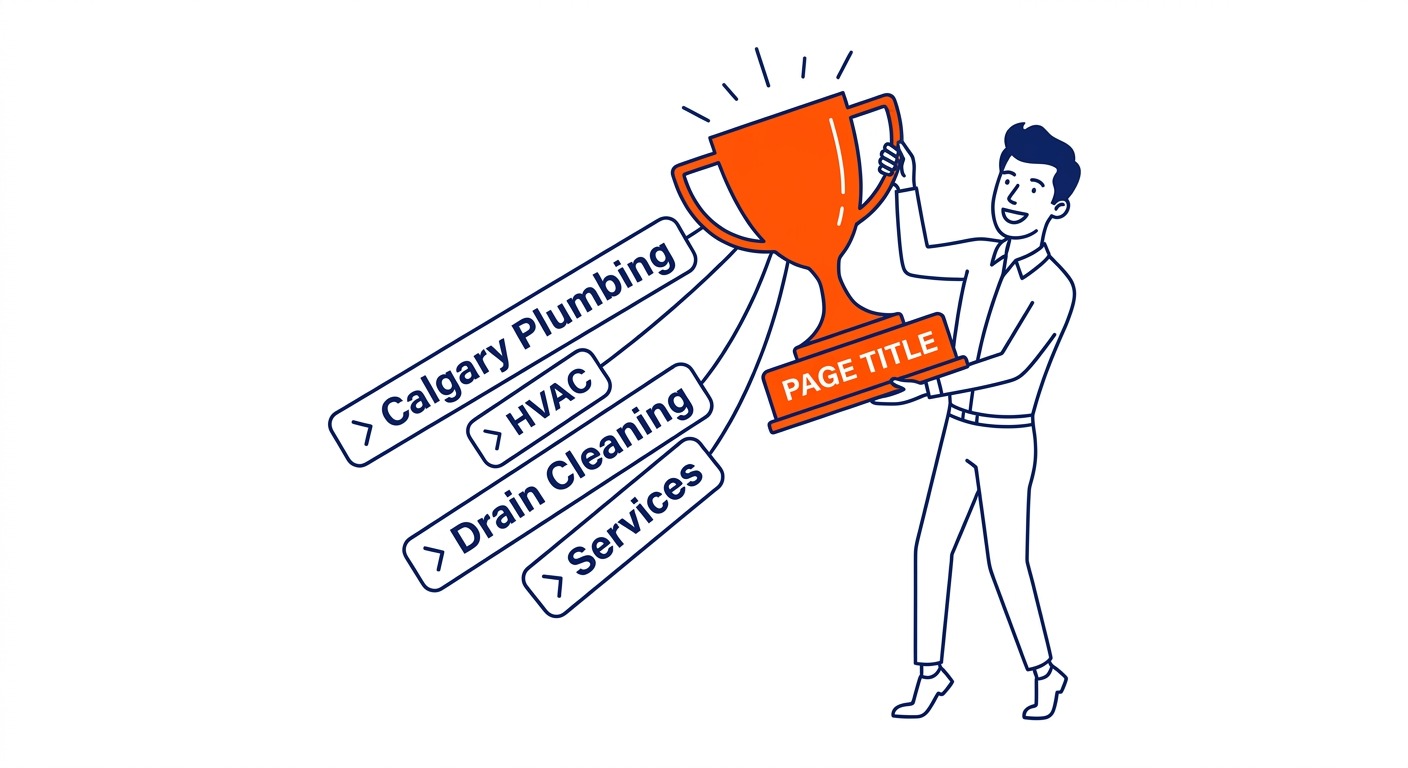
Page titles carry the most weight. The title tag is one of the first things Google reads. Whatever you want a page to rank for should appear there, early. Not after three adjectives. “Calgary Plumber: Emergency and Same-Day Service” signals the topic clearly. “Our Amazing Home Services Team” signals nothing.
URL slug is underused. Your website address is a ranking signal before Google reads a sentence. /calgary-emergency-plumber/ communicates the topic immediately. Keyword-heavy URLs with seven hyphens are overkill. One or two relevant terms, clean and readable. Most site owners ignore this and leave a valuable signal unused.
Headings carry more weight than body text. The H1 is the main page heading. Put your primary keyword in it. H2 and H3 subheadings carry secondary and related keywords. Heading structure is how search engines map the page hierarchy.
Opening paragraph: keyword before the 100-word mark. Not shoehorned. Just there. Google prioritizes the top of the page in its initial crawl.
Body text is where keyword density matters least. Roughly once per 100 words for the primary term. The rest gets filled naturally with supporting keywords and semantic phrases. If the writing sounds like it was built for a crawler, it was. Both Google and real users will notice.
Meta descriptions are not a ranking factor directly. However, including the keyword means it gets bolded in search results when someone’s query matches. Better click-through rates follow, which indirectly matters more than most people realize.
Image alt text is the most commonly neglected signal. Every image on the website should have alt text describing what it shows. Where the keyword fits naturally, include it. Screen readers and search engines both rely on this. Leaving alt text blank is a missed opportunity on every image.

How to Write Keywords for SEO
Two failure modes show up constantly.
First: stuffing. Repeating the keyword so many times the text becomes unreadable. “Calgary plumber” in every paragraph, every heading, every sentence. Google’s spam filters caught this by 2012. Readers bounce in seconds. It does not help and actively harms.
Second: writing around the keyword instead of writing about the topic. More subtle. The phrase appears throughout the content. But the page never actually helps anyone. It never explains costs, or what separates a reliable contractor from one who vanishes after the quote, or what the hiring process looks like. The keyword is there. Substance is not.
Write for the person searching. Writing about hiring a Calgary plumber? Cover what they actually need: cost ranges, same-day availability, questions to ask, red flags to watch for. The keywords appear naturally when the topic gets covered properly. Force-inserting the phrase into every paragraph produces worse results than just writing a thorough page.
One percent is the rough density rule. A 1,000-word piece: roughly 10 appearances of the primary keyword. But density is a proxy. Topical depth matters more than hitting a number. Semantic keywords, related terms, supporting phrases.
Still, the intent has to match. “How much does roof repair cost” signals a research-mode searcher who wants an actual number. A page that responds with a sales pitch instead loses them in ten seconds. Rankings reflect that.

Types of Keywords to Use
Short-tail keywords are broad terms with high search volumes. “Plumber.” “Calgary roofing.” Enormous competition. Intent is unclear. Someone searching “plumber” could be hiring, researching trades, or looking up a specific name. Ranking for broad terms takes years of authority. They are also expensive in paid search. Worth having eventually, not where to start.
Long-tail keywords are specific phrases. “Emergency roof repair Calgary northwest.” “Residential plumber same day Calgary.” Lower volume, clearer intent, easier to rank for. Cheaper per click. They convert better because the searcher already knows what they want. Most effective SEO strategies are built on long-tail terms first, then expanded. Traffic comes pre-qualified.
Branded keywords include your business name. Worth targeting to protect your own visibility from competitor ads and to ensure you appear when someone searches specifically for you.
Local keywords carry a geographic qualifier. For any business with a defined service area, local keywords are the primary target. Calgary SEO strategy almost always starts here. Competition is lower than national terms. Budget goes further. A searcher in Calgary is a potential customer. Ten thousand national searches from everywhere else are not.
Informational keywords target people in research mode. “What does roof repair cost.” These rarely convert on the first visit. However, they build familiarity over time. Worth developing for blog and content sections.
Commercial keywords are for buyers already decided. “Book SEO consultation Calgary.” Higher conversion rates, higher cost per click, tighter budgets required.

How to Use Keyword Search Tools
The tools for keyword research make the data accessible. Several are free.
Keyword Planner is inside Google Ads at no cost. Type in a product, a service, or a competitor URL. Back comes a list: keyword ideas, monthly volumes, competition levels, bid ranges. Two things most skip. Switch to Expert Mode first. Then change the location filter from national to your city. Default settings show national data, which is irrelevant for local businesses. The full walkthrough of how to use Google Keyword Planner covers every filter worth setting.
Search Console is where real traffic data lives. Under Performance, then Queries, you find every search that brought someone to your site. Sort by impressions. High impressions, low clicks: those are keywords where you appear but are not yet winning the click. Easier to improve existing ranking positions than start from zero.
Autocomplete generates keyword ideas the moment you start typing in the search bar. Each suggestion reflects real search behavior. Work through variations of your core terms. Add a city name, a question word, a modifier. Different suggestions appear at each step. These free moves are the core of how to search Google keywords.
Related searches sit at the bottom of every results page. After any search, scroll down. Eight or ten related queries appear. Often long-tail variations of what you searched and worth adding to a list.
Ahrefs and SEMrush go further. Exact volume figures, keyword difficulty scores, competitor keyword gaps that Keyword Planner won’t show. Most SEO services run both: free tools for discovery, a paid platform to validate.
FAQ
How do I use keywords for SEO?
Start with research. Find the phrases real customers type, not the ones your team prefers. Then place them where it counts: title tag, URL, H1, opening paragraph, body text, image alt text. One primary keyword per page. Supporting terms throughout. Actually covering the topic matters more than just containing the word. That gap between “contains the keyword” and “answers the search” is where most pages fail.
Do keywords still matter for Google ranking?
They do. But not like 2008, when stuffing worked. Google now reads context and intent, not just phrases. Content built around answering a question ranks for keyword variations nobody specifically targeted. Meanwhile, content that repeats a keyword forty times without saying anything useful gets penalized. Keywords signal the topic. Content delivers on it. Both have to be present.
How many keywords per page?
One primary keyword. That is the target for ranking. One keyword, one URL. Chase fifteen unrelated terms with a single page and authority splits across all of them. None rank well. Supporting terms and semantic phrases fill in around the primary naturally. A 1,000-word page hits the primary roughly 8-12 times, with related phrases through the rest. Too many targets means nothing ranks.
Short-tail vs long-tail keywords: what is the difference?
Short-tail is broad. “Plumber.” Huge search volume, enormous competition, unclear intent. Hard to rank for, expensive to bid on. Long-tail is specific. “Emergency plumber Calgary northwest 24 hour.” Lower volume. Intent is clear. Converts better because the searcher already knows what they want. Most new campaigns lead with long-tail for a reason: faster ranking, more qualified traffic, lower cost.
How do keywords work in Google Ads?
Start with a keyword list assigned to ad groups. A matching search triggers the auction. Your ad enters. Match type controls how loosely Google interprets it. Broad match reaches searches you never specified. Phrase match requires your phrase somewhere in the query. Exact match fires only on your precise keyword or a close variant. Lead with phrase or exact. Gather conversion data first. Broad match comes later, once you know which terms produce results.
