What Is Domain Authority? Moz’s Ranking Score Explained
Every new client at To-The-TOP! asks about it within the first few sessions. “What is my domain authority?” The number comes up, someone googled it, and now they want to know if 23 is good or bad. Honest answer: it depends entirely on your competitors, not on any universal chart.
Domain Authority is Moz’s proprietary score, running from 1 to 100, estimating how competitive a website is in search engine results. New sites start near 1. Well-established publications sit above 90. Most small and mid-sized businesses land somewhere between 20 and 50. The number is not a Google ranking factor. It is a benchmark tool, useful for sizing up the competition before committing budget to a keyword campaign. Those results pages have their own anatomy, and what a SERP in SEO is breaks it down. For SEO in Calgary, knowing your DA relative to local competitors is more useful than fixating on the raw number itself.

How Moz Calculates the Score
Moz built DA around backlinks, specifically the number of unique root domains linking to a site and the authority those linking domains themselves carry. A single link from a site with DA 70 moves your score more than fifty links from DA 10 sites combined.
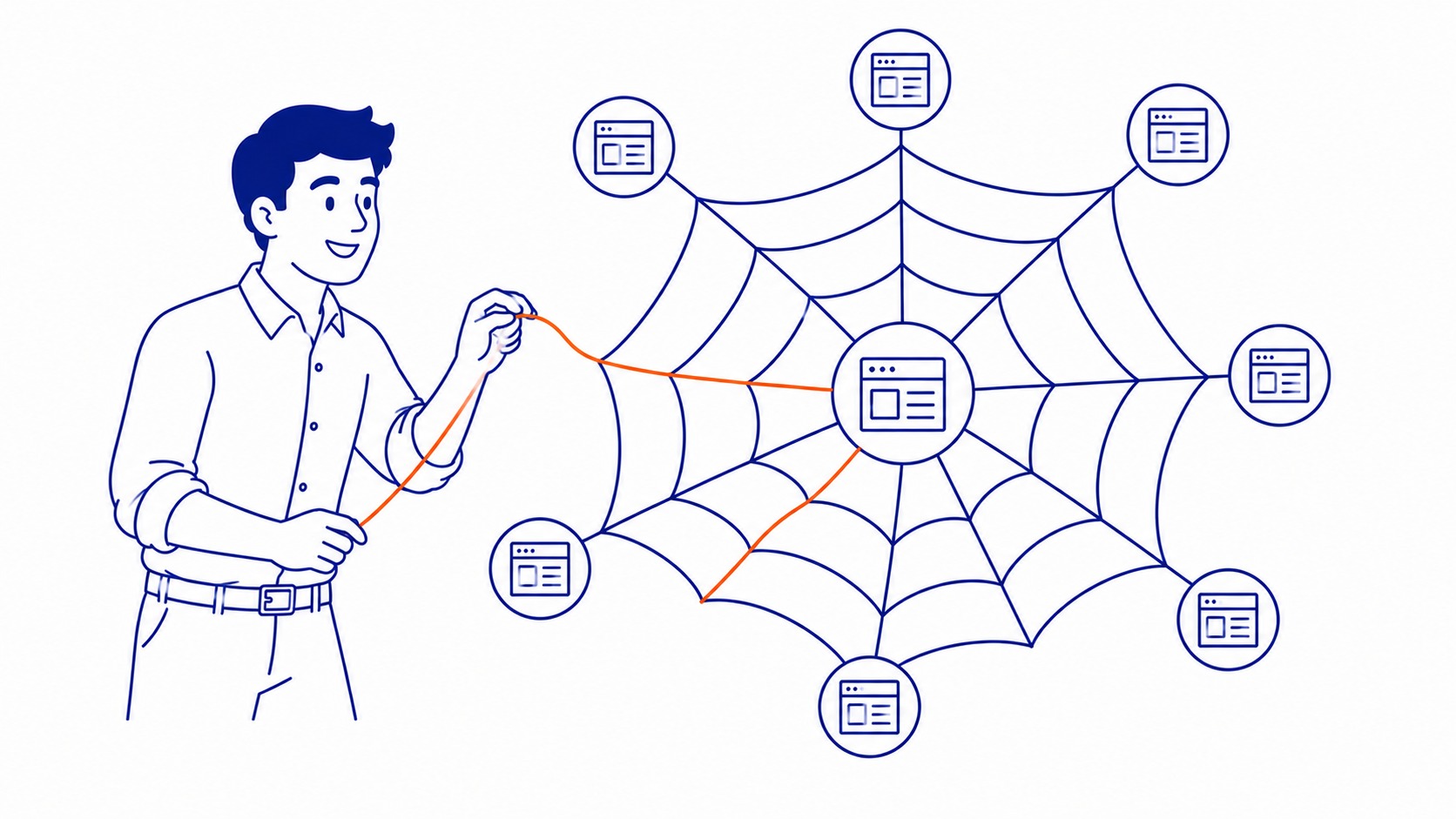
Three signals do most of the work:
- Linking root domains: How many distinct websites link to yours. One domain that links ten times counts as one root domain, not ten.
- Link quality: The DA of the linking site, its spam score, whether the link passes equity or not.
- MozRank and MozTrust: Moz’s internal measures of link equity flow and the trustworthiness of the linking network.
The algorithm updates regularly. A site can watch its DA shift without any change to its own backlinks, purely because Moz recrawled the web and the competitive landscape shifted. That variability is why DA is a relative metric, not a fixed score with a fixed meaning.
Domain Authority vs. Page Authority
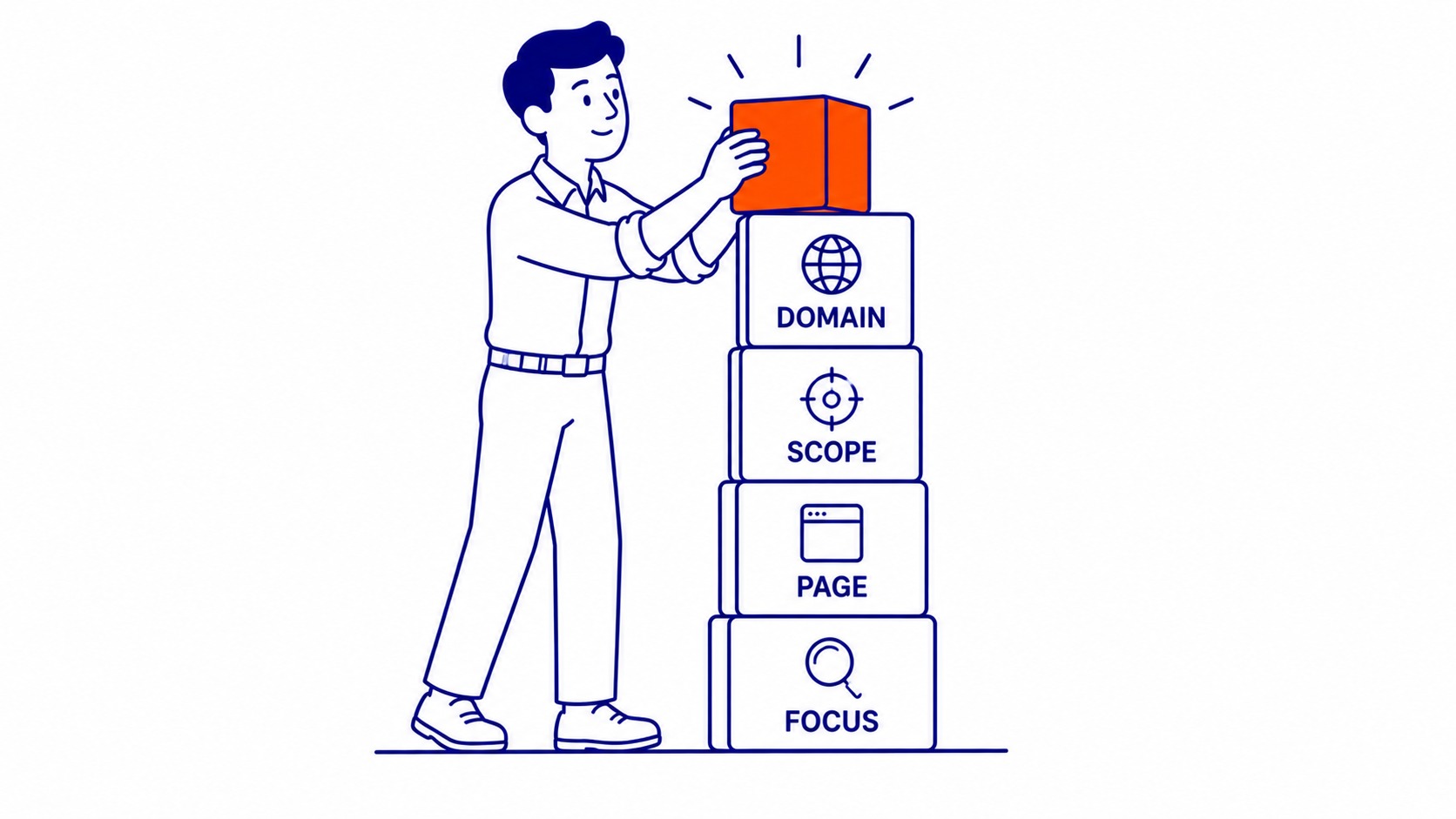
Two different metrics, two different scopes. Domain Authority predicts ranking potential for the whole domain. Page Authority predicts ranking potential for a single URL.
A website can have DA 40 with individual pages that carry PA in the 60s if those specific pages have earned strong external links on their own. Product pages and blog posts that attract links build page-level authority independent of the domain score. Both metrics live in Moz’s tools and serve different research purposes: DA for competitive domain comparisons, PA for evaluating individual page strength before targeting a keyword. Good on-page SEO builds the page signals that eventually accumulate into domain-level authority over time.

What Is a Good Domain Authority Score?
Competitive context is everything. DA 30 is respectable for a local service business competing against other local service businesses with similar histories. That same score means almost nothing against DA 70+ national publications fighting for the same keyword.
Rough benchmarks, for orientation:
- 1 to 10: New site, minimal backlinks, no established history
- 11 to 30: Small business, some directory listings, a few earned mentions
- 31 to 50: Established business, active backlink profile, content with some traction
- 51 to 70: Strong regional or niche authority, active content and link programs
- 70+: National publications, major brands, news outlets
The number that matters most is whether your DA is competitive against the sites ranking for your target keywords. Pull the DA of the top five organic results for your core keyword. If they sit at 35-45 and your site is at 38, the backlink gap is not the primary obstacle. Competitors sitting at 65 while your site is at 22 calls for a keyword strategy shift and a longer link-building timeline. A proper SEO audit maps that competitive gap and flags where the effort should go.
Domain Authority Is Not a Google Ranking Factor
Worth stating directly, because the confusion runs deep. Google builds its ranking signals from its own index. Domain Authority is Moz’s metric, calculated from Moz’s crawler data. The two systems do not share data.
High DA and strong Google rankings correlate because both are downstream effects of the same input: a site with many high-quality backlinks tends to rank well and also scores high in DA. Correlation does not make DA a ranking input. Google does not consult Moz’s database when deciding where a site lands.
Agencies selling “DA improvement services” as a direct path to better rankings are selling that correlation as causation. What actually moves rankings is earning links that Google respects, improving the technical SEO health of the site, and building content depth on the topics the site wants to rank for. DA follows that work. It does not lead it. The full picture of how to improve SEO covers organic signals that matter in Google’s index, not just third-party score metrics.
Key Factors Behind the Score
Backlink volume and quality: The primary driver. More unique linking root domains, from sites with strong link profiles of their own, push DA up. Thin directories and unrelated links contribute very little movement.
Spam score: Moz tracks a spam signal alongside DA. Sites with high spam scores pointing at yours can drag the domain score down. A periodic site audit finds and removes or disavows the worst of these before they do long-term damage.
Technical health: Crawlability, clean canonicalisation, structured site architecture. A site Google can’t fully crawl struggles to convert link equity into ranking signals, and that stagnation shows up in DA over time.
Internal linking structure: Link equity flows through internal links. Pages buried deep in the site with no internal links pointing to them sit cut off from the domain’s overall equity. Addressing those gaps is part of the website promotion work that builds lasting authority.
Content depth: Content that earns natural citations from other sites builds DA indirectly. Pages that answer questions more completely than anything else ranking for that query earn links over months. Shallow content does not.

Building a Stronger Domain Profile
Backlink profile first. That is where to spend effort if DA improvement is the stated goal.

Earn editorial links. Publish research, data, or expert commentary that practitioners in your industry cite. One link from a genuinely respected publication moves DA more than fifty directory submissions.
Get cited in relevant directories and publications. Industry associations, local chambers, vertical directories with editorial standards. These carry more link equity than mass-submission directories. Link building through citations and editorial placements is part of the SEO services work that supports both rankings and DA.
Guest post on authoritative relevant sites. Link equity from a DA 50+ industry blog counts. A guest post on a DA 12 link farm contributes almost nothing and may actively introduce spam score risk.
Audit and disavow toxic links. Moz’s spam score flags backlinks that actively harm DA. Identifying those links and removing or disavowing them stops the drag before it compounds. To-The-TOP!’s portfolio of ranked keywords reflects years of this ongoing link profile maintenance for Calgary-area clients.
Fix internal link depth. Pages several clicks from the home page receive almost no internal equity. Restructuring navigation and editorial cross-links brings those pages back into the equity flow. The cumulative effect shows in both page-level PA scores and overall domain movement within six to twelve months.
Building domain authority for a local business takes time. Twelve to eighteen months of consistent backlink activity before the score moves materially in a competitive vertical. Anyone selling faster results is selling something that will not hold when Moz’s next index update recalculates the field.
Frequently Asked Questions
What is a Domain Authority score, exactly?
Moz’s proprietary score, 1 to 100, estimating the ranking potential of an entire domain. Higher scores indicate stronger ability to compete for high-volume keywords in search results. Calculated from Moz’s backlink index, it updates as Moz recrawls the web. Not a Google metric, not a direct ranking input, but a useful competitive benchmark when used correctly.
Is a Domain Authority of 30 good?
For a local business competing against other local businesses, 30 is workable. The real test is whether 30 is competitive for the specific keywords on the target list. If the top-ranking competitors sit at 25-35, then 30 places the site in the competitive range. Target-keyword winners sitting at DA 55+ call for a longer link-building runway before those terms become realistic targets.
What is an example of a Domain Authority?
A local Calgary service business with a few years of history, some directory listings, and an active content program typically sits around DA 25-35. Regional news outlets sit around DA 50-65. Major publications sit at DA 85+. Each number is meaningful only within the competitive tier it occupies, not against an absolute standard.
How do I find out my Domain Authority?
Moz’s free Link Explorer shows DA and PA for any URL (available at moz.com). Ahrefs and Semrush offer comparable metrics under different names: Domain Rating and Authority Score respectively. All three pull from different backlink indices, so scores vary slightly between tools. To-The-TOP!’s ongoing SEO reporting tracks DA alongside full backlink profile growth so clients see competitive movement, not just a static number from a single check.
