How Many Times Should You Audit Your Site for SEO?
The question comes up in almost every new client call: how often should you run an SEO audit on your site? Most SEO blog posts land on “quarterly” and move on. Still, that answer is not wrong exactly. It skips the variables that push audit frequency up or down for any specific business.
To-The-TOP! has been the SEO company Calgary businesses have relied on since 2007, running Calgary SEO campaigns across industries, from low-competition local services to high-traffic product catalogues. Audit frequency varies by site, however. Getting it wrong in either direction has costs.
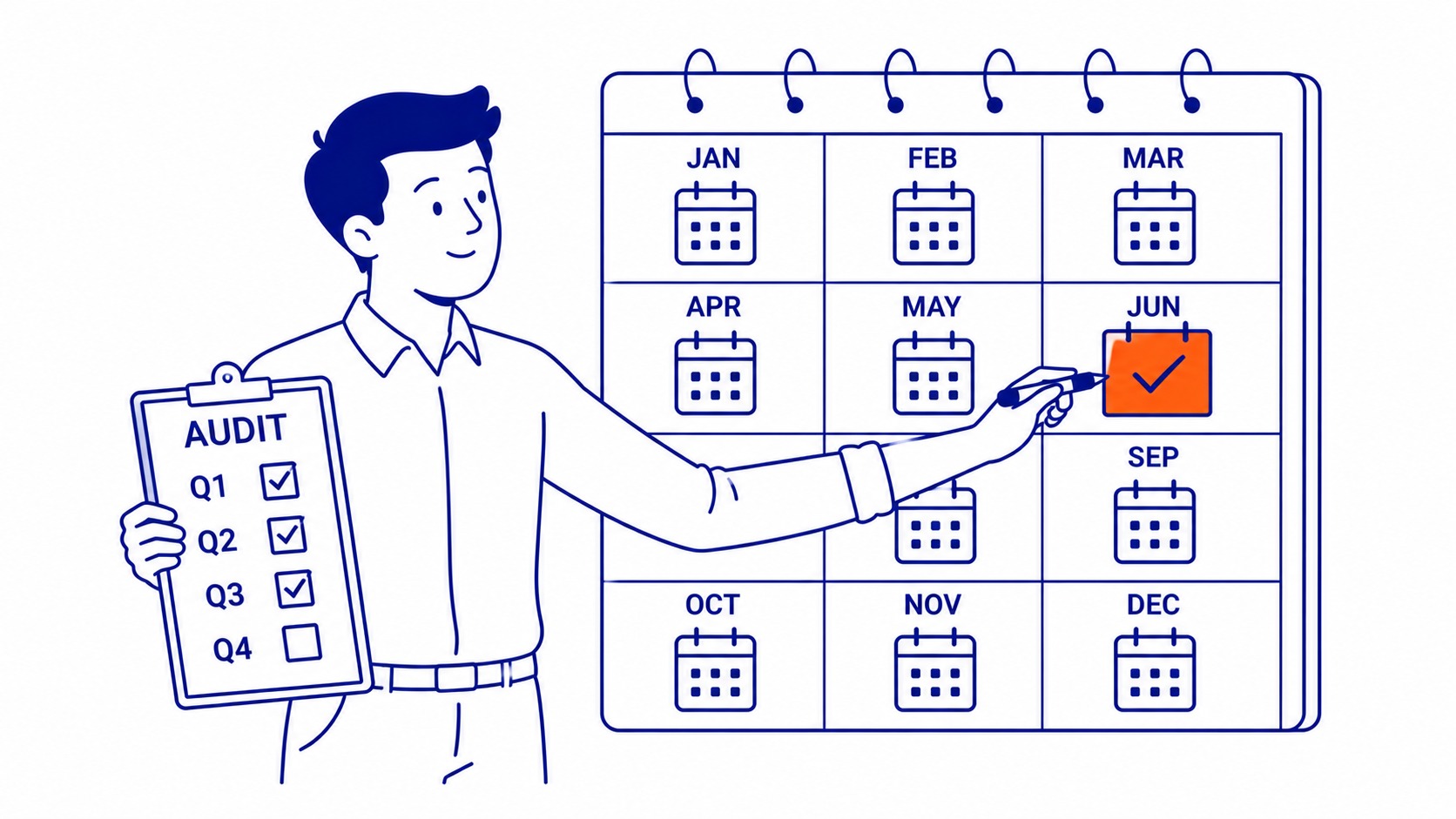
No Single Number Fits Every Site
“Quarterly” is a reasonable default. That is about it. Change volume and competitive pressure are the real drivers, and they vary enormously between sites.
A 15-page brochure site in a low-competition niche needs a different cadence than a 400-page product catalogue competing against national retailers. The brochure site manages well with a solid annual audit and lighter quarterly checks. Catalogue sites need more frequent attention, though, particularly on technical issues that scale with page count and site size.
Finance, legal, health, and e-commerce: sharper algorithm scrutiny across all four. Google algorithm updates also hit those categories harder and more often. Monthly SEO audits are not an excess for sites in those verticals. They are a sensible response to a higher-risk environment.
Annual Audits: The Bare Minimum
Once a year is the floor, not the goal. Twelve months is long enough for indexing problems to compound, broken links to accumulate, and meta tags to go stale without anyone flagging it. An annual SEO website audit still beats no audit at all. A surprising number of Calgary businesses I speak with have never run a thorough one.
Use it as a baseline reset. A full technical crawl. Content performance review against what is actually ranking. A backlink profile check. What comes out of the annual audit shapes the priority list for every lighter check that follows.
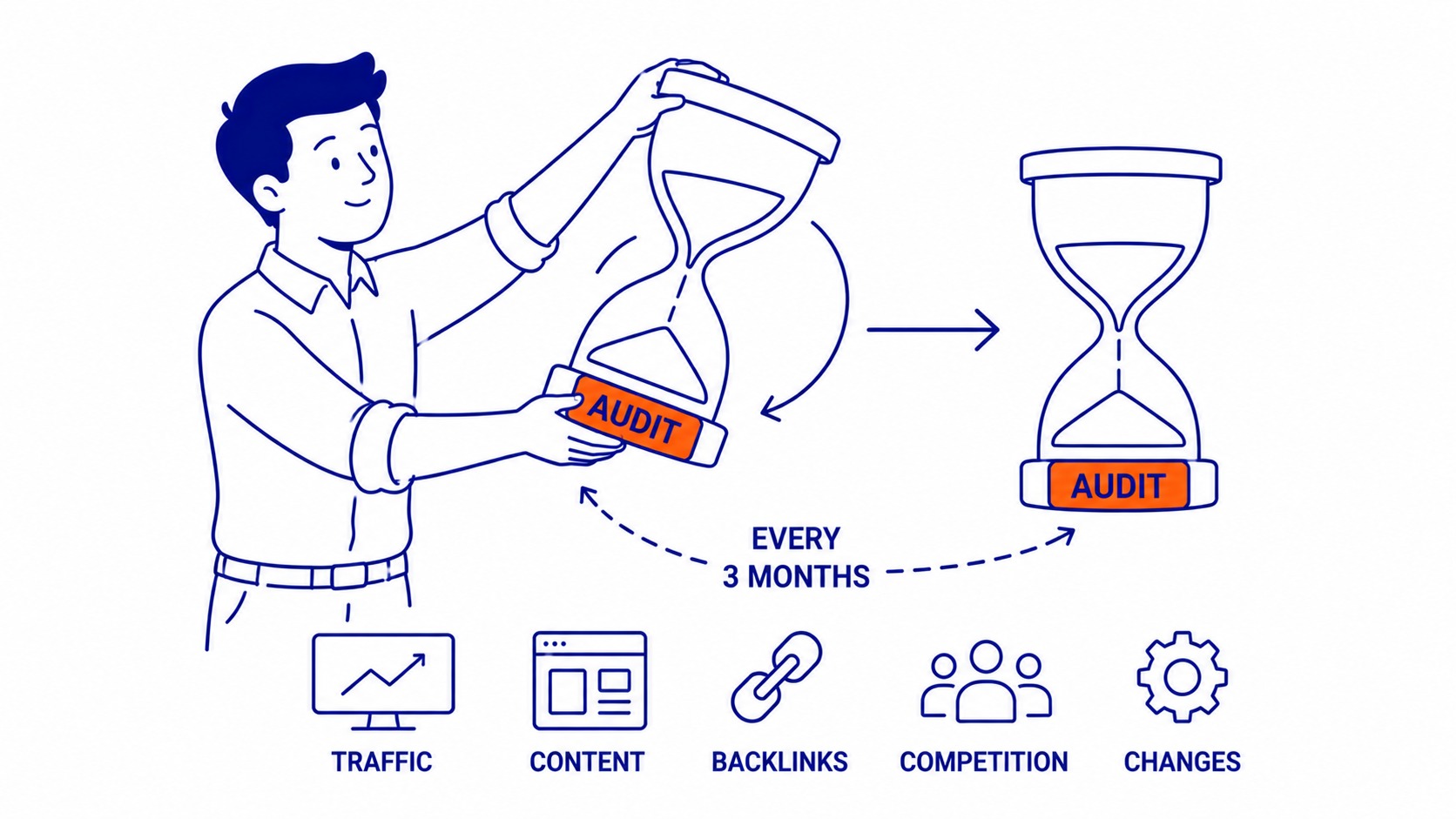
Quarterly SEO Audits: Where Most Businesses Land
Four audits a year is where most sites stay ahead of slow drift. Google Search Console data refreshes monthly, so catching issues on a quarterly cycle is usually fast enough to prevent compounding damage to rankings.
Regular audits at that cadence give the team something concrete to act on without constant interruption. Four times a year: review technical issues, check ranking movement, spot content gaps before competitors fill them, flag anything before the next cycle.
Think of it as a site health check. Maintenance that keeps small problems from becoming a rescue project.
Monthly Checks for Competitive Industries
Competitive verticals move faster than a quarterly cycle can track. Legal, finance, real estate, health: these industries see high algorithm sensitivity and aggressive competitor content production. A core page dropping 20 positions and sitting undetected for three months is, however, an expensive oversight.
Monthly checks do not need to be full audits, however. A focused technical crawl and a ranking report usually covers it. Instead, reserve the deep content review and backlink analysis for quarterly. The Google Ads management Calgary businesses run alongside organic is worth reviewing on that same monthly schedule, since paid campaigns often surface the same keyword performance signals.
Unscheduled Audits: When to Drop Everything and Run One
Scheduled audits handle slow drift. The unscheduled audit catches the sudden break.
After a Google Algorithm Update
Major algorithm updates cause ranking shifts within days. If organic traffic drops after a confirmed update, run an immediate SEO audit. Google Search Console also shows which pages lost impressions first. That is the diagnostic starting point. Do not wait for the quarterly window.
After a Redesign or Major Technical Change
Site redesigns break things. Redirect chains from old URLs, missing canonical tags, duplicate content from new URL structures, crawl errors from navigation changes: any one of them can suppress search rankings fast. A technical SEO audit run immediately after launch catches those issues before they compound. Discovering them two months later means two months of lost organic traffic from your site.
Other triggers worth acting on: sudden unexplained traffic drops, a competitor content push on your highest-value pages, new service sections going live, or significant developer changes pushed to your site.
What a Full SEO Audit Covers
Technical Checks
Crawlability. Indexation. Page speed. Core Web Vitals. Site speed. Mobile performance. Structured data. Redirect chains. Canonical tags. Crawl errors. Internal link structure. A full technical SEO audit works through every one and ranks findings by impact on your site. The full scope of what technical SEO covers shapes which signals appear in every audit’s checklist.
Core Web Vitals get flagged separately because Google treats them as direct user experience signals. Slow pages lose rankings even with strong content. Google Search Console surfaces both site speed and Core Web Vitals, for free, and should be the first tool opened in any audit.
On-Page and Content
Title tags. Meta descriptions. Heading structure. Duplicate content. Content gaps against target keywords. Outdated pages that once ranked and now sit idle. On-page signals are where audits most often surface the fastest, lowest-effort wins.
Backlinks also sit here. Checking link quality, broken links pointing inward, and anchor text distribution feeds directly into what link-building work makes sense next, so take the same pass at SEO keyword analysis for the terms those links are meant to lift. Screaming Frog handles the technical crawl reliably; Ahrefs or SEMrush covers backlinks and organic traffic analysis. Tooling is the easy part, and the case for an SEO audit rests on what you do with the findings.

Tools Worth Having in Your Audit Stack
Google Search Console is free, should already be connected to your website, and surfaces crawl errors, manual actions, and impressions data. Still, no audit skips it.
Screaming Frog for technical depth. Ahrefs or SEMrush for backlink analysis and traffic tracking. Those three cover most of what a standard audit needs. Moz is a reasonable addition if it is already in the toolkit. The tool matters less than the consistency of checking the same signals at each audit interval. That consistency is what reveals change over time rather than just a point-in-time snapshot of your website.
A full walkthrough of how to do an SEO audit covers each step in depth, from the initial crawl setup through prioritising findings by ranking impact. SEO audit pricing varies enough that it deserves its own look before you commit.
What Skipping Audits Actually Costs
Sites that go 18 months without a check tend to arrive with compound problems. Broken links nobody caught. Redirect chains three hops deep from a redesign nobody documented. A crawl error blocking an entire product category. Duplicate content from a staging environment still sitting indexed.
Any one of those issues drags organic traffic down. Together, they make it nearly impossible to identify which fix actually moves rankings. The owner usually notices when a competitor appears above them on searches they used to own. No clear diagnostic signal. The graph just declines.
Still, regular audits convert compounding issues into a prioritised action list. Skip them long enough, and the next audit becomes a rescue project.
Businesses in Drumheller, Duncan, Edmonton, and Edson treat quarterly or annual audits as the baseline for any serious organic search effort, regardless of site size.
Frequently Asked Questions
How often should you do an SEO audit?
For most businesses, quarterly is the working standard. Competitive industries, including legal, finance, health, and e-commerce, warrant monthly checks on technical health and ranking data. Annual is the bare minimum. The right frequency depends on your site’s size, how actively your website changes, and how competitive your industry is.
What is the 80/20 rule in SEO?
Roughly 20% of pages drive 80% of traffic and conversions. Focus audit attention on those high-value pages first. Fixing one important page typically delivers more ranking movement than fixing ten low-traffic ones.
Is SEO dead or evolving in 2026?
Evolving. AI tools are changing how people search, but ranking signals still drive the citations that AI-generated results pull from. Technical health and content depth matter more now, not less. Regular audits keep both in shape.
What are the 3 C’s of SEO?
Different practitioners use different frameworks, though. A common version: Crawlability, Content, and Citations (links). An SEO audit should cover all three. Can search engines index your pages? Is your content worth ranking? What does your backlink profile say about the authority you are claiming?
Contact Calgary SEO Company To-The-TOP!
Questions about anything in this article, or about your own rankings? Talk to a Calgary SEO specialist directly.
Phone: (403) 308-5949
Address: 1509 14 Ave SW, Calgary, AB T3C 0W4
Hours:
Monday to Friday: 10:00 am – 7:00 pm
Saturday: 12:00 pm – 4:00 pm
Sunday: closed
