Does Video Help SEO?
Short answer: yes. The longer answer has conditions worth understanding before you start planning videos around the idea.
To-The-TOP! started getting this question regularly around 2018, when videos began appearing in Google search results as rich snippets more often. Clients doing walkthrough tours, product demos, or even simple talking-head introductions were showing up on page one twice: once as an organic text result and again as a video thumbnail in the SERP. That double visibility is real. It does not happen automatically, though.
Video SEO and the search engine optimization in Calgary that businesses already invest in are not the same discipline. One without the other misses most of the opportunity. Understanding how search engines actually read video is the starting point.
The businesses getting the most from their videos are not the ones producing the most of them. They treat each video the way they would treat a landing page: keyword-targeted titles, detailed descriptions, captions, transcripts, and schema markup. That discipline, applied to your content from the first upload, is where the SEO value lives.
This post covers how search engines process video content, what YouTube’s role is in the bigger SEO picture, and which steps actually move the needle.
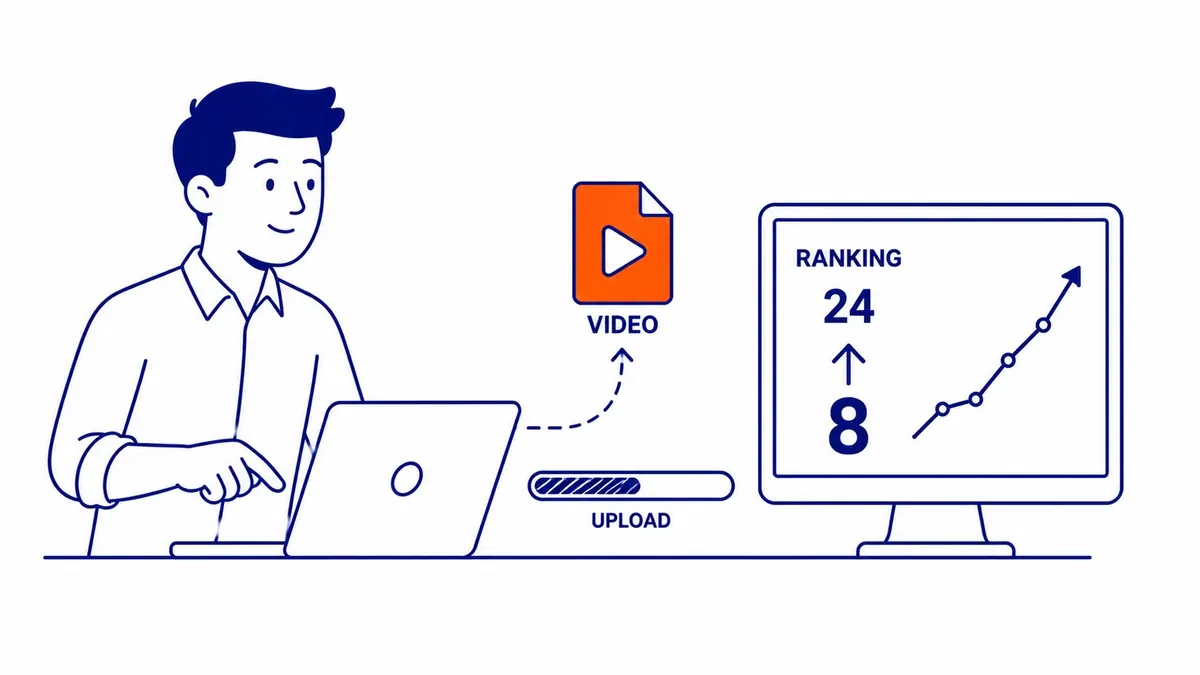
How Search Engines Read Video Content
What Google can index and what it misses
Google cannot watch a video the way a person can. Audio, facial expressions, the walkthrough content itself, none of that gets indexed directly. What search engines read: the video title, the description, captions or a transcript if one exists, and the schema markup on the hosting page.
Your video could be the most useful piece of content you have ever produced. Without a title that reflects actual search queries, a description that explains what the video covers, and closed captions uploaded to YouTube, search engines have almost nothing to work with. A VideoObject schema on the embedding page adds another layer that most competitors skip entirely.
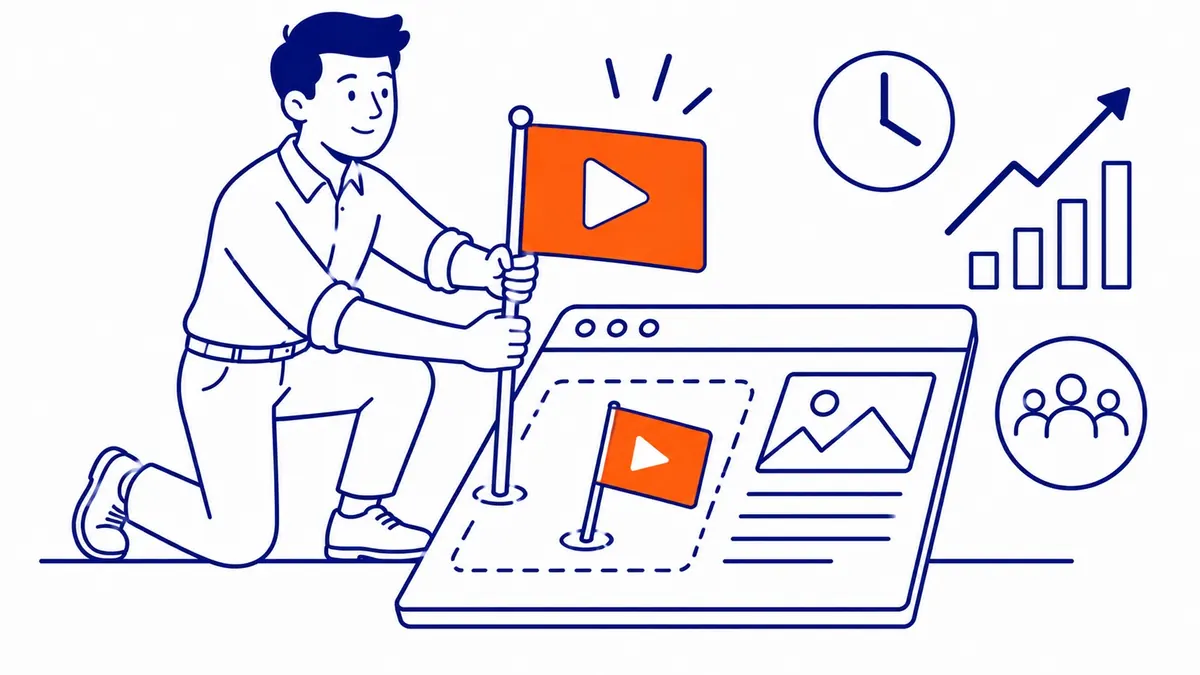
Embedding on your site vs. leaving it on YouTube
Hosting your videos on YouTube and embedding them on your website produces a different outcome than self-hosting. YouTube benefits first. Watch time, view count, and ranking authority all build on the YouTube platform. Your site benefits indirectly: better engagement signals and potentially a rich snippet in Google results. Self-hosting gives your site more direct search ranking control but loses the YouTube channel entirely. Most businesses doing video SEO start with YouTube and embed. The same question comes up around social signals and search rankings, where the link is looser than people expect.
YouTube as a Search Channel
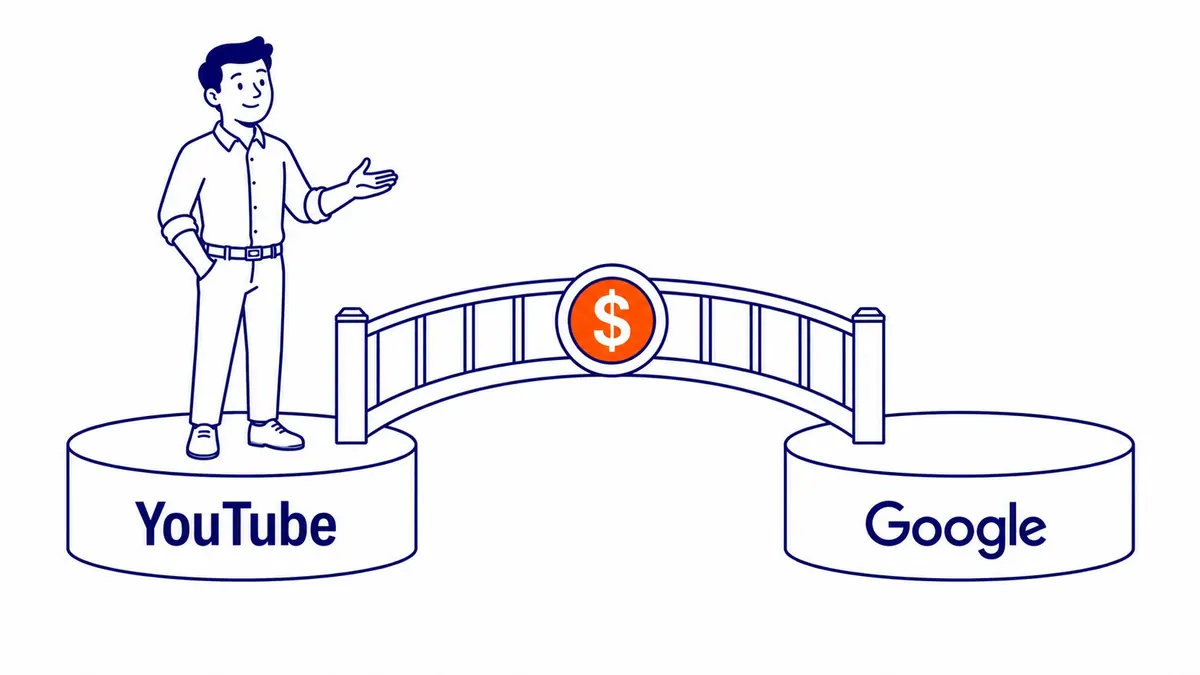
Second-largest search engine, and Google owns it
YouTube processes more than 3 billion searches per month. Second-largest search engine in the world, and Google owns it. Search results pull YouTube videos into carousels prominently. A properly optimized YouTube video competes in both places: YouTube’s own results and Google’s video section.
Picking keywords for YouTube follows the same logic as picking them for a web page, so it pays to have your keywords researched once and use them across both. People type questions into YouTube’s search bar the same way they type into Google. Titles and descriptions that match those queries earn impressions. Watch time determines ranking once someone clicks.
Videos that tend to rank: tutorials, how-to guides, product comparisons, and local service explainers. A business explaining a complex service in a clear walkthrough often reaches a search audience on YouTube that the same text page on your website never does. Your YouTube channel also becomes a second discovery surface. People who find your videos through search often visit your website later, once they have decided they trust what they are seeing.
The full breakdown of what YouTube SEO is covers the ranking signals that separate channels showing up on the first page from those that never get indexed.
On the paid side, the budget you hand a Google Ads management company also buys video placements across YouTube and the display network. Separate from organic video optimization, but part of the same ecosystem. Data from paid video campaigns often points toward better topics for your content calendar. Those topics still need checking against what doing keyword research for YouTube involves.
Dwell Time, Bounce Rate, and Visitor Signals
How visitor behaviour affects your rankings
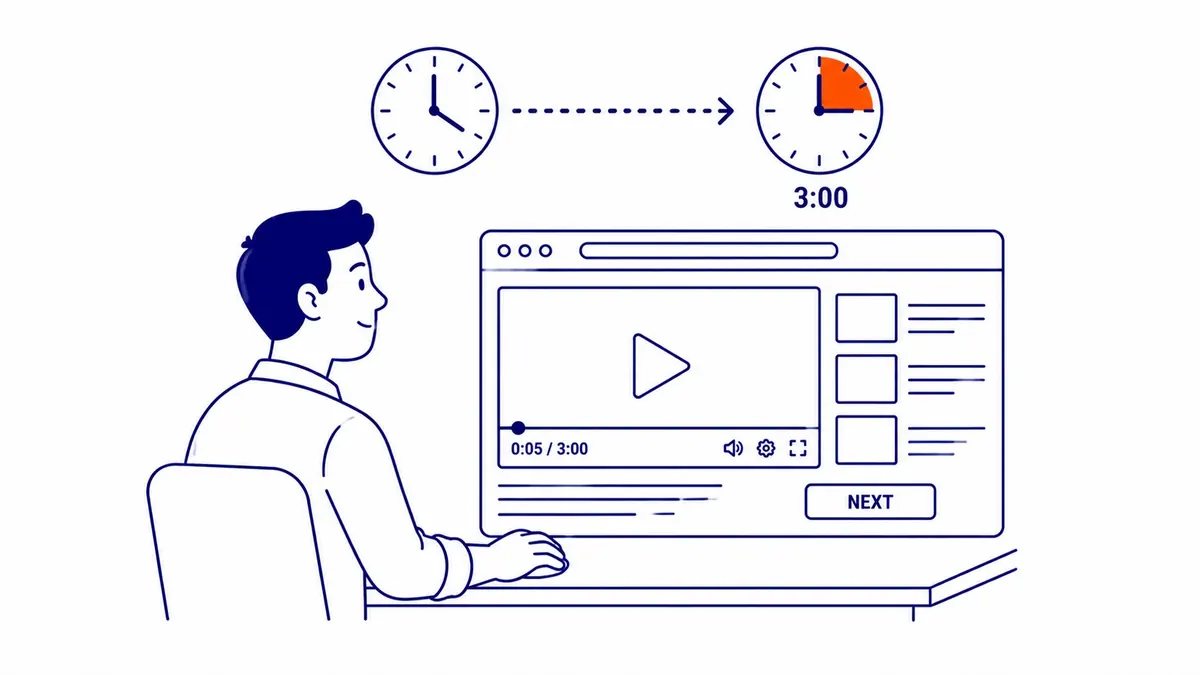
A visitor who lands on a page, watches a three-minute video, then clicks to another section of your site sends a different engagement signal than one who bounces after fifteen seconds. Google does not confirm dwell time as a direct ranking factor. The behaviour it correlates with: longer sessions, lower bounce rates. That pattern shows up consistently in the data To-The-TOP! collects during an SEO web audit.
Pages with embedded video tend to perform better on those metrics. Not because of the video itself, but because visitors who find what they were looking for stay. A product demo that shows how something actually works holds people on the page longer than a paragraph of text doing the same job.
Worth noting: a slow-loading video player or one that auto-plays with sound pushes users away faster than a text page would. Your video has to load quickly. Video is one of the factors we check in any site audit alongside page speed, mobile performance, and internal linking.
Captions, Transcripts, and Video Metadata
Where the keywords in your video actually live
Search engines cannot parse audio. Captions and transcripts are how the words spoken in your video become indexable text. A five-minute walkthrough where you describe your services a dozen times, without a transcript on the page, those mentions contribute nothing to keyword density.
Add a full transcript to the page where your video lives. Upload closed captions to YouTube. Both give search engines the keyword-rich content they need to understand what your videos cover and why they are relevant to specific queries. When search engines can fully index your content, the page earns more topical authority.
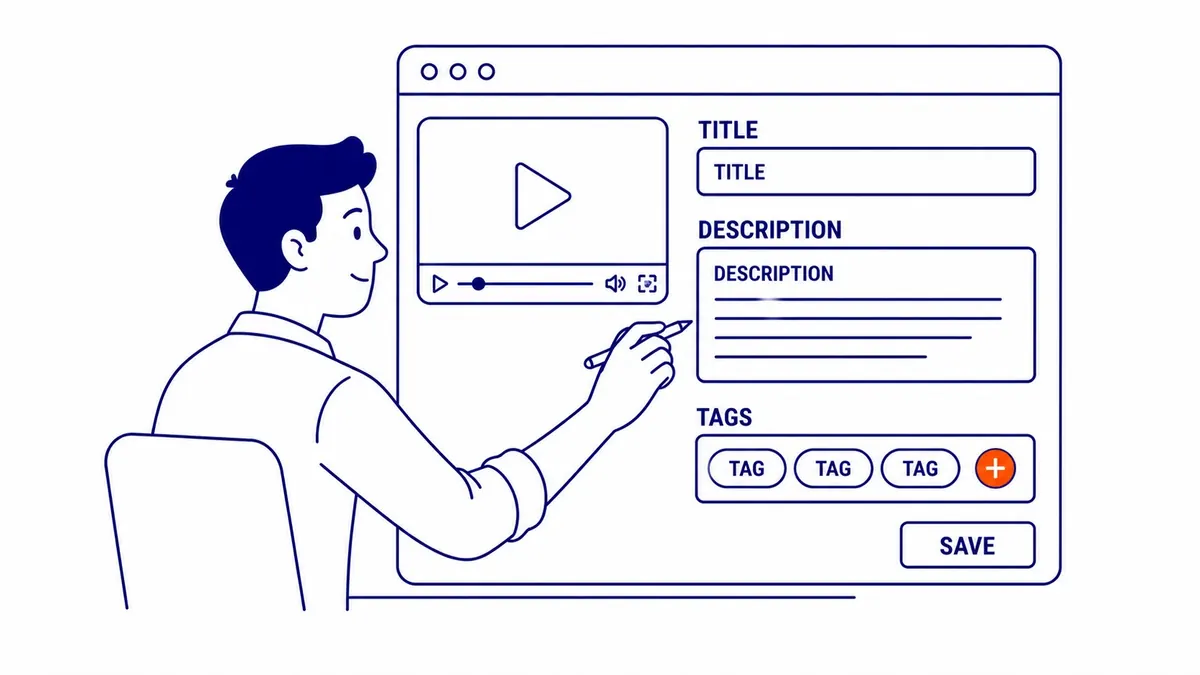
Video metadata: title, description, tags, thumbnail alt text. Treat your video metadata the way you would treat a page title and meta description for any organic result. Relevant keywords in the title. A detailed description. Tags that reflect actual search queries, not just broad topic labels.
The same logic applies to your text pages. The guide to on-page SEO elements and factors breaks down exactly where keywords need to live to influence rankings across both written and multimedia content.
Video Content and Backlinks
Why videos earn links that text pages often don’t
Video content earns backlinks for one straightforward reason: people share videos. A well-made explainer, a data-driven summary, a tutorial that solves a real problem, these attract links from blogs, resource pages, and industry sites more readily than a text article covering the same ground.
Those backlinks matter for domain authority. More referring domains from relevant sites pointing at your website builds the foundation that helps all your pages rank better over time. A single video that earns links from a few quality sites can have an outsized effect on your whole profile, right down to competitive local searches like SEO services near me.
That said, low-effort videos with no optimization earn nothing. Your content has to answer a question people actually search for, and your video has to demonstrate something genuinely useful. Filler content in video format performs the same as filler content in text format. The medium does not do the work on its own.

Businesses in Coaldale, Cochrane, Cold Lake, and Colwood use video content to compete in local search results where text alone is not enough. Ranking the video itself is a separate job, one we cover in video SEO explained.
FAQ
Is video content good for SEO?
With the right setup. Optimized videos, meaning proper titles, descriptions, closed captions, and a transcript on the page, contribute to keyword coverage, engagement signals, and backlink potential. Unoptimized videos contribute almost nothing. Search engines still read text first. Video content extends your content foundation; it does not replace it.
Is SEO dead or evolving in 2026?
Evolving. Results pages now pull from AI overviews, video carousels, map packs, and organic listings. Pages and videos earning those placements still depend on the same signals: authority, relevance, and technical quality. The SEO company Calgary businesses have trusted since 2007 has watched the ranking mechanics shift several times. The underlying logic has not changed.
What is the 80/20 rule for SEO?
Roughly 80 percent of search traffic comes from 20 percent of your keywords. A handful of well-targeted, well-optimized pages drive most of your organic visibility. The same principle applies to your videos: a small number of highly relevant, properly optimized videos outperform a large volume of loosely related uploads. Focus matters more than volume.
What is the YouTube 7 second rule?
The first seven seconds determine whether a viewer stays or leaves. YouTube weights watch time heavily in its ranking signals. A video that loses most viewers immediately will rank poorly regardless of how well the title and description are optimized. Those first seconds need to answer the searcher’s question, or signal clearly that the answer is coming.
Contact Calgary SEO Company To-The-TOP!
Questions about anything in this article, or about your own rankings? Talk to a Calgary SEO specialist directly.
Phone: (403) 308-5949
Address: 1509 14 Ave SW, Calgary, AB T3C 0W4
Hours:
Monday to Friday: 10:00 am – 7:00 pm
Saturday: 12:00 pm – 4:00 pm
Sunday: closed
