Why Invest in SEO?
First client who pushed back on investing in SEO ran a home services company in southeast Calgary. Good operator. Solid reviews. Their competitor, a newer business with a smaller crew, ranked above them for every search that mattered in the city. That competitor was not better at the work. They were just easier to find.
Fourteen months of SEO work reversed that gap. Not overnight. Consistently, and in the right direction.
To-The-TOP! has been doing this since 2007. The question of whether to invest in SEO comes up in almost every first call. This post covers the straight answer, because your business deserves the straight version rather than the sales pitch.
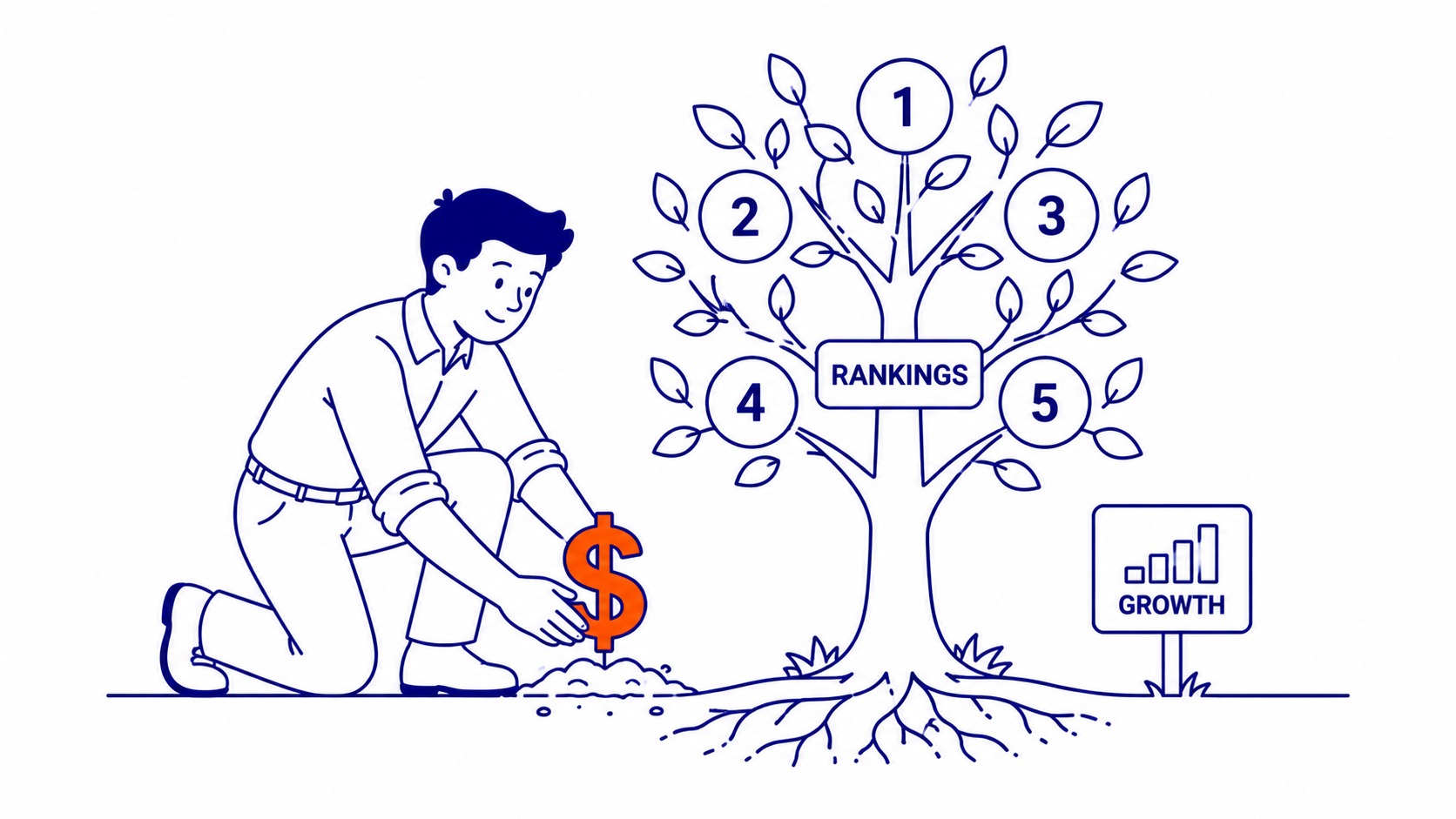
Organic Traffic Doesn’t Cost You Per Click
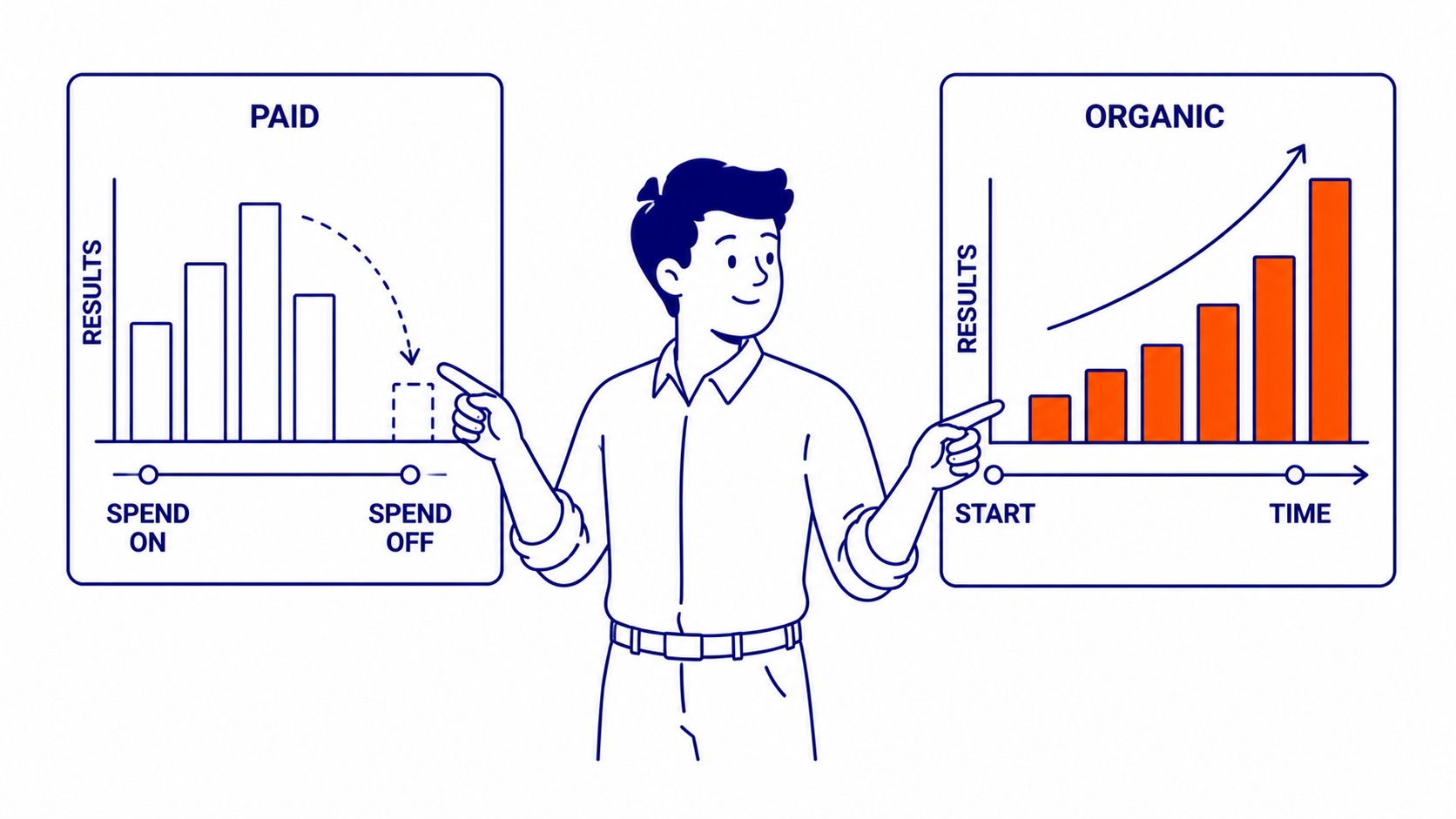
Two paths exist for appearing at the top of search results, though only one builds on itself.
Paid search delivers visits only while you pay. Even if you have us manage your Google Ads, the visits stop the same day the spend does. SEO earns rankings. Rank a page well and it keeps pulling in visitors whether or not your business is actively spending money on it this month. Three years in, a service client’s page still generates 30 to 50 leads a month from a campaign that wrapped active work eighteen months ago. Organic visits compound.
Paid advertising is not wrong. It moves faster. For product launches or time-sensitive offers, it is usually the right tool. Organic search costs less per visitor the longer a position holds. The position does not disappear the moment you stop paying.
Most Calgary businesses run both. Budget shifts toward SEO as organic rankings build. That is also the pattern we have seen hold across industries since 2007. Compounding is what separates organic SEO from anything you rent by the click.
SEO Builds Credibility That Compounds
High organic rankings carry trust signals that paid placements do not.
Someone searching “Calgary accountant” and clicking an ad knows they are looking at advertising. A click on the third organic result carries a different weight. The placement reads as an endorsement. That perception affects click-through rate and first impressions when they land on your website.
Credibility builds further as your content earns backlinks. Other sites link to your guides, your service descriptions, your answers. Search engines read those links as authority signals. Your brand becomes associated with the queries that matter to your business. The effect is slow, however. It does not show up in month one or month two.
Companies that start SEO late find the authority gap difficult to close. Three or four years of compound advantage is hard to replicate through paid advertising alone. Worth knowing before spending three more years on ads with nothing to show for domain authority. The full case for why organic search matters long-term covers the compounding authority dynamic in more detail.
The Realistic Timeline
Three to six months before meaningful SEO movement. That is the realistic window for most businesses.
Some see earlier signals. Keyword impressions climbing in Search Console. Pages moving from page three to page two. Clicks and conversions take longer. That is the mechanics of authority-based placement. Search engines need time to index your pages, observe engagement signals, and assign weight to new additions.
Clients who stop the work at month two and declare it broken never see months seven through twelve. That second half is where revenue from organic search starts showing up clearly.
SEO is a long-term investment in the literal sense. Not a metaphor for “expensive.” The returns compound in a way paid advertising does not. Your business builds an asset it owns, not a rented position that disappears the moment you stop paying. The difference matters when you are making a budget decision that covers the next two or three years.
What SEO Actually Involves
The question that comes up almost every time: what are you actually paying for?
Keyword Research
Finding out what your potential customers are already searching for, how often, and how competitive each term is. That is the job our keyword research does first, and the quality of the list it produces determines everything downstream. Ranking for terms nobody searches does not generate revenue. The keyword selection work is where most of the strategic value lives in a well-run campaign. A poor keyword list means years of work pointed at the wrong targets.
Technical SEO
Page speed. Mobile performance. Crawlability. Core Web Vitals. None of it is visible to users but search engines read all of it before deciding where any page appears. A site that confuses crawlers does not rank regardless of page quality. Your website’s technical foundation matters as much as what is on the page. Sometimes more.
Content and On-Page Work
Pages built around what searchers are looking for, written with enough depth and specificity to earn authority. Plenty of owners start by typing something like SEO web audit into Google, and an audit really is the starting point. It identifies which technical issues and page gaps are suppressing your website’s visibility, then ranks them by impact so the most consequential fixes happen first.
SEO vs. Paid Advertising
This comparison comes up constantly. Two things worth clarifying.
Paid advertising is not wrong. It generates leads faster. For time-sensitive offers and product launches, it is usually the right move. To-The-TOP! runs Google Ads management alongside organic work for several clients. For a business paying for a local search engine optimization service, running ads alongside it is often the right strategy, particularly while organic positions are still building.
Search engine optimization wins on cost per visitor as months accumulate. Paid ads carry a fixed cost per click that does not decrease. Organic visits carry no per-click cost. The longer the positions hold, the lower the effective cost of each visitor becomes. Strong organic visibility puts your brand in front of searchers without paying per impression. Revenue from those visits compounds alongside your positions.
Clients who see the best long-term ROI from digital marketing tend to have both running. Paid for immediate demand capture. Organic for the compounding asset.
Local SEO in Calgary
Calgary is a competitive market for SEO. Trades. Professional services. Service companies. All of them have established operators with years of history online. New entrants do not close the authority gap quickly.
Map Pack vs. Organic Results
Local SEO Calgary means appearing in both the map pack and the organic placements below it. Google Business Profile is the foundation for map pack visibility. Citation accuracy, recent reviews, and consistent information across directories all factor in. Local organic positions depend on page-level authority, keyword targeting, and page relevance to specific local search intent.
This work covers both systems. The clients who get the most out of it treat them as a single effort rather than two separate problems. Whether somebody types search engine marketing Calgary MRC SEO consulting or something plainer, they are hunting for the same thing, and our work pairs Business Profile optimisation with pages targeting what local searchers are already looking for. Two systems, one effort, and that pairing is most of what SEO does for small business here. For the results side of that, our write-up on SEO services goes into the numbers.
ROI and What the Numbers Look Like
Timeline to Positive ROI
Hard to give a single figure. It depends on competition level, current domain authority, and how much ground the site needs to close before positions move. Most clients find month six starts showing enough visitors to justify the investment. Month twelve makes the case clearly.
Cost Per Visitor Over Time
Revenue from organic search typically runs at better margins than paid visits. No per-click cost. The auction dynamic that raises costs on paid channels does not exist here.
A service business appearing for ten mid-competition keywords in Calgary might pull 300 to 500 relevant visitors per month. At a 3% conversion rate, that is 9 to 15 inquiries. What each inquiry is worth depends on the service. Run that calculation for your own numbers before deciding the investment costs too much.
Which Businesses Benefit Most from SEO
Service businesses with clear local intent. Trades, professional services, healthcare practitioners, legal and financial advisors. Any category where potential customers search before contacting anyone.
E-commerce benefits differently. Search builds category authority in the long run. Slower to start. Harder for competitors to displace once built.
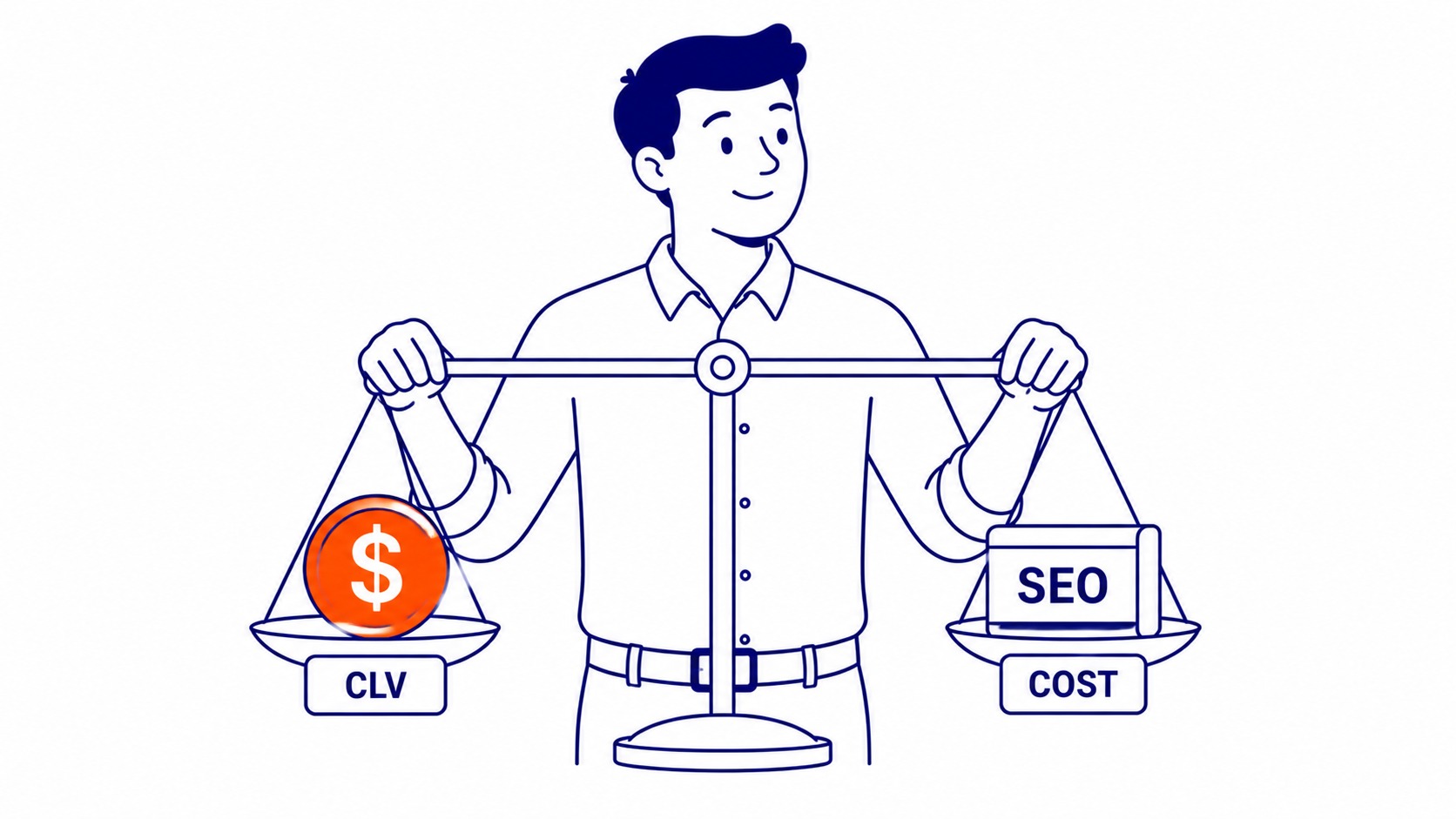
Companies with thin margins need to run the numbers before committing. Whether you are buying content, technical fixes, or an off page SEO service, the cost needs to clear against what a customer is actually worth over a full engagement. Worth asking about before signing anything. The conversation usually starts with that calculation, not with a pitch. The is SEO worth it analysis covers the ROI calculation specific to different business types and industries.
Businesses in Toronto, Trail, and Vancouver face higher organic competition, making the compounding advantage of early SEO investment more pronounced than in smaller markets.
Frequently Asked Questions
Is SEO really worth investing in?
Worth it depends on time horizon and competition level. Short-term, paid ads move faster. Longer than two years, organic almost always wins on cost per visitor. Clients who have been working with To-The-TOP! for five or more years stopped asking that question around year three.
Is SEO dead or evolving in 2026?
Evolving. AI Overviews and generative search answers now appear above organic placements for some queries. The underlying mechanism still depends on page authority, content relevance, and crawlability. Pages that earn AI citations tend to be the same pages that already appear organically. Strong SEO remains the foundation.
What is the 80/20 rule of SEO?
Roughly 80% of visitors tend to come from 20% of keyword targets. That is why keyword research matters more than raw volume. Finding the terms your potential customers actually search for, not just the highest-volume terms, determines whether the work produces leads or impressions.
Will AI replace SEO?
Different problem, different tool. AI tools like ChatGPT surface information from training data. Search engines index the live web. A search for your business, your location, or your specific services still runs through Google. What goes into those organic positions depends on page authority, page relevance, and technical crawlability. That work has been consistent since 2007.
Contact Calgary SEO Company To-The-TOP!
Questions about anything in this article, or about your own rankings? Talk to a Calgary SEO specialist directly.
Phone: (403) 308-5949
Address: 1509 14 Ave SW, Calgary, AB T3C 0W4
Hours:
Monday to Friday: 10:00 am – 7:00 pm
Saturday: 12:00 pm – 4:00 pm
Sunday: closed