
How to Use ChatGPT for SEO
November 2022. That is when OpenAI launched ChatGPT on its platform. Within six weeks, every second client call included the same question: can this thing help with search rankings?
Straight answer: yes, for specific tasks. It accelerates the drafting and brainstorming that used to eat hours. Keyword ideation. Content outlines. Metadata. Structure templates. None of that replaces real ranking strategy, but moving through those tasks faster frees up time for the work that actually drives results.
At To-The-TOP!, we brought ChatGPT into specific workflow stages of our Calgary SEO services in early 2023. The sections below cover where it earns its place, where it does not, and which ChatGPT prompts produce usable drafts.
What ChatGPT Actually Does in a Search Workflow
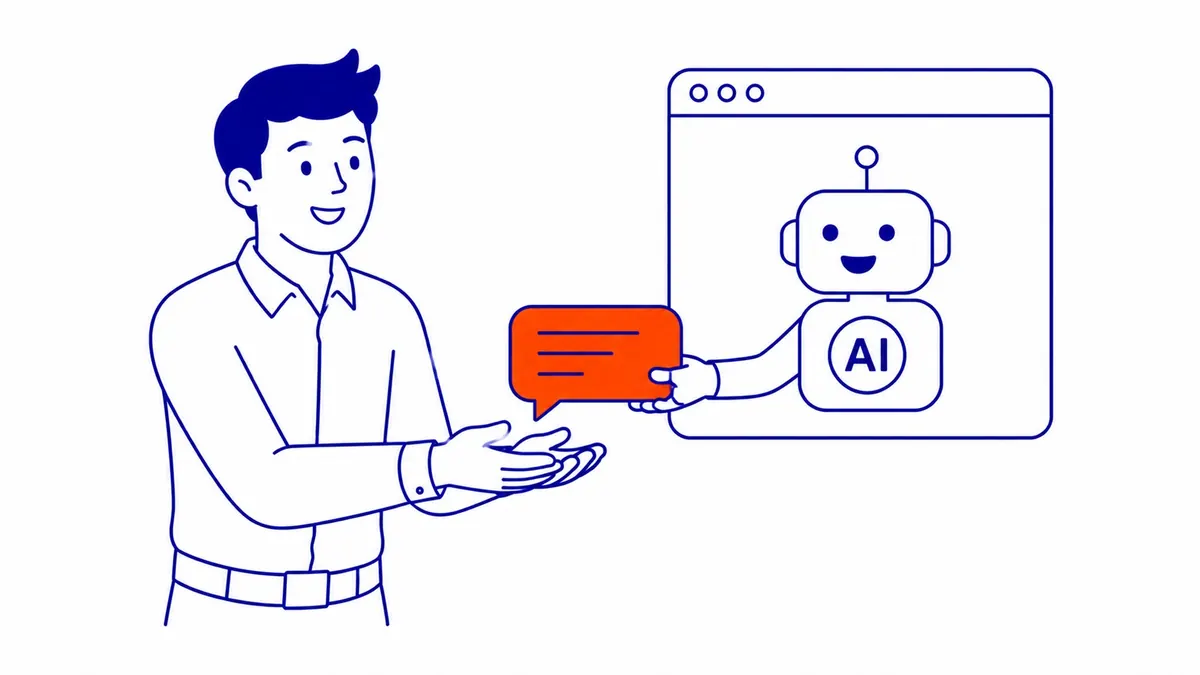
Worth understanding before the examples. The model generates language from patterns in its training data. It does not crawl the web, pull live search volume figures, or read your analytics. Every response comes from what the model absorbed before its knowledge cutoff, not from live search engine results. That distinction shapes every ChatGPT SEO decision a practitioner makes.
Most businesses that try this AI-assisted approach use it as a fact source rather than a drafting assistant. That distinction matters more than which platform version you are on. ChatGPT on the OpenAI platform generates language confidently whether the underlying information is current or not.
Where ChatGPT Helps
Speed on low-stakes drafting tasks.
The tool generates usable copy faster than anything I have used in two decades of this work. Ten title tag options in thirty seconds. A content outline in under a minute. Five metadata drafts while reviewing keyword data. For businesses handling content at volume, that speed is why ChatGPT earns its place.
Tasks it handles reliably: keyword brainstorming, content outlines, FAQ expansion, alt text copy, structured templates, and readability rewrites. None of those tasks need live search data. The model delivers on all of them.
Where ChatGPT Helps Most
One area stands out beyond drafting speed.
Users who struggle with blank-page problems find ChatGPT SEO brainstorming genuinely helpful. Ask it to describe ten different angles on your topic from the perspective of different buyer types. You get ten starting points in seconds. Which of those to develop is still a judgment call. The tool does not make that judgment.
Where ChatGPT Falls Short
Accuracy is the first problem.
ChatGPT output looks confident even when the information beneath it is wrong or outdated. The training data has a cutoff. Algorithm updates, ranking shifts, and competitor moves after that cutoff are either guessed at or absent.
It also does not know your site. The model cannot pull Google Search Console data, check your crawl coverage, or identify which of your pages has a technical indexing issue. Decisions about your content strategy, link acquisition, and site architecture still need actual data. The model does not have it.
Using ChatGPT for Keyword Research
Useful as ideation. Not a keyword tool.
Using it for keyword research works as a brainstorming layer alongside platforms that provide actual search volume numbers. Semrush, Search Console, and Ahrefs give you data. ChatGPT gives you ideas. Both matter. Neither replaces the other.
Seed Lists and Question Mining
A prompt built around role context works better than a bare keyword request. For example: “You are a search specialist for a services business in Calgary. List 50 keyword variations covering service types, question-based phrases, and long-tail keywords for a plumbing company.”
Give it your topic, your industry, and your location. Ask for fifty variations, not ten. Fifty forces the model past generic suggestions that mirror every competitor’s list. Run the high-intent phrases through a proper website keyword analysis for actual search volume figures. The resulting list becomes the starting inventory, not the final one. That ideation step moves faster than any manual method.
The chatgpt prompts that produce the strongest keyword lists tend to include three elements: a defined role for the model, a specific service or topic, and an explicit instruction to include question-based phrases. Weak prompts produce generic output. A well-structured prompt produces a usable brainstorm in seconds. Worth treating this as a repeatable step in every new content project.
Long-Tail Keywords and Search Intent
Long-tail keywords surface reliably through question mining. Ask ChatGPT to list questions someone would search for around your topic. You get conversational phrases, many of which map directly to PAA queries and voice search patterns. Faster than manual brainstorming, though the responses still need filtering against real search volume data.
Search intent mapping is where it earns consistent workflow value. Drop in a keyword list. Ask it to classify each one: informational, navigational, commercial, or transactional. It classifies user intent with reasonable accuracy on well-documented topics. Spot-check a sample against actual search results. Still, a first-pass classification across fifty keywords takes thirty seconds instead of thirty minutes.
Competitive Topic Gaps
Paste a summary of a competitor’s content into the conversation. Ask which angles that content covers and which your existing pages miss. The draft it returns is rough. It does not replace a gap analysis run against real ranking data. For quickly identifying new topics worth exploring, however, the brainstorm gives a working list to filter. From that list, take the ten most plausible gaps. Run each through Search Console or Semrush for actual search volume. Two or three usually have enough demand to justify a page. That triage step takes under an hour; without it, topic selection is mostly guessing. Most of how to do keyword research using AI comes down to that filtering step. Guessing is exactly what the short version of keyword research is meant to remove.
Content Planning with ChatGPT
Outlines and metadata. Genuinely time-saving.
Building Outlines and Content Briefs
ChatGPT builds outlines quickly. Give it the target keyword, the audience, and the page type. Ask for an H2/H3 structure with a note on each section’s intent. A first draft outline arrives in under a minute.
The default version is generic. It mirrors the heading structure every competitor already uses. Push back: ask for one section with an opinionated stance, one that addresses a common misconception, and one with a local or industry-specific angle. The second pass is usually more useful.
For your content briefs specifically, the tool performs better with real SERP context loaded in. Pull PAA questions and related terms from Search Console or a keyword tool first. Paste those as additional context. Ask it to build the brief so those questions are explicitly covered. Your content ends up structured around what people are actually searching, not what the model guesses they want.
Title Tags, Meta Descriptions, and Subheadings
Title tags and meta descriptions are probably ChatGPT’s strongest application in a content workflow. The prompt format that works: target keyword, page type, 60-character limit, five options requested. Ten seconds to results.
Patterns to avoid in title tag output: leading with the brand name, question formats on commercial-intent pages, excessive punctuation. ChatGPT defaults to all three. Ask specifically for options that lead with the target keyword and keep the brand secondary.
The descriptions it generates read clean but generic. They work as starting points. Add a local detail, a specific figure, or a practitioner observation before your page goes live. Your content needs something the default version leaves out: a reason specific to this searcher, on this query, to click.
Subheadings come quickly too. Paste your H2 list. Ask for H3 suggestions that add depth or cover missing intent. Use what fits the page. Ignore the rest. Publishing any of it unedited is where the risk of ChatGPT content actually shows up.
On-Page SEO Tasks ChatGPT Handles Well
Two areas, consistently.
Improving Readability and Page Structure
Paste a draft paragraph into ChatGPT. Ask it to improve readability without changing the meaning. The edited version shortens sentences, removes passive voice, and tightens transitions. Useful for sections of your content that have drifted wordy over multiple revision passes.
Heading structure checks work the same way. Paste your H2/H3 list. Ask it to flag gaps in topic coverage or headings that duplicate each other’s intent. The suggestions are not always accurate. Treat them as a second opinion rather than a rewrite directive.
For expanding thin pages, ChatGPT drafts subheadings, FAQ answers, and supplementary copy quickly. Review everything before it goes live. The model fills word count at speed, but accuracy drops on specifics where its training data is thin.
Schema Markup and Internal Link Suggestions
Schema markup drafts are one of the most practical ChatGPT SEO applications in a content workflow. Ask for FAQ schema, LocalBusiness schema, or HowTo schema for a specific page. The result is clean JSON-LD that needs validation before publishing. Still, it saves significant time compared to writing it from scratch. Run it through the Rich Results Test before adding it to a live page.
For internal links, ChatGPT needs context to produce anything useful. Give it a list of your target pages, their URLs, and anchor text themes. Ask it to suggest internal link placements for a given post. Without that context, the suggestions are too generic to act on. With it, the suggestions give a working starting point for a page-level review. Context is exactly where the limits of SEO automation show up.
ChatGPT, Bing, and AI Search Visibility
The search landscape shifted hard in 2023.
Generative Engines and GEO
Bing integrated ChatGPT into its search interface in early 2023. A synthesised AI response now appears above Bing’s standard results, citing crawled sources the way a researcher cites references. Google launched AI Overviews shortly after on a similar model. AI tools like ChatGPT, Gemini, and Perplexity are powering answer-engine interfaces that surface cited responses rather than ranked links.
Generative Engine Optimization, or GEO, means structuring your content so these systems surface it as a citation. Bing, Perplexity, and the Google AI Overview layer pull from pages they already trust. Clear heading structure, authoritative sourcing, thorough entity coverage, and structured data all increase your chances of being cited as a source. Most of those signals overlap directly with the standard practices behind our search engine optimization work. Optimising for Bing AI and optimising for traditional search engines requires the same underlying work. Businesses already ranking well in traditional search have a significant head start in AI citation too. The authority signals built over years translate directly.
Brand Mentions and AI Overviews
ChatGPT conversations themselves are not indexed by either search engine as direct ranking signals. Still, your brand’s visibility in AI Overviews depends on how well your content is sourced across credible websites. Generative engines pull citations from pages already rated as authoritative.
Backlinks from credible domains, consistent entity data, and strong topic coverage all increase your chances of appearing as a cited source. Brand mentions across reputable sites carry weight for AI Overview citation decisions. Users who click from those AI citations already arrive with context about what they searched. Your content needs to match that context immediately, or the click bounces. What ChatGPT can help with here: drafting content structured clearly around specific user queries. Clean FAQ sections, direct answers in the body copy, and well-labelled headings give generative engines a cleaner signal to cite from. At To-The-TOP!, whether you have us manage your Google Ads or the organic search work, the approach treats AI search visibility as a natural byproduct of doing the underlying work correctly. There is a wider practical side to AI for SEO that goes past visibility in chat answers.
Frequently Asked Questions
Can you do SEO with ChatGPT?
Partly. ChatGPT handles specific tasks well: keyword brainstorming, content outlines, meta descriptions, structured drafts, and readability edits. What it cannot do: pull live search volume, audit your site for technical issues, or replicate the judgment that comes from reading actual SERP patterns over years. Treat ChatGPT as a drafting and brainstorming layer. Strategic ranking decisions still need a practitioner working with real data.
Is SEO dead or evolving in 2026?
Evolving, not dead. AI Overviews, Bing chat results, and answer engines like Perplexity changed where responses surface on a results page. Still, the page-level authority, entity coverage, and content depth that drive those AI citations are the same signals that have mattered since 2007. Businesses that built solid search engine rankings ten years ago are still collecting that traffic. The compound effect of real ranking work does not disappear because the interface changed.
What are the 3 C’s of SEO?
Content, credibility, and crawlability. Your content needs to match search intent, answer the query thoroughly, and cover the topic at the depth the SERP expects. Credibility comes from backlinks, consistent brand signals across the web, and authoritative entity coverage. Crawlability means search engines can find, read, and index your pages without technical barriers in the way. All three need to work together. Strong content on a technically blocked site ranks poorly. Clean crawlability with thin content performs no better. Worth asking about all three before signing with any company.
What is the 80/20 rule of SEO?
Roughly, 80% of ranking results come from 20% of the effort. That 20% almost always includes the same three areas for the businesses we have worked with at To-The-TOP!: technical crawlability, keyword relevance on the key commercial pages, and authority signals from a small number of strong backlinks. A long list of minor improvements matters far less than getting those three right. The 80/20 lens is a reminder: do not spend the month on image alt text while crawlability problems sit unfixed.
Contact Calgary SEO Company To-The-TOP!
Questions about anything in this article, or about your own rankings? Talk to a Calgary SEO specialist directly.
Phone: (403) 308-5949
Address: 1509 14 Ave SW, Calgary, AB T3C 0W4
Hours:
Monday to Friday: 10:00 am – 7:00 pm
Saturday: 12:00 pm – 4:00 pm
Sunday: closed