
Do Backlinks Help SEO?
Clients ask this question constantly. Backlinks still matter significantly. The mechanics of how they matter have shifted since 2007, though. After 19 years running a search engine optimization company in Calgary and across western Canada, this is what we actually observe.
A backlink is a link from one website pointing to yours. Search engines treat these connections as editorial votes. More votes from credible, relevant sources translate to stronger positions in search results. That reasoning traces back to Google’s original PageRank system, and it still holds.
Not all votes carry equal weight, however. A link from an established trade association still counts for far more than a link buried in a directory nobody visits. The quality of the referring domain determines most of the value.
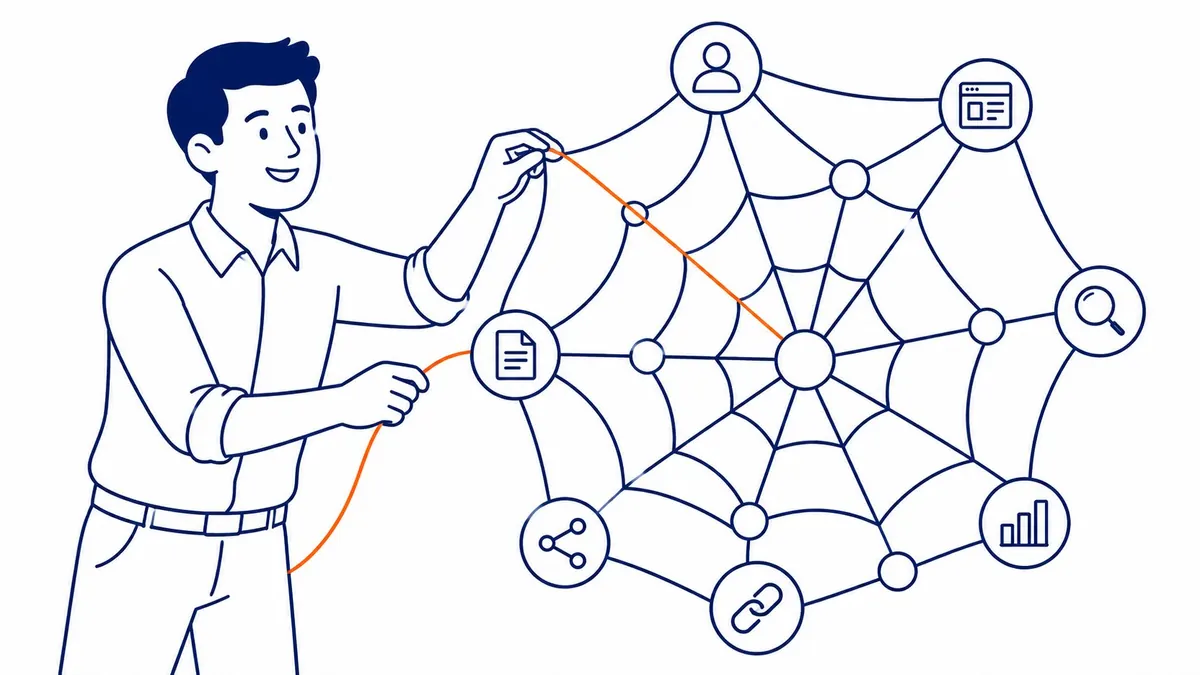
Why Google Still Uses Backlinks
Older than most SEO tactics. Still core.
Google’s original insight was that links between websites reflect genuine editorial judgment. Trade publications cite research reports. Local media covers businesses doing something worth reporting. An industry blog recommends a service. Each of these connections happens because someone decided the destination deserved attention.
That logic still holds in 2026. Google’s public statements confirm backlinks as one of three core ranking signals. Organic traffic follows authority. Authority follows credible external links that accumulate over time.
Google also got much better at distinguishing earned backlinks from manufactured ones. A link placed on a forum profile in 2012 counted then. It rarely does now. The algorithm has seen every shortcut already. Shortcuts died; why links remain a ranking signal did not change with them.
The Weight Behind a Single Backlink
Several factors separate a strong backlink from a useless one.
Domain strength is first. Sites that rank well for competitive terms and carry strong authority pass more ranking signal to the sites they link to. A mention from a high-authority publisher carries real weight. Links from newly registered blogs with no traffic carry almost none.
Relevance still matters just as much. A link from a plumbing supply company to a plumber’s website signals topical alignment. Search engines recognise that relationship. A link from an entirely unrelated industry does almost nothing for the plumber’s rankings.

Anchor text adds another layer. The words in the hyperlink tell search engines what the destination page covers. Descriptive anchor text still provides useful context. Repeated exact-match anchor text looks purchased, not natural.
Link equity is also part of the picture. Dofollow links pass ranking value from the referring page to your site. Nofollow links still signal a connection without passing the same level of equity. Both are part of a healthy backlink profile.
How Backlinks Move Rankings
Real movement takes time. Consistent time.
Pull a backlink analysis on any client site and the same pattern appears. Pages ranking on page one almost always carry a stronger backlink profile than pages stuck on page two or three. The gap is rarely technical, however. Both pages often have similar on-page SEO. Similar content that addresses the search query too. What the lower-ranking page still lacks is external authority.
One strong backlink from a relevant, authoritative source can shift a page several positions. We have already seen this happen in To-The-TOP! campaigns. A feature in a regional trade publication. Two citations from established industry directories. Rankings shift within six to twelve weeks after Google crawls the link.
Referral traffic is also a secondary benefit worth noting. A strong backlink on a high-traffic page sends actual visitors to your website, separate from any ranking effect. That traffic can still convert. It is not purely an SEO signal.
The timing piece matters. Google crawls the linking page first. The link gets indexed next. Rankings update after that. None of that sequence makes sense without knowing what backlinks in SEO mean in the first place.
Quality vs. Quantity: What the Numbers Show
One strong link beats fifty weak ones. Every time.
Backlinko analysed over a billion pages to understand ranking patterns. The number-one result in Google averaged 3.8 times more backlinks than results in positions two through ten. Domain authority of the linking sites also predicted rankings better than raw link count.
That is the core practitioner takeaway. A site with 20 backlinks from respected industry publications consistently outranks a site with 200 backlinks from unvetted directories. We still see this in competitive Calgary markets.
How many backlinks does a site actually need? Depends entirely on the competition. A local business targeting neighbourhood search terms might rank with 30 to 50 strong backlinks. National financial services sites competing for broad commercial terms need significantly more.
The answer is always relative to the competitive landscape, not an absolute number.
Link Building Approaches That Hold Up
Earned links are the goal.
Guest posting on legitimate industry publications still produces results. The site needs a real audience. Content must add genuine value too. Directory placements on established, industry-specific directories still pass ranking signal. Press mentions from regional media carry strong authority and rank among the cleanest backlinks available.

Link farms still do not work. Neither do paid links sold by the hundred. Private blog networks also get flagged. Google’s SpamBrain system runs on those patterns. Rankings drop when manipulative links accumulate, sometimes permanently.
Broken link building is a reliable outreach method. Find a resource in your industry that already moved or disappeared. Contact the sites still pointing to it and offer a replacement. The outreach converts because it solves a real problem for the webmaster rather than just asking for a favour.
As an SEO services agency in Calgary, we include a competitive backlink gap analysis in our work. We identify the strongest referring domains in a client’s top competitors’ profiles, then prioritise outreach to similar sources. That targeting draws on keyword analysis for SEO at the page level. Not all pages benefit equally from additional link authority. Deciding which pages get those hours starts with the basics of link building in SEO.
What a Weak Backlink Profile Looks Like
Warning signs show up in every SEO audit.
Three patterns repeat across problem sites. A high percentage of links from completely unrelated industries. Exact-match anchor text that looks purchased rather than natural. Sudden spikes in backlink acquisition followed by long dry periods.

Google’s Penguin update in 2012 targeted manipulative link patterns. That system still runs. Sites still recover from old link schemes every year. Recovery involves submitting a disavow file. Clean link rebuilding follows. Months of waiting come last.
A healthy backlink profile shows gradual growth. Varied anchor text across links. Multiple referring domains, not ten links from the same site. A mix of link types that reflects how real editorial linking actually happens.
Starting Your Backlink Profile
Most businesses already have untapped link opportunities.
Suppliers who list their clients. Trade associations with member directories. Local chambers of commerce. Industry publications that cover your market. These sources exist before a single outreach email gets written.

A proper SEO audit is still the starting point. It also shows existing backlinks and their quality. Toxic links worth submitting for disavowal surface there too. From there, knowing which pages most need additional authority helps direct outreach effort efficiently.
Off-page SEO and on-page work are not separate tracks. Strong technical signals with no backlinks stalls out. Backlinks pointing to thin or disorganised content also stall. Both need to be in reasonable shape before consistent ranking movement happens.
Google Ads management can support short-term visibility while organic authority builds. For most businesses working on their Calgary SEO, the two run in parallel. Paid search covers the gap while link building compounds over time.
Frequently Asked Questions
Do backlinks improve SEO?
Still one of the top-three ranking signals Google uses. More high-quality backlinks from relevant, authoritative sites generally correlate with stronger positions in the SERPs. The relationship is not automatic, however. A strong backlink profile on a technically broken site still underperforms. But for a site with solid on-page SEO in place, new backlinks from credible sources move rankings.
What is the 80/20 rule of SEO?
Roughly 80% of ranking results tend to come from 20% of the effort. In link building, that means a small number of high-authority backlinks from relevant domains account for most of the ranking lift. The practical approach is to focus outreach on five or ten strong prospects before chasing dozens of marginal ones.
Is SEO dead or evolving in 2026?
Evolving. AI-assisted search changed how results appear at the top of Google. The underlying authority signals remain in place, however. Backlinks still matter. Content depth still matters. The sites appearing as citations in AI Overviews are almost always the same sites that rank well through search engine optimization. Fundamentals remain unchanged.
What are the 3 C’s of SEO?
Three pillars come up in most SEO frameworks. Content tells Google what a page covers. Credibility comes from your backlink profile and the quality of sites linking to yours. Crawlability also ensures Google can access and index what you have built. Miss any one of these and rankings suffer.
Contact Calgary SEO Company To-The-TOP!
Questions about anything in this article, or about your own rankings? Talk to a Calgary SEO specialist directly.
Phone: (403) 308-5949
Address: 1509 14 Ave SW, Calgary, AB T3C 0W4
Hours:
Monday to Friday: 10:00 am – 7:00 pm
Saturday: 12:00 pm – 4:00 pm
Sunday: closed