
What Is Onsite SEO?
Most clients ask this on the first call. They have been told they need SEO. Seen a quote. Not sure what the work actually involves. Fair question. The answer divides into two halves: what happens on your website, and what happens off of it. Onsite SEO is the first half.
Every page your site has is either an asset or a liability, depending on its current state.
What Onsite SEO Actually Covers
More than most businesses expect.
Title tags and meta descriptions come to mind first. Not wrong to start there. Those are what search engines display in results. Getting the keyword placement right matters. They are, however, the beginning, not the whole picture.
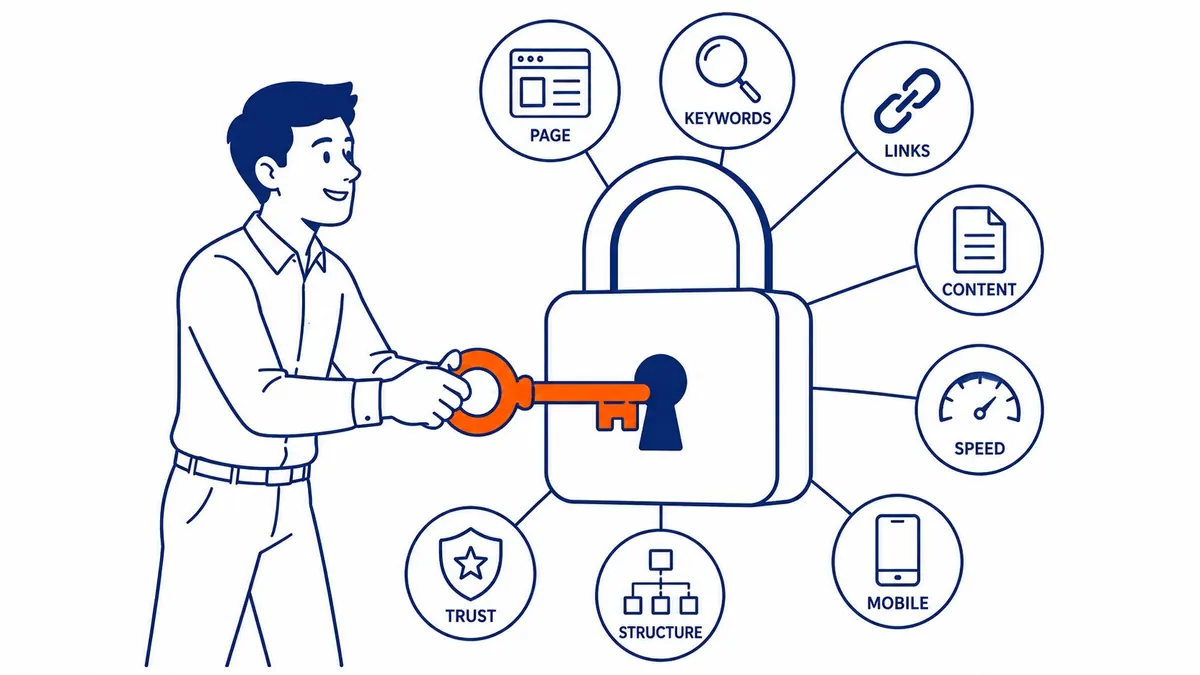
Heading structure on every page is where the logic of the page lives. The H1 carries your primary keyword. H2s and H3s organize the content so users and search engines can both follow the flow. The body content then carries the depth each page needs. Keyword usage matters here too. Not in the way most people expect, however. Search engines now understand context well enough that stuffing a phrase into the text backfires. Specificity and relevance matter more, though.
Internal links connect your pages to each other. Image alt text describes what images actually show. URL structure signals what a page is about before it is even crawled. Page load speed also affects how long users stay. Schema markup helps search engines categorize the content. Mobile formatting determines whether the page works for the majority of users who never visit on a desktop.
At To-The-TOP!, a website audit for SEO covers every one of these categories. Most sites we look at have two or three solid areas. Two or three that need real work. Page speed and schema are the most common gaps. Speed is often the most fixable. A compressed image and a deferred script can shave two to three seconds off load time. That is meaningful. Worth asking whether more than one H1 tag is doing damage on those same pages?
Two Disciplines: Onsite and Offsite SEO
Two different workstreams.
Onsite SEO is everything within your own website. Offsite SEO is what the rest of the web says about you. Backlinks from other domains carry a lot of that signal. External mentions and local citations also feed in. So does your Google Business Profile. All of it comes from outside your pages.
Both still influence rankings. The order matters, however. Onsite problems create a ceiling. Links from other websites push rankings upward. Structural problems or thin content stop that movement before it gets far.
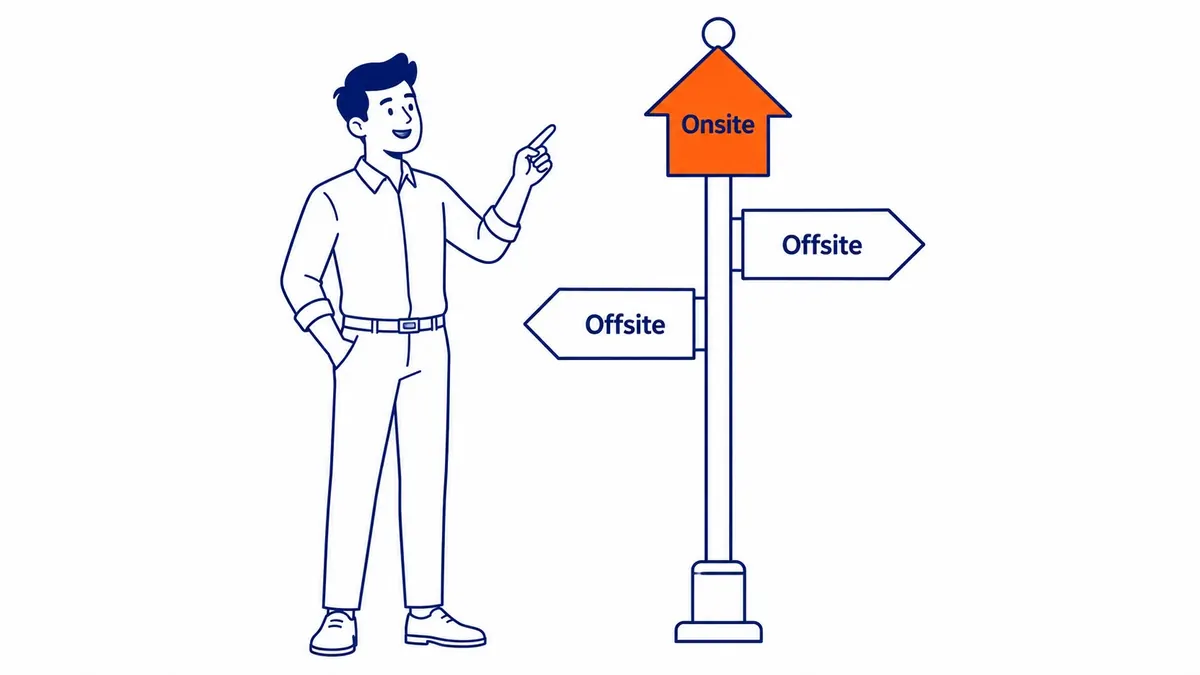
We run the website audit before building out a link profile. That ceiling has to move first. Offsite work pointed at a site with onsite problems is largely wasted. A well-structured site with a thin backlink profile will plateau eventually, however. Neither works alone. The businesses that compound rankings fastest still work on both simultaneously.
To-The-TOP! has been doing this since 2007. Offsite signals have shifted considerably over that time. The onsite fundamentals have stayed roughly the same. Clear pages. Fast pages. Content that still answers what users actually came to find.
How to Do Onsite SEO
Start where search engines start.
Title tags first. One per page. Primary keyword near the front, kept under 60 characters. One H1 per page with the primary keyword present. Heading structure below that should follow the logical flow of the content, not be generated as an afterthought.

Content is where keyword research pays off. Knowing which keywords your target audience actually searches, and how often, shapes every page you write. As an SEO agency Calgary businesses rely on, To-The-TOP! treats that research as its own distinct process. Onsite SEO assumes that research is already done. Optimizing a page for a term with no search volume is not optimization.
Internal links are the most overlooked part. Service pages should link to each other when the topic connects. Blog posts and guides should also link back to the core service pages they support. Your site, linked well internally, gives search engines a clearer map of what matters. Users stay longer too.
Page speed is worth calling out separately. A slow site loses users before they convert. Search engines also notice that signal. Most sites we audit have at least one render-blocking script or an uncompressed image slowing the load.
Ongoing is the part nobody loves hearing. Competitors adjust their pages. Algorithms update. SEO services in Calgary that include regular onsite review still hold rankings that a one-time audit cannot sustain. Worth asking any agency how often they revisit onsite work before signing on.
FAQs About Onsite SEO
What is an on-site SEO?
Work that lives on your own website. Title tag optimization. Heading structure. Page speed. Schema markup. Content quality. Internal linking. All of it onsite. Offsite SEO covers what other websites and platforms say about you. Backlinks. External citations. Google Business Profile signals. Those come from outside your pages.
What does the term actually mean?
It simply describes where the work happens. On your own pages, not elsewhere on the web. Search engine optimization covers both onsite and offsite signals. The half you control entirely is the onsite half.
Is SEO dead or evolving in 2026?
Still running. AI-generated answers have changed the results page, however. Pages with clear structure and genuinely useful content get cited in AI summaries. Schema markup factors in as well. Strong onsite SEO still makes all of it more likely. The underlying fundamentals have not changed, however.
Where do you actually start?
A website audit first. It shows the technical problems and the wrong-fit keyword targets before you spend effort on content. Fix the technical issues first. Google Ads management fills the traffic gap while organic rankings develop. Both tracks still run at the same time. Neither replaces the other.
Contact Calgary SEO Company To-The-TOP!
Questions about anything in this article, or about your own rankings? Talk to a Calgary SEO specialist directly.
Phone: (403) 308-5949
Address: 1509 14 Ave SW, Calgary, AB T3C 0W4
Hours:
Monday to Friday: 10:00 am – 7:00 pm
Saturday: 12:00 pm – 4:00 pm
Sunday: closed