How to Do Ecommerce SEO the Right Way
Running SEO on an ecommerce website is not the same job as running it on a five-page service site. The scale changes everything. Product pages. Category pages. Filter-generated URLs that grow with every colour option, every size filter, every price slider. Manufacturer descriptions copied verbatim across dozens of similar products. All of these patterns quietly kill ecommerce organic performance. Most online stores are already generating duplicate content and thin page signals without realising it.
Fixing that takes a different approach than standard on-page work. Each layer of ecommerce SEO compounds when done right. Neglect any single layer and organic traffic that should already be building instead stagnates.
This guide covers how to approach each layer and what to prioritise first.
What Makes Ecommerce SEO Different
A service business might have 20 pages on its website. A modest ecommerce store has 200 product URLs and dozens of category pages. Colour filters, size filters, price sliders. Each one generates additional URLs with near-duplicate content. Google does not index every URL on every site in one pass. Spend crawl budget on low-value filter pages and the product pages that actually matter get crawled slowly.
Thin content is the second problem. Most manufacturers supply a product description. Retailers copy it verbatim. Google sees near-identical pages across dozens of competing stores. None rank confidently. Moving on is the default response.
Duplicate content from faceted navigation compounds the issue further. A category page filtered by “red” and a category page filtered by “large” can return near-identical product sets. Both URLs get indexed. They also compete with each other. Neither wins consistently.
No deliberate internal linking plan means most product pages sit at the edge of the site. Minimal authority. Thin crawl frequency. Hundreds of product pages need path authority routed from the homepage through categories. Miss that plan and most product pages still become invisible to Google. Good content alone does not fix that.

Keyword Research for Ecommerce SEO
Three types of search intent drive ecommerce traffic. Each matches a different page type. Get this mapping wrong and the wrong pages chase the wrong keywords. Ranking for nothing on any of them is the result.
Transactional searches belong on product pages. The buyer is ready to purchase. Brand name, model number, exact SKU. These are transactional signals. The page needs to deliver fast and convert. Ranking for these terms earns revenue directly.
Commercial investigation searches belong on category pages or comparison content. Still researching, not ready to buy. Compare queries also drive this traffic. “Best laptop under $1,000” fits a category page. So does “composite vs fibreglass kayak.” These pages answer the comparison and link to relevant products below.
Informational searches belong on blog content and buying guides. Early in the funnel still. How-to articles and product guides earn trust. Internal links from those posts carry readers to category and product pages where the sale happens. That traffic converts later, but it still converts.
Mapping every target keyword to a specific page type before writing anything is how keyword research pays off in ecommerce. Category pages should not chase transactional product terms. Product pages should not try to rank for “best X” queries. Intent mismatch wastes the page and splits the signals Google uses to understand what each URL covers.
Long-tail keywords convert better. Specificity signals intent already declared. That “blue 20L waterproof daypack under $80” search? Two clicks from a purchase. “Backpacks” is still browsing. Both types matter. The long-tail buyer, though, needs less convincing once the page is found. Search intent still determines all of that math.
Amazon autocomplete and Google Suggest surface buyer language that keyword research tools miss. Type the product category and let autocomplete finish the query. Those completions are actual searches real buyers are entering right now. They reveal phrasing patterns that sometimes differ from the store’s own internal terminology. Where those pages get built matters too, so pick the ecommerce platform with that in mind. Buyer language is where driving ecommerce sales with SEO usually starts paying off.
Optimising Product and Category Pages
Product pages are the revenue engine. Four elements matter most, and most stores underinvest in all four.
Title tags lead with the product name. Brand second, then store name. Sixty characters maximum. Google still truncates from the right. Front-load the product name so the most important part survives truncation in the SERP.
The meta description should lead with a differentiator. Price point, shipping offer, unique feature. Write it for the buyer, not the algorithm. Mentions like free shipping in the meta description have a measurable CTR effect. That CTR feeds Google’s relevance signal over time.
H1 is the exact product name. No keyword stuffing. Simply use the product name and nothing else.
Product descriptions are where most ecommerce stores lose ground. Manufacturer copy already appears on 30 or 40 competing retail sites. Google sees it everywhere. None of those copies rank strongly. A unique description that addresses actual buyer questions outranks manufacturer copy within a few months. 150 to 300 words is enough for most products. Sizing notes, common use cases, what the product does not do well. That is what buyers actually want answered.
Category pages need introductory text above the product grid. 150 to 200 words. Usually enough. Cover the target keyword. Explain what distinguishes the products in this category. Address the specific buyer question this page answers. Google evaluates that text to understand what the category is about. Without it, the category page ranks purely on link signals and internal site structure. Both are weaker than well-written on-page content.
Schema markup on product pages earns rich snippets. Product schema with Offer and AggregateRating gets star ratings and price displayed directly in search results. Click-through rate difference is significant. BreadcrumbList schema also helps Google understand the hierarchy of the site and improves how breadcrumbs appear in results.
SEO work on ecommerce projects almost always starts with the product and category page audit. That is where the biggest early ranking gains hide, still unclaimed on most stores. The SEO services that move the needle fastest on ecommerce are the ones that go here first.
Technical Ecommerce SEO
Site architecture still matters more in technical SEO than almost anywhere else online. A flat structure is the goal. Every product page reachable from the homepage in three or four clicks. Deep hierarchy pushes product pages too far from the root. That authority dilutes. Crawl frequency drops. Products at five or six clicks from the homepage barely get indexed.
Faceted navigation is the most common technical ecommerce SEO problem. Size filters, colour filters, price sliders. Each generates a new URL with near-duplicate content. Pointing filter URLs back to the clean category URL via canonical tags prevents those duplicates from splitting ranking signals. Alternatively, robots.txt exclusions keep filter URLs out of the crawl entirely for combinations that serve no unique content value.
Core Web Vitals are ranking signals and they correlate directly with conversion rate. Slow product images and render-blocking scripts hurt both. Layout shifts during page load add to the problem. Ecommerce sites with large image catalogs are particularly exposed.
Mobile-first indexing changes the crawl order. Google still evaluates the mobile version first. Desktop comes second. Most ecommerce shoppers also browse and buy on phones. Poor mobile performance still shows up in rankings fast. A mobile product page that is harder to navigate than desktop will show it in rankings.
A technical SEO audit on an ecommerce site surfaces crawl budget waste. Duplicate URL patterns. Core Web Vitals failures. Mobile usability gaps. Running one before investing in content production avoids building on a broken foundation. The audit ranks findings by impact so the fix sequence is clear rather than guesswork.
XML sitemaps should cover product and category pages only. Exclude filter URLs. Skip pagination too. Leave account and checkout pages out entirely. A clean sitemap routes crawl budget toward the pages that matter. Most of this never gets checked, which is why choosing an ecommerce SEO partner starts with the audit. Crawl budget is a small piece of why ecommerce sites need SEO attention at all.
Content and Internal Linking for Ecommerce
Informational content handles the top of the funnel. Topical authority also builds over time from that work. Buying guides. Product comparisons. How-to content. These rank for research-phase queries. Organic traffic from that work also feeds the category and product pages where conversions happen. A well-linked post on choosing a road bike also passes authority to the road bike category page and drives traffic that converts.
Topical authority matters more than it used to in ecommerce SEO. Ten articles on cycling, all interlinked, signal stronger subject expertise than ten unrelated articles scattered across different categories. Google’s understanding of a site’s topical depth affects how aggressively it ranks category pages in that space. Breadth across a topic earns trust. Random article sprawl does not.
Internal linking needs a deliberate plan. Every blog post should link to at least one relevant category page. Category pages link to featured and best-selling products. Product pages link to related products and back to the parent category. This creates a crawlable web of pages that pass authority to each other, rather than isolated pages that gather none.
Anchor text should be descriptive. “Click here” sends no topical signal. “Men’s waterproof trail running shoes” sends a clear signal about the destination page. That specificity is also what buyers click on when they are already in research mode.
SEO Company To-The-TOP! builds internal linking architecture as part of every ecommerce engagement. The highest-leverage situation is a store with content already built but few connections between pieces. Fixing the link structure alone can move category pages without writing a single new article.
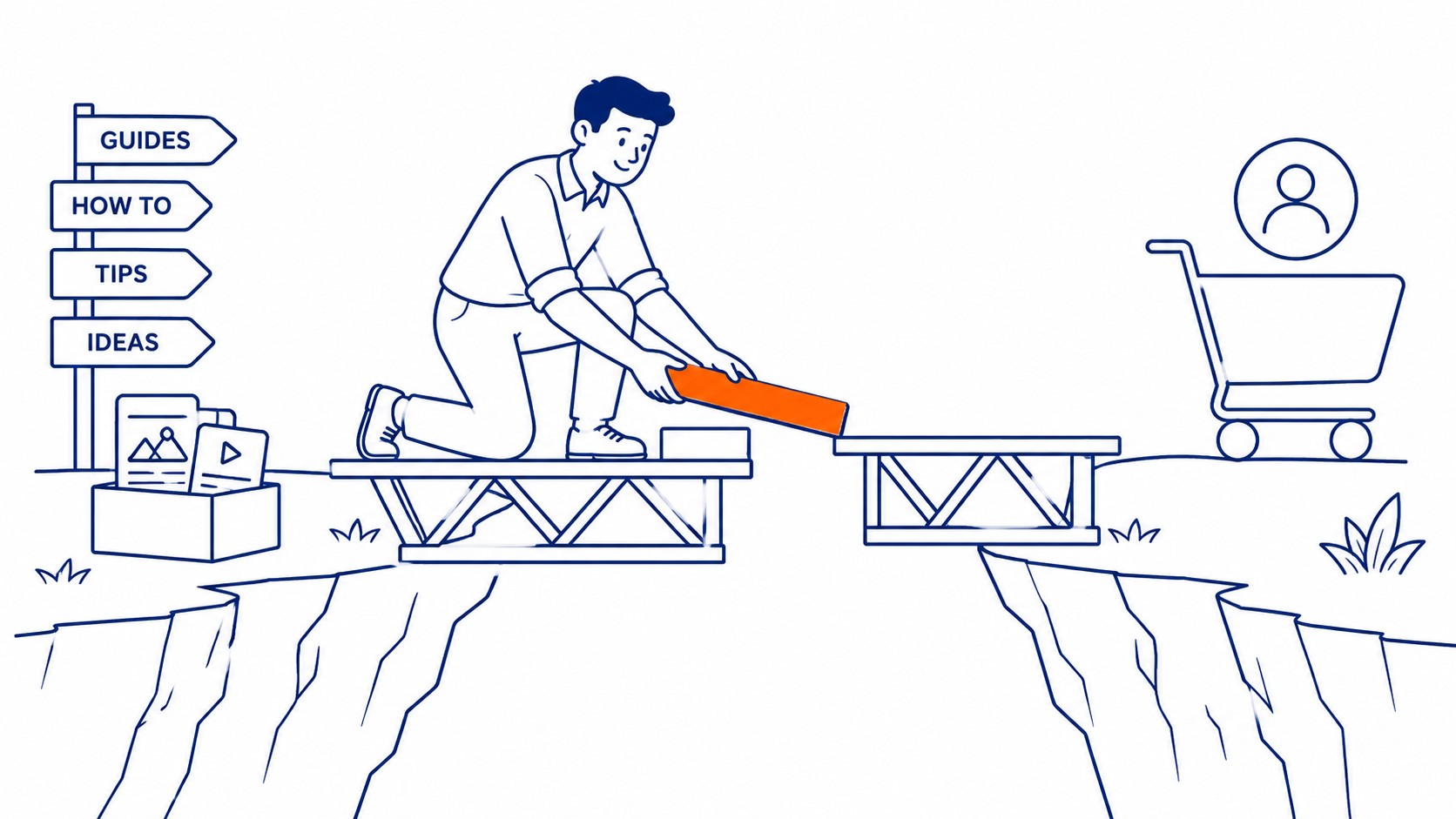
Link Building and Ecommerce SEO Authority
Link building for ecommerce is harder than for service businesses or editorial blogs. Product pages are rarely linkable assets. Very few bloggers write posts that link to a product listing. The strategy has to work around that constraint.
Supplier and manufacturer pages that link to authorised resellers are a free source of links most ecommerce stores never pursue. Ask directly. Most suppliers are willing, and those links also carry genuine topical relevance.
Product review outreach to relevant bloggers and YouTubers in the product niche earns both links and referral traffic. Link quality varies. The referral audience, however, is usually higher-intent than general web traffic.
Original research earns high-authority links because media will cite it. Price tracking studies, annual trend reports, industry data aggregated across products. One trade publication mention with a link is worth dozens of lower-quality links from unrelated sources. Creating that research is not fast, but the link equity it earns is durable.
Guest posts on industry blogs link back to category pages, not product pages. A cycling blog guest post linking to the bike category page is far more durable. That link to a single product SKU lasts only as long as the product does.
Google Ads management runs parallel to organic link building on most ecommerce accounts. Paid search covers high-intent product queries while organic authority builds. Both also compound each other. One does not cannibalize the other’s traffic over time.
Frequently Asked Questions
How long does ecommerce SEO take to show results?
Three to six months before meaningful organic movement on new initiatives. Category pages on an established site with existing authority can move faster. Product pages at the back of a large catalog with thin descriptions and no backlinks take longer. The site’s current technical health sets the pace. A crawl issue blocking category pages from indexing needs resolving before any content work matters. Still, most stores pick up long-tail movement within 60 to 90 days. Structured on-page work still shows first on product terms.
What is the most important ecommerce SEO factor?
Site structure and category page optimisation. Everything else compounds from that foundation. Category pages still carry the traffic volume. “Men’s running shoes Calgary” generates far more searches than any individual product term. Getting the architecture right so those pages rank is the first priority. Product page work builds from there. So does content strategy and link building.
Do product descriptions matter for SEO?
More than most store owners realise. Manufacturer copy across all products signals thin content to Google, especially when that same description already appears on competitor sites. Unique descriptions with buyer-relevant detail rank on their own. Sizing notes, material comparisons, common use cases in the copy. These also strengthen the category page through internal linking signals. The investment in original descriptions pays back in rankings and conversion rate. Reduced bounce is the bonus.
Is Google Ads better than SEO for ecommerce?
Different job. Ads cover immediate high-intent queries with a direct budget cost per click. Organic builds over months and compounds without ongoing click cost. Most ecommerce stores that perform well run both. Ads handle product launches and high-value lines where waiting is expensive. Organic handles long-term category authority where cost-per-click would be unsustainable at scale. Running both gives two SERP placements on the same queries. More total page-one real estate. Combined traffic exceeds what either channel earns alone.
How many keywords should a product page target?
One primary keyword plus a handful of closely related variants. Focus the title tag and H1 on the primary term. Use variants naturally in the product description and image alt text. Trying to rank a product page for ten unrelated terms fragments the signal. Google still reads a page optimised for one clear intent as more authoritative than a page trying to cover ten at once.
Contact Calgary SEO Company To-The-TOP!
Questions about anything in this article, or about your own rankings? Talk to a Calgary SEO specialist directly.
Phone: (403) 308-5949
Address: 1509 14 Ave SW, Calgary, AB T3C 0W4
Hours:
Monday to Friday: 10:00 am – 7:00 pm
Saturday: 12:00 pm – 4:00 pm
Sunday: closed
