What Is On-Page SEO? Elements, Factors, and How to Apply Them
On-page SEO is everything you control directly on your own website. Title tags, meta descriptions, headings, content quality, internal links, image alt text, URL structure, page speed: each one sends signals to search engines about what your pages cover and how useful they are to the people searching for it. These are the signals you can change yourself, without waiting for another website to link to yours.
Off-page SEO, by contrast, involves signals that come from other sources: backlinks from other sites, mentions in publications, local citation signals. On-page work is what Calgary SEO practitioners touch first because it is entirely within a site owner’s control. Fixing the on-page foundation before pursuing external links is how ranking improvements hold instead of stall.
What On-Page SEO Actually Covers
On-page SEO covers every element of a page that search engines read and users experience. That includes written content and its structure, HTML elements like title tags and meta descriptions, the keywords you are targeting and how they are placed throughout your content, technical elements like page speed and mobile usability, and the internal architecture that connects your pages to each other.
Some on-page factors send direct ranking signals. Your title tag, for example, is one of the strongest on-page signals available. Others, like meta descriptions, do not move rankings directly but affect whether users click on your result once it appears. Both matter. A result that ranks on page one but earns few clicks still loses. On-page optimization covers both the ranking signals and the click-through levers that determine how much traffic your website actually earns from that ranking.
Why On-Page SEO Matters for Rankings
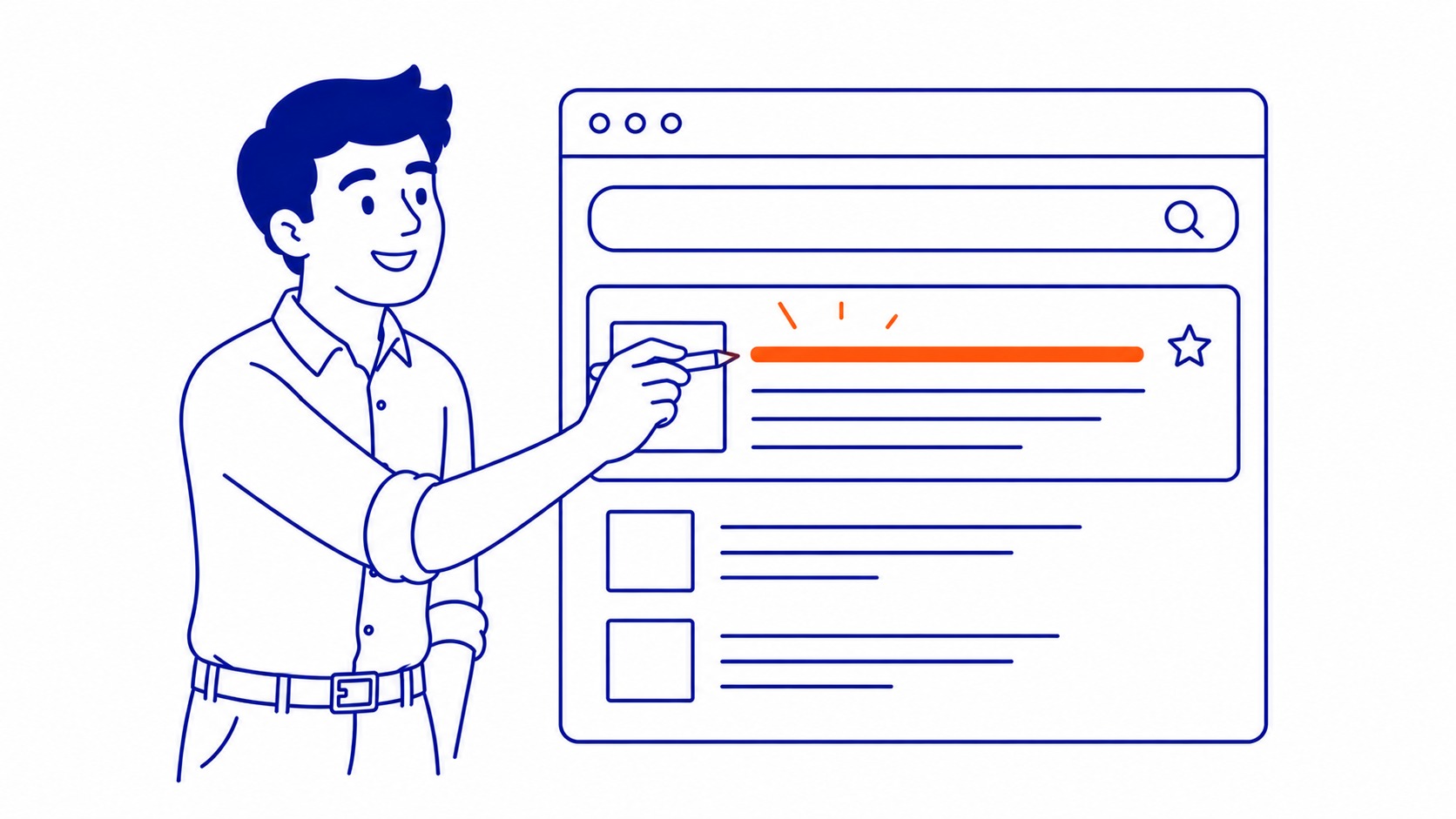
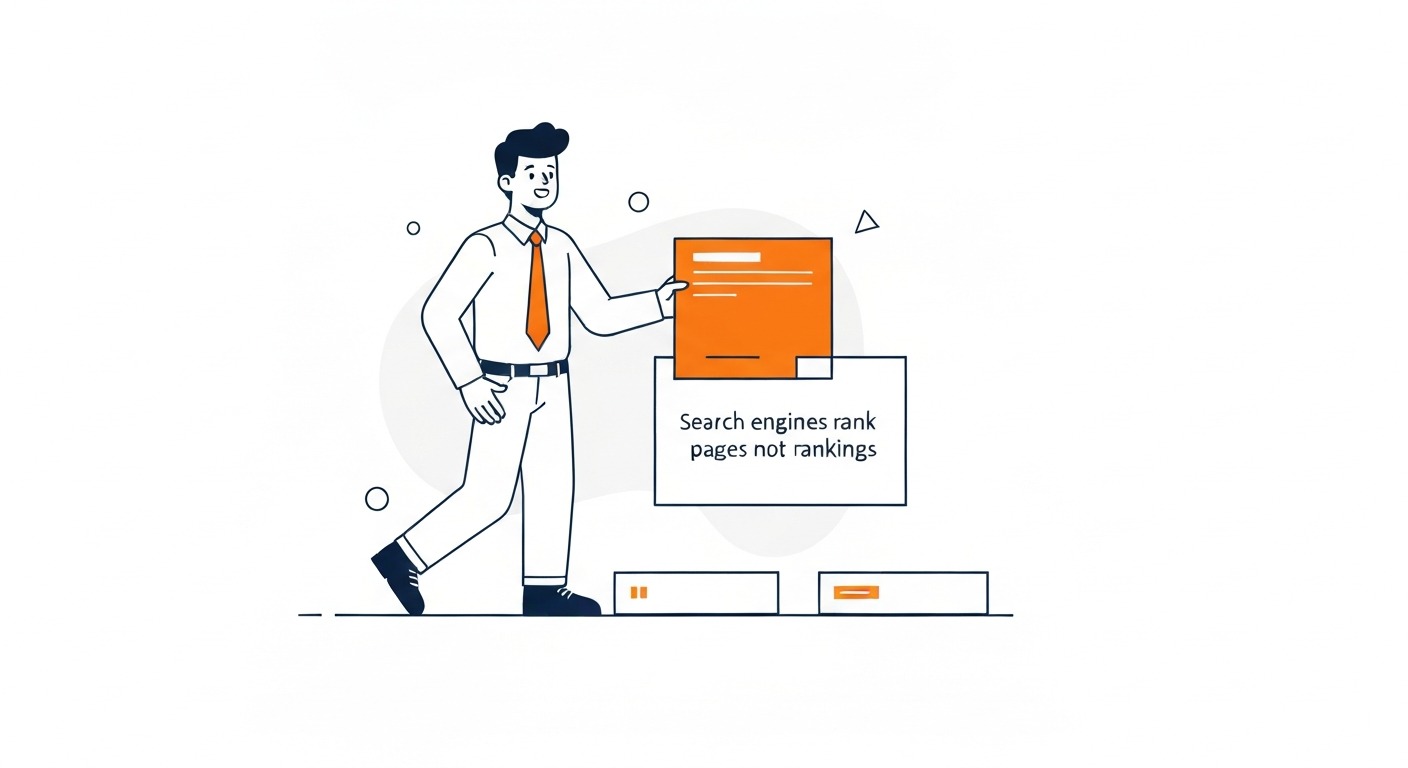
Search engines rank pages, not websites. Your domain authority helps, but a page on a high-authority domain still ranks better when its on-page elements are properly optimized than when they are left as defaults or ignored entirely. Google reads each page individually and scores it against the specific query it is trying to answer.
How Search Engines Read Your Pages
Search engine crawlers read the HTML of each page, not the rendered visual. Title tag, meta description, heading tags, body copy, alt attributes on images, anchor text on internal links: these are what the crawler parses. One element it skips entirely is the meta keywords tag, and what meta keywords are explains why. A page that looks polished in a browser can still send weak signals if the HTML is thin, the title tag is generic, or the headings do not reflect what the content covers.
Google also measures user behaviour. If users land on your page and immediately return to search results, that signals the content did not answer the query. Time on page, scroll depth, and pogo-sticking all factor into how search engines evaluate whether a page is actually serving the people who find it. On-page SEO is therefore both about what search engines read in HTML and about building content that satisfies user intent well enough that visitors stay.
Title Tags and Meta Descriptions
Title tags and meta descriptions are the two on-page elements most users see before they visit your site. They appear in search results as the clickable headline and the descriptive snippet below it. Getting these right is foundational for your website. Both live in the head section, and how to use meta tags for SEO sorts out which tags there still matter. Leaving them as auto-generated defaults means Google writes them for you, and it often does not write them with your target keyword or your best conversion pitch in mind.
Writing Title Tags That Rank and Get Clicked
Title tags are the single heaviest on-page ranking signal. Primary keyword near the front, under roughly sixty characters, written for a person deciding whether to click. A title that reads as a keyword list ranks worse and earns fewer clicks than one that reads as a genuine answer to the query. We cover the specifics in what an SEO title is. To-The-TOP! rewrites title tags on every client site before touching anything else, because that single change often produces measurable movement in three to four weeks.
Avoid putting the brand name at the front unless the query is navigational. “To-The-TOP! Calgary SEO Company | Professional SEO Services” buries the primary keyword behind the brand. “Calgary SEO Services | To-The-TOP!” puts the keyword first and still communicates the brand. For informational queries like “what is on-page SEO,” the question phrase itself is the headline. Write title tags for the query, not for the company’s ego.
Meta Descriptions and Click-Through Rate
Meta descriptions do not directly move rankings. Your site does not rank higher because your meta descriptions are well-written. What they move is click-through rate. A result sitting at position four with a compelling meta description often outperforms position three with a generic one, because more users choose to click on it. And results that earn proportionally more clicks over time tend to climb.
Write meta descriptions as ad copy for the search result. 150 to 160 characters. Active voice. One reason to click. Include the primary keyword naturally, because search engines bold matching terms in the snippet, making your result stand out visually. The guide on how to improve your SEO covers click-through improvements in a full improvement strategy.
Headings, URLs, and Internal Links
Headings, URLs, and internal links work together to tell search engines how your site is structured and which pages matter most. Getting these right is less glamorous than content creation, but their cumulative effect on crawlability and authority distribution across your site is significant.
Heading Hierarchy and URL Structure
One H1 per page states the main topic and usually contains the primary keyword. H2 headings break the content into its major sections. H3 headings handle subsections within those H2 blocks. This hierarchy helps search engines parse the structure of the page and helps users skim to the sections most relevant to their specific question. Skipping heading levels or using them for visual styling rather than structure weakens both signals.
URLs should be short, readable, and keyword-present. A URL like to-the-top.ca/what-is-on-page-seo/ sends a clear signal about the page’s topic and reads as a legitimate result rather than a database string. Hyphens separate words; underscores are not treated the same way by search engines. Keep URLs lowercase and avoid stop words where they do not add meaning.
Internal links distribute authority across your site and tell Google which pages you consider important. The full picture of what internal and external linking in SEO is sits right alongside this on-page work. A newer post linking to your cornerstone service pages with descriptive anchor text passes both relevance and ranking authority to those pages. Ten internal links buried as unclicked footers pass less than two links woven naturally into body copy that users actually follow. The keyword research that underpins a site’s content strategy shapes which internal links to build, because anchor text should reflect your actual ranking keywords rather than generic phrases like “click here.”
Content Quality and Keyword Use
On-page SEO starts with content that genuinely covers the topic. Producing that content well is its own craft, covered in what SEO writing is. A technically perfect page with thin, vague content still ranks poorly because search engines are good at distinguishing pages that actually answer a query from pages that only look like they do on the surface. Content quality and on-page technical work are not separate tasks. One without the other underperforms.
The primary keyword belongs in the first paragraph of your content. From there, use it naturally throughout the body copy of your page, in at least one H2, in the URL, and in the image alt text. Related terms and synonyms contribute to topical signal without requiring repetition of the exact keyphrase. Your website ranks on the strength of how thoroughly your content answers the query, not on how many times one keyword appears. A page about on-page SEO that also covers title tags, meta descriptions, heading structure, and keywords is signalling to Google that it is a thorough resource on the topic.
Keyword stuffing means forcing the same phrase into every paragraph. It stopped working in 2011 and now actively hurts rankings. Users notice it too. Pages that read as if a phrase was jammed into every sentence lose visitors quickly, and that bounce behaviour feeds back into how Google rates your page’s usefulness. Write your content for the user first, then confirm that your primary keyword appears in the right structural positions.
Images and Page Speed
Images contribute to on-page SEO in two ways: their alt text and their file size. Alt text is the HTML attribute that describes an image for screen readers and for search engine crawlers that cannot see visuals. Including the primary keyword in at least one image’s alt text adds a minor but real on-page signal. Descriptive alt text on all images improves accessibility and helps search engines understand the page context more fully.
File size and page speed matter more than most site owners realize. Google measures Core Web Vitals on real user devices under real network conditions. A page that takes four seconds to load on a mobile data connection loses a meaningful percentage of visitors before they ever see the content, and that exit behaviour signals dissatisfaction to search engines. Compress images before uploading. Defer render-blocking scripts. Test on an actual phone rather than a fast office connection. A full SEO audit surfaces exactly these speed issues, ranked by how much ranking impact each fix is likely to produce.
On-Page vs Off-Page SEO
On-page SEO is everything your team controls on your own website. Off-page SEO is everything that happens on other sites: backlinks from other domains, brand mentions in publications, local citation signals on directories and maps. Both matter for rankings, but they follow a logical order.
Fix on-page first. A website with weak title tags, thin content, and slow page speed will not extract full value from the backlinks it earns, because search engines are simultaneously reading the page those links point at. Strong off-page signals pointing at a strong on-page result compound effectively. Those same signals pointing at a weak on-page result produce smaller gains and waste the link equity. The on-page foundation is what makes external work worthwhile. Professional SEO services audit the on-page work first precisely because fixing it raises the ceiling on everything that follows.
Frequently Asked Questions
What is on-page SEO with an example?
On-page SEO is the practice of optimizing individual pages on your website to rank for specific search queries. Example: a Calgary contractor wants their services page to rank for “basement renovation Calgary.” On-page SEO for that page means putting the phrase in the title tag, the H1, the URL, and naturally throughout the body copy. It means choosing keywords with enough volume to be worth targeting and using them where search engines look for relevance signals. It means writing your content to cover basement renovation comprehensively enough to satisfy users who land on it. It means compressing images for fast load time and linking to the page from other relevant content on the site. All of that is on-page SEO work.
What are the most important on-page SEO factors?
Title tag and content quality rank highest in practice. The former carries the most individual signal weight of any on-page element. Content quality because thin content is the most common reason a technically correct page still does not rank. After those two: heading structure, meta descriptions (for click-through rate rather than rankings), URL structure, internal links, image alt text, and page speed. None of these are optional. A page strong in some and weak in others still underperforms relative to what it could earn with all factors addressed.
Is on-page SEO the same as technical SEO?
Related but not the same. Technical SEO covers infrastructure issues that affect the whole site: crawlability, indexation, site speed at the server level, mobile-first rendering, schema markup, canonical tags. On-page SEO covers element-level signals on individual pages: title tags, headings, content, internal links, image alt text. Technical SEO creates the foundation the site runs on. On-page SEO optimizes the individual pages running on that foundation. Both are required. Fixing one while ignoring the other leaves real ranking potential untapped. The how to do an SEO audit guide covers both layers in the context of diagnosing a real site.
How long does on-page SEO take to show results?
Title tag and meta description changes can show movement in two to four weeks once Google recrawls the affected pages. Content improvements typically move rankings over six to twelve weeks as the updated page is re-evaluated against competing results. Page speed improvements are among the faster-moving on-page changes: Google’s Core Web Vitals assessment can update within days of a significant speed improvement. On-page work is faster than link building but slower than paying for Google Ads placement. Both channels are worth running in parallel while the organic work matures.
