
SEO Copywriting for Humans
No matter where or how you publish content, having a good copy online can help your website tremendously. The modern world focuses on communicating online for the most part. This is why online businesses are starting to see how SEO copywriting can help them grow their company and get to the top of their market.
Search engine optimization (SEO) should always focus in part on copywriting if it is going to be successful. Good copy will catch the readers’ eye and be of interest to them. It will make them want to read and then act on what they read. That is why good copywriting involves using wording that persuades your audience to follow through with your desired action, such as buying your goods and services. (more…)
Search Engine Optimization with Google Analytics
When it comes to a Search Engine Optimization campaign, most agencies will make use of Google Analytics. With this amazing tool, they can see how their campaign is running. Analytics shows from which areas traffic is coming, how many daily visits a site gets and more other metrics. While The analytics tool from Google is incredibly useful, though, most people only manage to scratch the service and aren’t sure how to make the best use of the platform.

Google Penguin: 3 SEO Tips
SEO Tips will help you to start from within your organization.
If your site lost rankings or you are in the market to upgrade your SEO, here is a help.
Following is advice based on what I am doing with my client partners that not only survived Penguin but are dominating the search engines.
Black Hat SEO – what you don’t want to do
It is a personal insight, and it can have no coherence with your experience and your discoveries.
Black Hat SEO is simply the call name for some techniques that are used to get higher search engine ranking is an unethical manner (ways that are forbidden by the main search engines). They usually break the current rules and regulations (some of them were permitted some time ago but they became obsolete/forbidden because of the abuse), create poor user experience for the visitors of the site, unethically presents content in different ways (one way for the human visitors and one way for the search engines spiders). (more…)
Best Keywords Selection – Getting to the Top of Google.
Effectively designing each web page and marketing your site is what will separate you from probably 99% of all other self-styled “webmasters.” Why? Because, very simply, they don’t have any idea what to do or how important website promotion is while you, in only a few minutes, will know exactly how to get started getting to the top of Google through this straightforward keywords tutorial.

Did you know that there are, literally, trillions of web pages on the Net? Hundreds of millions of websites. Most online pages get little commercial traffic while only a small minority of net pages get large volumes of traffic. (more…)
Why SEO Backlinks Don’t Work
Having a ton of backlinks pointing to your site, regardless of their page rank, simply does not count the way it used to.
Put simply, the days of climbing the ranks in Google by buying backlinks are over and done with.
Even with backlinks from the highest page ranks, your link profile is no longer the deciding factor when it comes to ranking on Google. (more…)
The 10 Secrets of On-Page Optimization
Google’s Penguin algorithm has changed the way to win at on-page optimization.
Keyword stuffing, over optimization and spam backlink campaigns, is a thing of the past.
Simply put, there are ten secret points to pay attention to if you are looking to achieve perfect on-page optimization. You can even use this post to see that I optimized this page, using all ten secrets, for the keyword on-page optimization. (more…)
How to create successful Link Building Campaign?
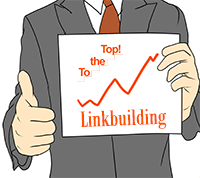 Structuring your link building campaign can be difficult as there is so much advice on the internet that contradicts with each other.
These make a person confused about what to do and what not.
One thing that most of us know for sure is, creating successful link building campaigns are very crucial for the success of a website.
So, figuring out that in which direction should you pursue your efforts for maximum returns in link building is difficult but necessary. (more…)
Frequently Asked Questions of SEO
To-The-TOP: SEO can be complicated and confusing, so here is some additional information to better serve you. (more…)
Working Hard To Write Quality Content
I may not know you personally, but I can tell you this about yourself: you can write quality content.
I am going to give you as much meat as possible in this post because it is such a central component to the quality of your website.
However, since it is such a central component to the success of your site, you will find more about this topic in most of our other posts!