What Is PPC Campaign Management?
Most business owners have a working picture of PPC: sponsored results at the top of the page, payment on the click, a daily budget capping the spend. That part is accurate. What actually goes into keeping those clicks profitable is a different conversation.
Every underperforming account we have reviewed had the same pattern: a solid launch followed by almost no ongoing management. The work that makes PPC profitable is not the setup, it is everything after. Bid adjustments, negative keyword lists, copy tests, landing page reviews. Skip that ongoing process and a well-built campaign slowly drains your budget, delivering traffic to your website that converts at nothing.
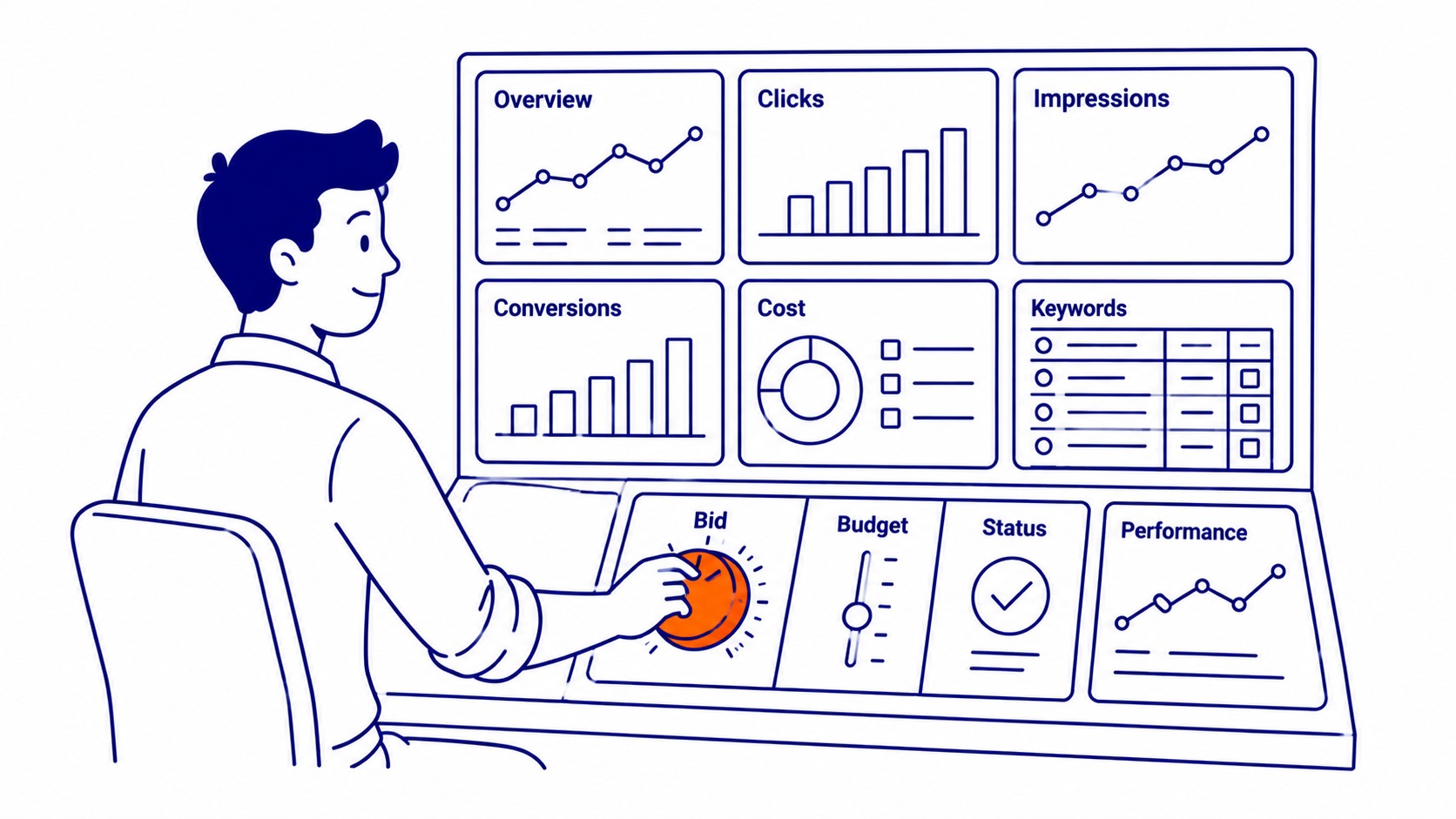
What PPC Campaign Management Actually Involves
Keyword research runs continuously. Not just at setup. Search behaviour shifts, competitors enter new auctions, and the queries driving conversions three months ago may be burning budget now. A PPC manager reviews search term reports regularly, adds converting queries as exact match keywords, and builds the negative list from non-converting terms. On the organic side, keyword competitive analysis does the same job.
Bid adjustments happen alongside that. Which devices are producing conversions? Time of day matters too: which hours drive the best qualified traffic? Geographic targeting also matters: which postal codes produce the leads worth paying for? Bid multipliers rise on the segments producing sales. They fall, or get excluded entirely, on segments that spend without producing.
Ad copy testing is the third constant. Rotating headlines, comparing descriptions, testing calls to action. Any campaign running the same ads from its launch date six months later is almost certainly underperforming. This is the work a Google Ads management company never finishes. Setup questions get answered once. Ad copy never stays answered. By month two, clients running both channels start asking about the real cost of Facebook ads. Audience work sits in the same bucket, setting up retargeting ads properly included.
Quality Score and What Actually Drives Ad Costs
Quality Score (1 to 10) multiplies against the bid. Two advertisers can bid identical amounts on the same keyword. The one with the higher Quality Score pays less per click and earns better placement.
The explainer on what is PPC covers the bidding mechanics and auction factors that campaign management decisions are built on.
Keyword-to-ad relevance, landing page fit, and historical click-through rate: those are the three factors that determine it. A search for “Calgary plumber emergency” should trigger an ad specifically about emergency plumbing, not a general home services page. That landing page should still carry the same message. Disconnection at any point in the chain lowers the score and raises costs.
With a strong Quality Score, your budget goes further. Lower CPC on the same daily spend means more clicks. More clicks, when the landing page converts, means more leads or sales from the same investment. Bidding more does not automatically win better results.
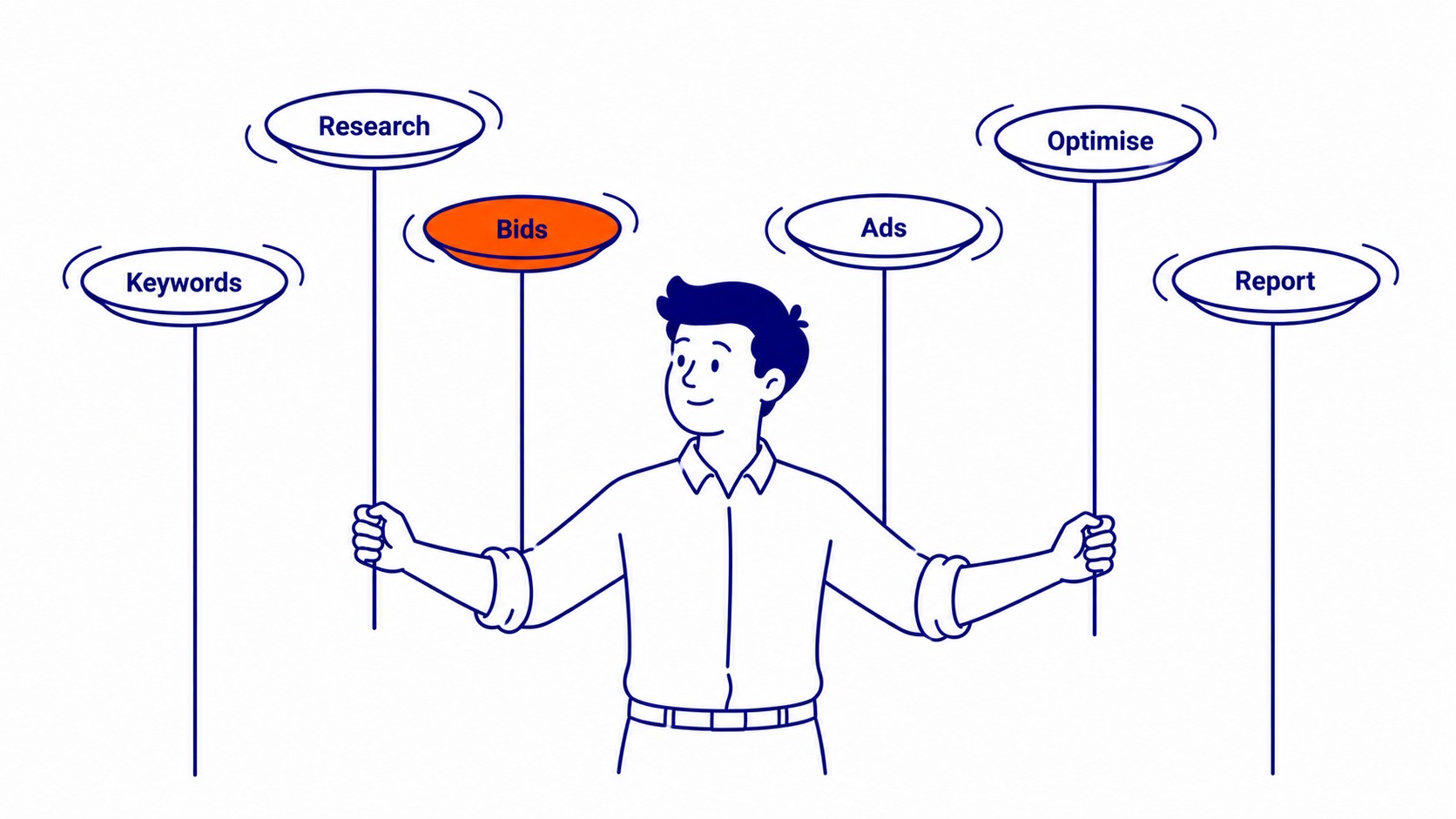
Targeting: Reaching the Right Audience for Your Business
Geography, device type, time of day, audience segments: PPC platforms give precise control over who sees your ads. That control only produces results when calibrated against actual conversion data.
The setup guide at Google Ads setup and strategy covers the account structure that ongoing campaign management works within.
A Calgary roofing company targeting the entire metro may find that most conversions come from four or five specific neighbourhoods. Tightening geographic targeting to those areas and pulling budget from lower-converting regions raises campaign efficiency without raising the overall budget.
Remarketing lists re-target people who visited your website and left without converting. Your website visitor data is one of the strongest signals available for audience layering. In-market audience segments also show ads to users Google has identified as actively researching the category. Demographics add another layer, useful when your business skews toward a specific age range or household income bracket. These tools sharpen keyword targeting rather than replacing it. Marketplace platforms run their own version of this, and Amazon PPC is the obvious one. Targeting sits inside the wider picture of SEM and PPC working together.
Ad Copy and Landing Page Alignment
The ad brings a visitor to your website. The landing page earns the conversion.
PPC management includes regular landing page reviews. Not necessarily redesigning from scratch, but catching the alignment problems dragging conversion rates down. An ad promising a free estimate should open on a page leading with that offer. Ads targeting a specific service should not resolve to a homepage. These mismatches hurt conversion rates and drag Quality Score lower at the same time.
Copy fatigue is real. Creative that performs well at launch typically sees declining click-through rates over time as the same audience sees it repeatedly. Fresh copy, rotated on a regular schedule, keeps those rates from degrading.
A/B testing landing page variations, however, produces data that shapes bid decisions too. Pages converting at higher rates earn more traffic. Bid adjustments follow.
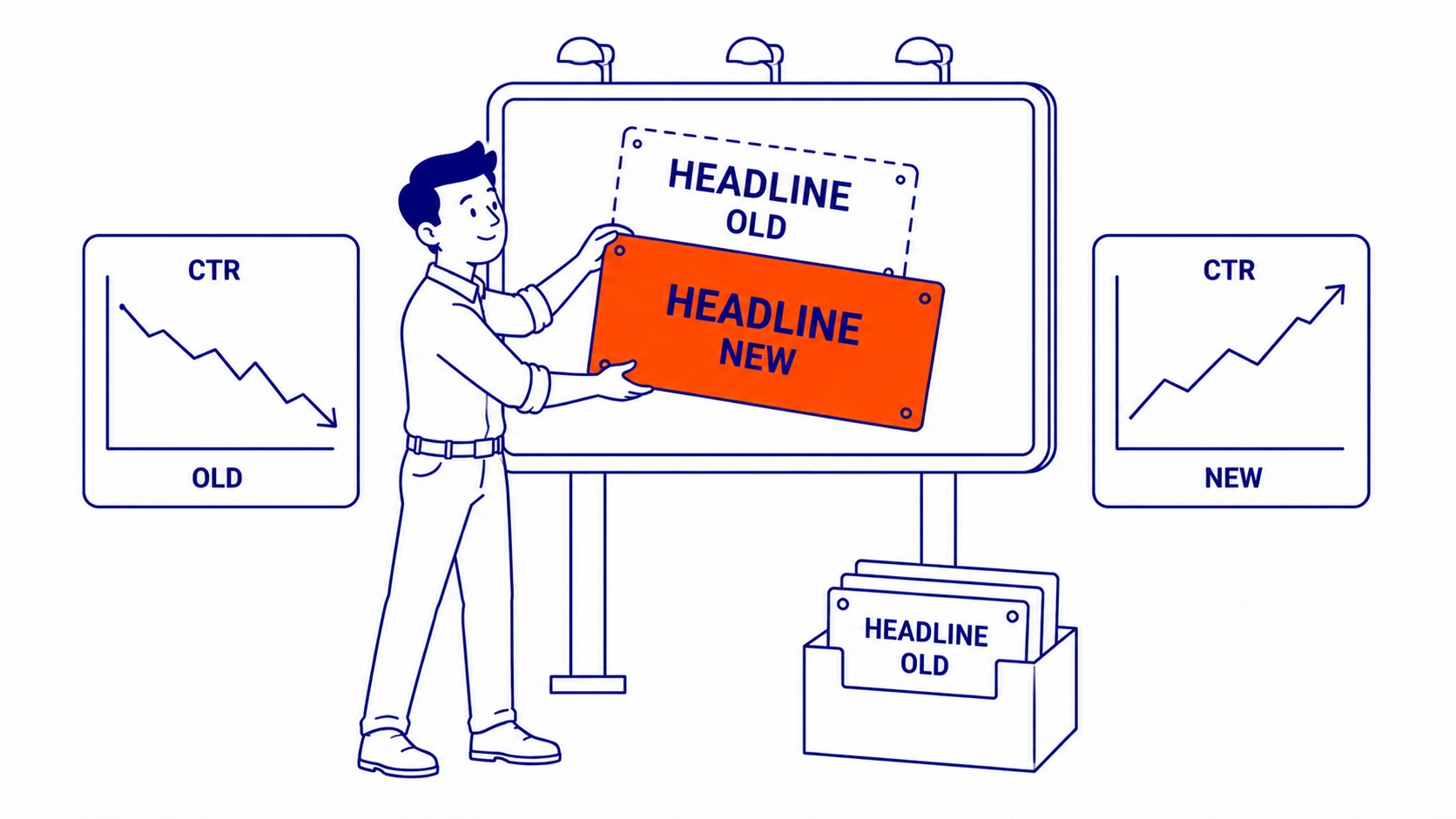
Negative Keywords: Where Your Ad Budget Stops Leaking
Getting an ad live is the easy part. Every Calgary business running paid search is losing some spend to irrelevant queries, and a Google Ads management agency that treats negative keyword research as a one-time task keeps losing it.
A home services company bidding on “renovations Calgary” may be showing ads for “DIY renovation ideas,” “renovation tools for beginners,” and similar terms that will never generate a call or form submission. Negative keywords block those searches from triggering your ads. A well-managed campaign builds hundreds of them over months, drawn from actual search term data.
This is the clearest gap between a launched campaign and a managed one. Adding negatives, tightening match types, and cutting waste is weekly work. It does not finish at launch. The work continues for as long as your campaigns run.
Reporting and Campaign Performance Data
Reporting in PPC management is not impression counts and click totals. Click-through rates, conversions, cost per acquisition, revenue attributed by campaign: useful monthly reports connect all of it and surface what to act on next.
The question good reporting answers: is this spend generating returns worth more than it costs? CPA by campaign, by ad group, by keyword. Conversion tracking on your website needs to be configured and verified correctly before any of that data is reliable. A campaign optimising toward conversions that were never tagged properly is making decisions based on bad signals, regardless of how well the ads themselves were built.
Investing in PPC campaign management without also investing in accurate tracking infrastructure means running your campaigns partially blind. Fixing the tracking layer is often the highest-return action in an underperforming account.
PPC Management: Running Campaigns Yourself vs. Hiring a Specialist
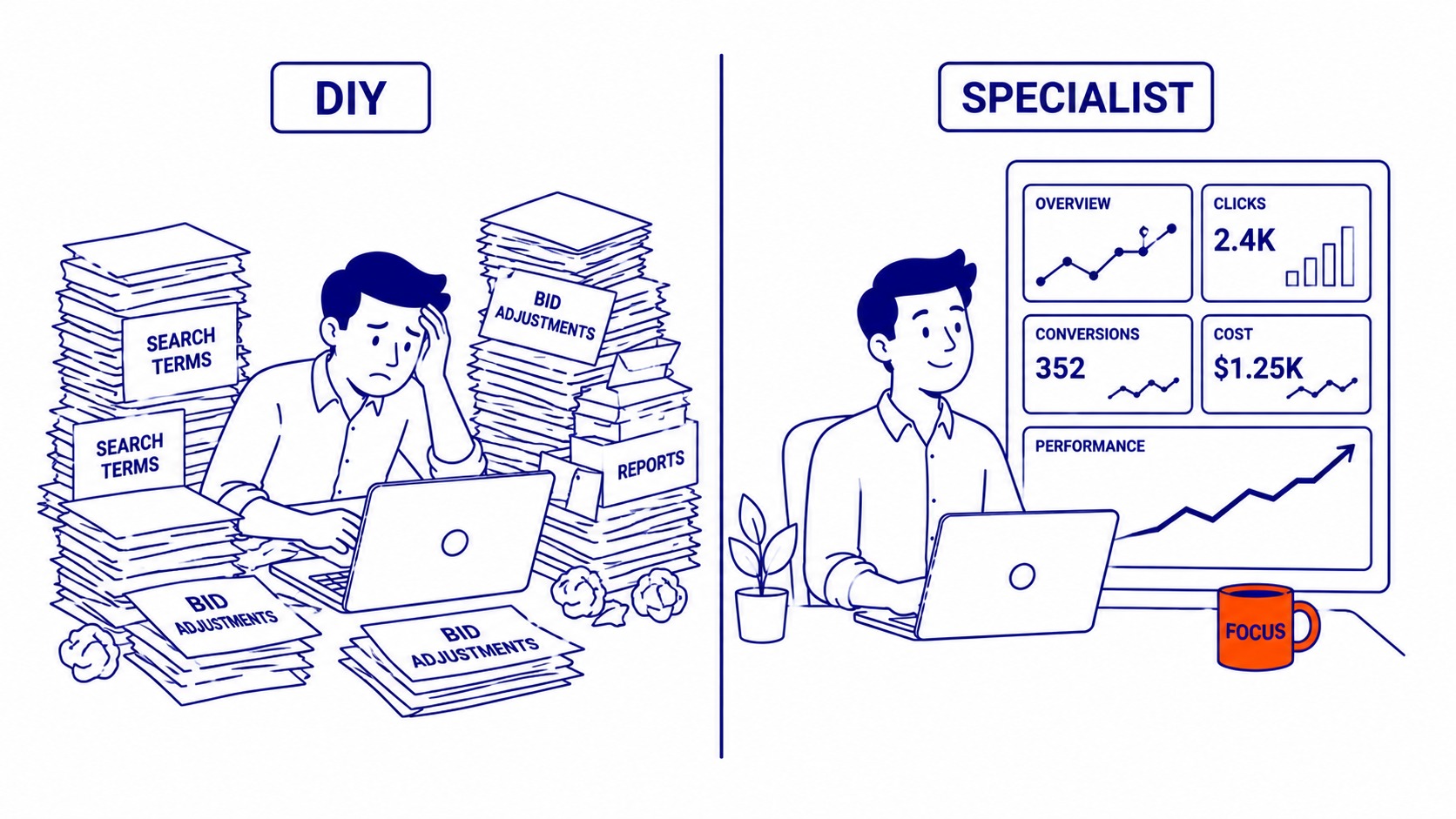
Running Google Ads yourself is possible. It occasionally produces solid results. What in-house PPC management usually lacks is the consistency to act on what the data shows.
The search term report revealing a wasted-spend pattern does not fix itself. Someone has to review it weekly, add negatives, shift bids, and test new copy. Done well, that takes several hours per campaign per week. Left inconsistently managed, the campaign drifts from whatever efficiency it launched with.
To-The-TOP! has been providing the Google Ads management Calgary businesses rely on since 2007. The first question people arrive with is usually about setup. The one that decides the outcome is who watches the campaign after launch. The campaigns that produce results over the long run share one trait: regular, active PPC management. Weekly reviews, not monthly check-ins.
PPC Campaigns and Calgary SEO Working Together
PPC and organic search are separate disciplines working toward the same outcome: qualified traffic that converts. Take a query like web designers Calgary local SEO and both turn up on the same screen. Search engines display paid results above organic listings. That traffic arrives the day a campaign launches. Organic results build over months, starting with search engine optimization keyword analysis, but the rankings still persist after the ad budget stops.
Running both makes sense for most service businesses. Paid campaigns hold the gap while organic authority accumulates. Once SEO holds target rankings, ad budgets can shift toward harder queries or new service areas. Keyword research from paid campaigns also surfaces terms worth targeting organically, which is where local business SEO services pick up the work. The two inform each other when managed together, consistently, over the same timeframe.
Advertisers in Red Deer SEO, Redcliff SEO, and Revelstoke SEO work through the same campaign structure and bidding decisions when running paid search. Most planning conversations start with estimating competitor ad spend in the target market.
Frequently Asked Questions
How much does PPC campaign management cost?
Fees depend on scope and provider. Most PPC management arrangements charge either a flat monthly retainer or a percentage of ad spend, typically ten to twenty percent. A business spending $3,000 a month on ads should expect management fees between $300 and $600, depending on how many campaigns are running and how actively they need to be managed. Well-run accounts often recover that cost through lower CPC and stronger conversion rates across your campaigns.
PPC vs. SEO: which produces better long-term results?
Both suit most service businesses. PPC delivers results faster. The traffic stops when the budget stops, however. SEO builds slower, but the results compound and persist. Businesses that hold strong positions in competitive markets tend to invest in both: paid search for immediate returns, organic SEO for the long game.
What does a PPC manager actually do?
Consistency, mostly. In-house PPC management often starts well and drifts as other priorities take over. Your campaigns get fewer reviews as weeks pass, optimisation slows, and performance drops without anyone noticing closely. A good PPC manager brings a predictable routine: weekly search term reviews, monthly copy tests, ongoing bid adjustments from actual conversion data. That routine is what keeps a campaign producing results rather than just spending.
Is PPC the same as Google Ads?
Google Ads is the dominant PPC platform for Canadian businesses. Bing Ads and paid social placements on platforms like Meta and Instagram also run on pay-per-click models. PPC campaign management covers whichever platforms the campaign runs on. For most service businesses in Calgary and Alberta, Google Ads is where the majority of the budget goes and where most PPC management attention belongs.
Contact Calgary SEO Company To-The-TOP!
Questions about anything in this article, or about your own rankings? Talk to a Calgary SEO specialist directly.
Phone: (403) 308-5949
Address: 1509 14 Ave SW, Calgary, AB T3C 0W4
Hours:
Monday to Friday: 10:00 am – 7:00 pm
Saturday: 12:00 pm – 4:00 pm
Sunday: closed
