What Is SEO Writing? A Practical Guide
SEO writing is the practice of writing content that ranks in search engines while still reading well for the person who clicks. Two audiences, one piece of text. The search crawler that decides where the result lands, and the reader who decides whether to stay.
That second audience is the one most people forget. They stuff keywords, hit the word count, and wonder why the post ranks for a week and then slides. Good seo writing serves both at once, and it has since long before AI tools made thin content cheap to produce.

SEO Company To-The-TOP!, a Calgary SEO firm, has been writing content that ranks since 2007. Here is how the work actually goes, not the textbook version.

What SEO Writing Actually Is
Start with the misconception. Seo writing is not about tricking Google. It never was, and the tricks that worked in 2009 get pages penalized now.
The real definition is narrower. You take a topic people are already searching for, you figure out what they actually want when they type that query, and you write the page that answers it better than the ones currently ranking. Keywords sit inside that process. They are the map, not the destination.
A post about furnace repair in Calgary needs the phrase “furnace repair” in sensible places. Title. First paragraph. A heading or two. Beyond that, what makes it rank is depth, structure, and whether a real reader gets their answer. Search engines have spent fifteen years getting better at measuring exactly that.

SEO Writing vs Copywriting vs Content Writing
These three terms get used as if they mean the same thing. They do not, and the difference matters when you hire someone.
Copywriting sells. It moves a reader toward one action: buy, book, call. A landing page headline is copywriting. Punchy, persuasive, short.
Content writing informs. Blog posts, guides, explainers. The goal is to be useful, build trust, keep someone reading. Whether that effort pays off in rankings is the question does blogging help SEO answers. Less hard-sell, more depth.
Seo content writing is content writing with search demand built into the plan from the start. You are not writing whatever you feel like and hoping it ranks. The topic got picked because data showed people search for it. Then seo copywriting blends in where the content needs to convert, not just inform. Most strong pages use all three modes. A guide that informs, ranks, and nudges the reader toward a next step.
How Search Intent Shapes Every Word
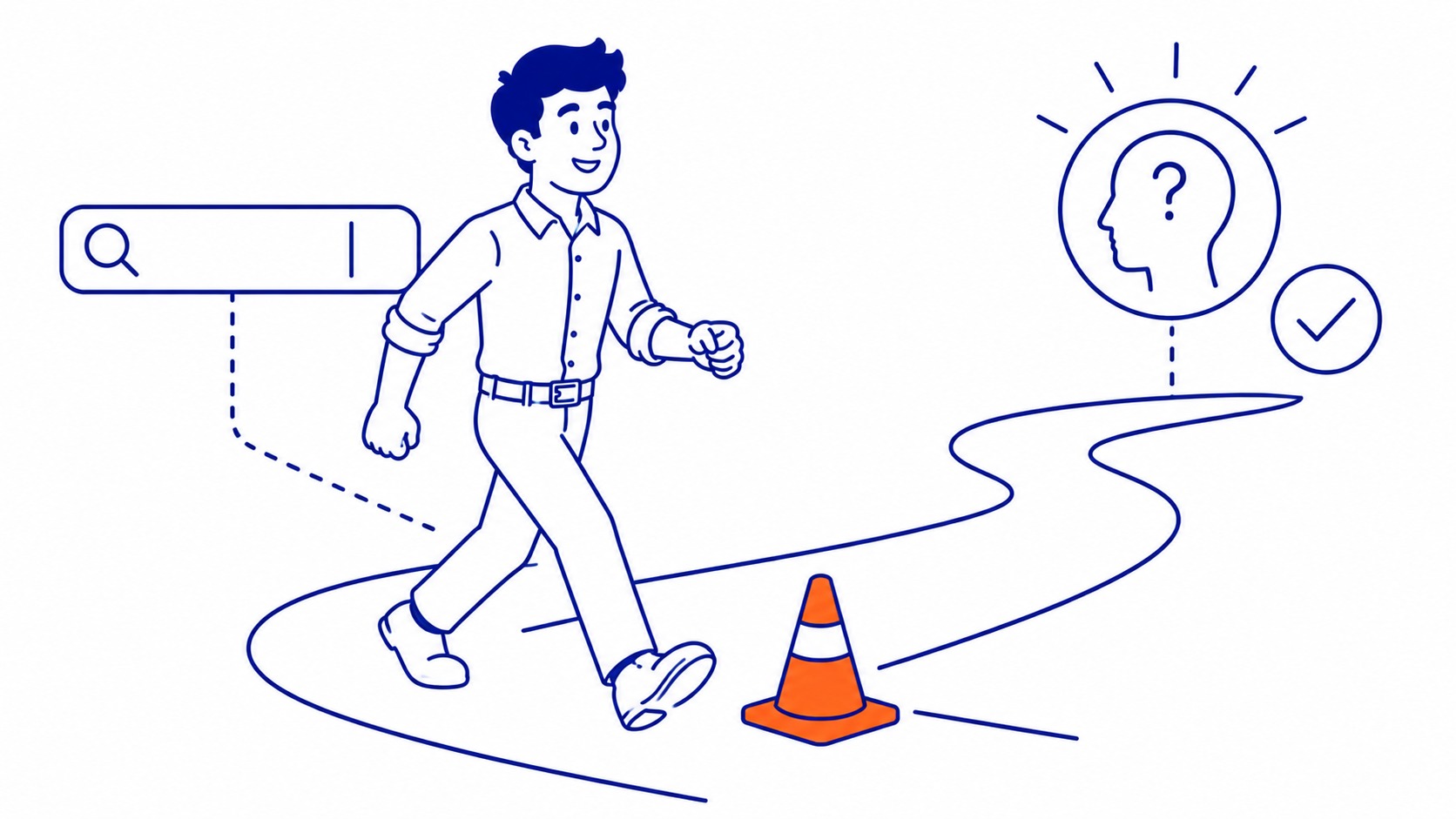
Search intent is the why behind a query. Get it wrong and nothing else you do matters.
Someone typing “best running shoes” wants a comparison, a list, opinions. Type “buy Brooks Ghost 16” instead and the want is a product listing with a checkout button. Same product category, completely different result. Hand the second person a 2,000-word guide and they bounce.
Before writing a single sentence, look at what already ranks for your target query. If the top ten results are all listicles, Google has decided that query wants a listicle. Fighting that with a single-product hard sell almost never works. The seo writing job is to read the intent the search results already reveal, then match it and go deeper.
There are four broad intent types worth knowing. Informational (“how does seo work”), navigational (“to-the-top seo”), commercial (“best seo agency calgary”), and transactional (“hire seo consultant”). Each one wants a different format.
Keyword Research Comes First
No keyword research, no plan. You are guessing at what people search and how often. It helps to understand why keywords are important before building a page around them.
Keyword research tells you three things. Which phrases people actually type, how much competition each one carries, and what related terms belong on the post. A good keyword selection process surfaces the long-tail phrases that convert without the brutal competition of the head terms. Our walkthrough on how to do keyword research covers the tools that do this.
The mistake here is chasing volume alone. A keyword with 40,000 monthly searches looks great until you see the first page of results is owned by national brands with millions of backlinks. Meanwhile a phrase with 300 searches and weak competition often brings more actual customers. Lower traffic, higher intent, real conversions.
Once you have your primary keyword and a handful of related terms, they become the skeleton of the article. Not stuffed in. Placed where they fit the meaning. Search engines read related terms as proof the post covers the topic with depth, so the secondary keywords matter nearly as much as the main one.
On-Page Elements That Carry SEO Weight
Certain spots on a page carry more search weight than the body text. Get these right and the rest of the writing has room to breathe. Those spots are the core of what on-page SEO is.
Title tag. The single most important on-page element. It is what shows in search results and what tells Google the topic. Put the primary keyword near the front and keep it under about 60 characters.
Meta description. It does not directly affect rankings. What it affects is whether someone clicks. Write it like ad copy: a reason to choose this result over the nine others competing for the eye.
Headings. H1 for the title, H2s for main sections, H3s for sub-points. They give structure to readers skimming and to crawlers parsing the content. Work keywords in naturally where they fit.
URL, first paragraph, image alt text. The keyword belongs in the opening hundred words and in the address itself. Alt text describes images for accessibility and gives search engines one more signal about the content. Video carries its own ranking rules, which is what YouTube SEO is about.
Writing for Readers and Search Engines at Once
Here is where seo writing earns its name. The post has to satisfy a crawler and a human in the same words.
Readability does heavy lifting. Short paragraphs, plain language, sentences that do not run on. People scan before they read, so front-load the answer. Google measures how long visitors stay and whether they bounce back to the search results, which means a page written for humans tends to rank better than one written for the algorithm.
Depth matters too. An article that answers the obvious question and the three follow-up questions outranks the one that stops at the headline. Sustained across a whole site, that is how content marketing helps SEO. That is why thin 400-word posts rarely hold a ranking anymore. They get out-covered.
Internal links pull weight as well. Pointing a new article at related pages, like a guide on how much SEO costs or what local SEO involves, helps readers and spreads ranking signal across the site. To-The-TOP! threads these links through every page rather than dumping them at the bottom.

Common SEO Writing Mistakes
Keyword stuffing tops the list. Cramming the same phrase into every other sentence reads badly and triggers spam signals. Use the keyword where it fits, then trust the related terms.
Ignoring search intent comes second. Writing the post you want to write instead of the one the query demands. No amount of optimization rescues a mismatch.
Writing for the algorithm instead of the reader is the quiet killer. Pages that sound robotic lose visitors fast, and search engines notice the bounce. Honest, useful writing beats keyword-optimized filler every time, even when the filler hits every technical box.
Last one: expecting overnight results. Content takes months to climb, not days. Anyone promising first-page rankings in a week is selling something. The pages To-The-TOP! writes in spring often peak the following autumn, which is why a published post needs ongoing website SEO support rather than a one-time effort. That is normal. Worth knowing before you judge whether the writing worked.
Frequently Asked Questions
What does SEO mean in writing?
In writing, SEO means shaping the content so search engines understand it and rank it for the queries it answers. That covers keyword placement, headings, title tags, and topical depth. The aim is content that reads naturally for people and still gives crawlers clear signals about the topic.
What are SEO writing examples?
A how-to guide built around “how to fix a leaky tap” with the phrase in the title and first paragraph. Or a service page targeting “search engine optimization Calgary” with structured headings. Maybe a product comparison aimed at a commercial query. Each one starts from a real search phrase, matches the intent behind it, and goes deeper than the pages already ranking.
How do I become a SEO writer?
Learn keyword research, study search intent, and write a lot. Pick a topic, find what already ranks, and write something more useful than that. Tools like Search Console show which queries your pages earn impressions for, which teaches intent faster than any course. The writers who improve fastest publish, measure, and adjust.
What does a SEO writer do?
A seo writer researches keywords, maps search intent, plans the structure, and writes content that ranks while staying readable. The role blends research and writing in roughly equal parts. On a typical project, half the time goes to figuring out what to write before a word gets typed.
To-The-TOP! builds SEO services around content that earns rankings, not keyword counts. The same approach runs through an SEO audit, a Google Ads management campaign, or ongoing website promotion. Worth a look through the SEO portfolio or the SEO blog before deciding who writes your next page.
SEO writing rewards patience and honesty more than tricks. Pick topics people search, match what they want, write deeper than the competition, and keep the reader in mind on every line. Rankings follow from there, usually a few months later than anyone would like.
