
What Is Law Firm SEO? A Practical Breakdown for Legal Practices
Law firm SEO is search engine optimization for a legal practice: the work that helps a firm’s website and Google Business Profile appear when someone in its area searches for the kind of lawyer it is, such as “family lawyer Calgary” or “how does probate work in Alberta”. It covers practice-area pages built around how people search, the local listings that drive the map results, content that answers the questions clients ask before they call, and the technical health of the site. It works on the same principles as SEO for any business, but legal searches carry higher stakes, closer comparison between firms, and professional rules about what a lawyer may say in marketing, and those three things change how the work is done.
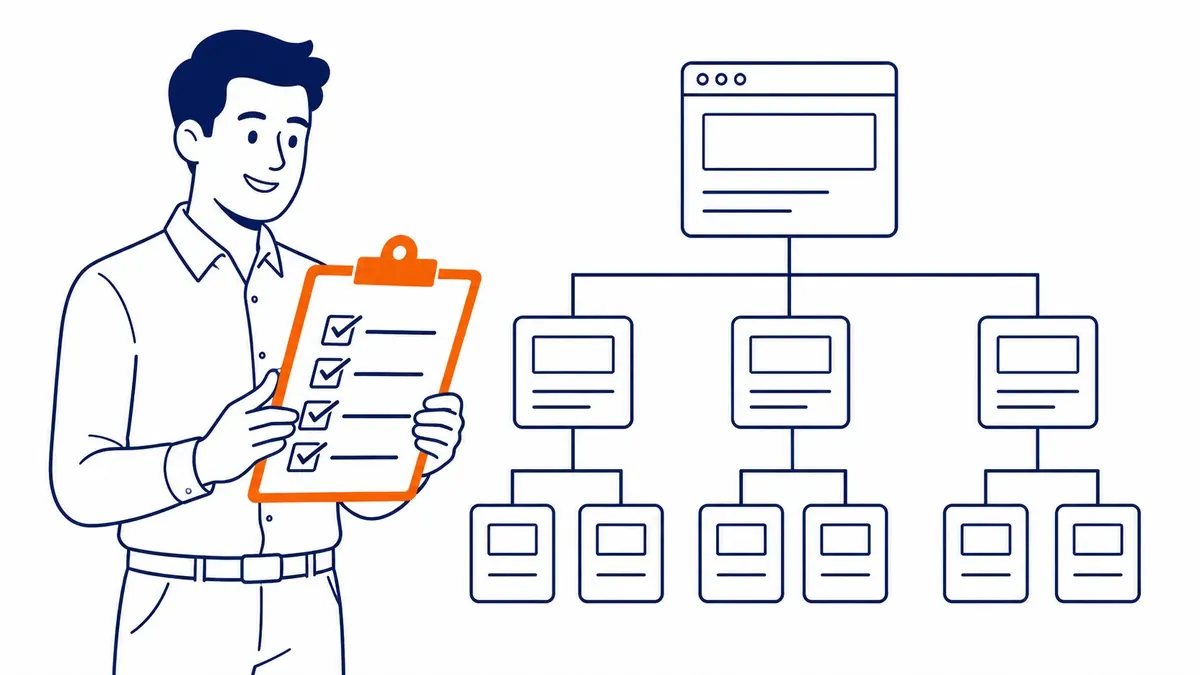
What law firm SEO covers
Most of the work falls into five parts, and a firm rarely needs all of them at the same intensity. A sole practitioner in one Calgary office depends heavily on the local parts, while a firm with several practice groups across Alberta and British Columbia needs far more content and site structure. The table below sets out what each part involves and the mistake that most often undermines it.
Which Blog Platform Is Best for SEO?
None of them, and that is not a dodge.
Every blog platform on your shortlist ships the same defect. No comparison article scores it. Scoring it would end the comparison.
A/B Testing in SEO and How to Prove a Change Actually Improves Rankings
Most SEO changes get made on gut feel. Change a title tag. Wait a month. Guess whether it helped. A/B testing in SEO replaces the guess with actual evidence.
Split traffic between two page versions. Measure which one performs better. Same logic as A/B testing for conversion rate, applied to organic search instead.
Who’s the Best in Ecommerce SEO?
You wanted names. Nobody here is going to hand you a ranked list. Only the usual reason is not the reason.
The usual reason is that lists go out of date. True enough. Still, something stranger sits underneath this question. It has nothing to do with how fast an agency roster changes. Rather it has to do with where the material comes from.
How Ad Rank Works in Google Ads
We audit a lot of Google Ads accounts. One pattern repeats more than any other. An advertiser has the highest bid on the page. Their ad still sits in position four. A competitor holds position one and pays less per click to get there. That is ad rank at work. Not the highest bid. The best combination of bid and quality, shaped by context.
Understanding that gap matters. It explains why raising your bid does not always move your ad’s position. Understanding the full calculation also shows how you can move up without raising your bid at all.
What Is a Good CPC for Google Ads?
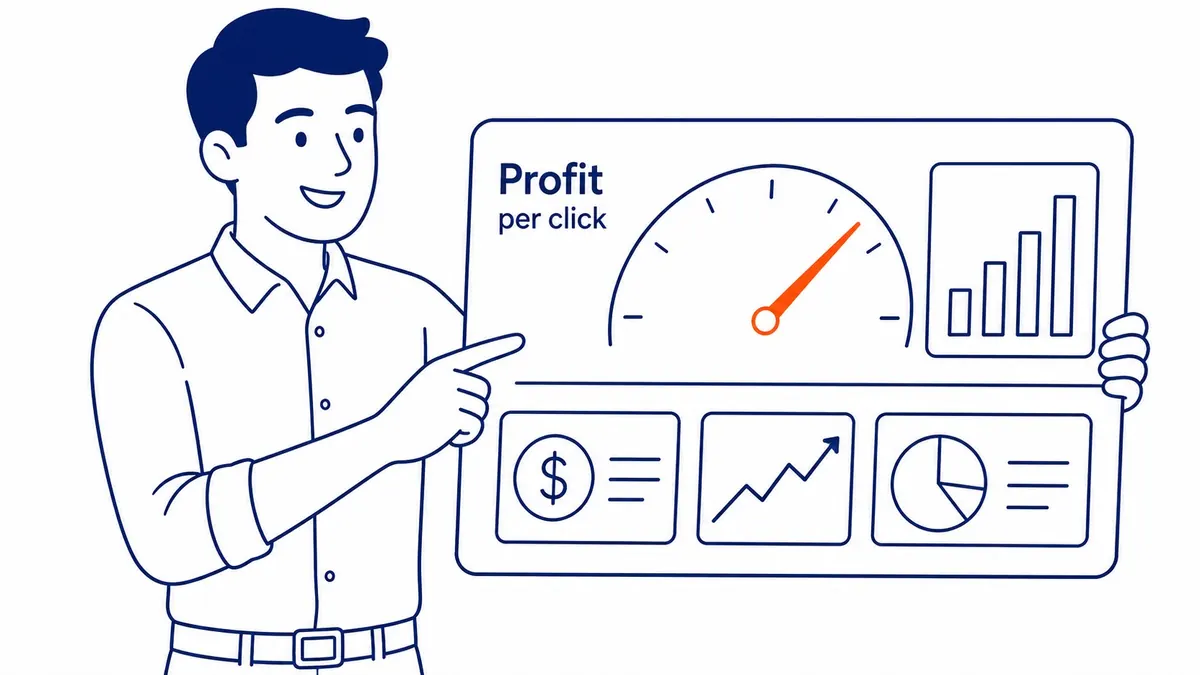
LocaliQ’s 2026 search advertising benchmarks put the average cost per click at $5.42 across all industries, with industry averages running from $1.63 for arts and entertainment to $9.87 for attorneys and legal services. Those figures come from LocaliQ’s own customers’ search campaigns on Google Ads and Microsoft Ads combined, and the page does not say which currency they are in or which countries the campaigns ran in, so they are a rough reference point rather than a Canadian price list. A good CPC for your own account is any CPC that sits comfortably below your break-even CPC. For a lead-generation campaign, that is your gross profit per sale multiplied by the share of clicks that become leads and by the share of leads that become paying customers. A CPC above the industry average can still be a good one, and a CPC below it can still lose money.
This guide comes from SEO Company To-The-TOP!, a Calgary practice that has worked in search since 2007 and holds Google Ads certification. It covers the 2026 benchmarks and what they can and cannot tell you, why your own market can differ from them, how to calculate the CPC your business can afford, and what changes when Google sets your bids for you. Where a statement comes from Google or a published report, the article names it, and where a number is an example, it is labelled as one.
How to Access Premium SEO Tools at a Lower Cost
The legitimate way to access premium SEO tools at a lower cost is to work through the lower-cost options in order: use the free version first, take a free trial only when you have a specific job ready, buy a single month when you need more, and switch to annual billing only once the tool has proved it earns its keep. As of October 2026, the main plans for Ahrefs, Semrush, Moz and SE Ranking list at $99 to $139 a month, with lighter plans from Ahrefs at $29 and Moz at $49 that come with tighter limits. Annual billing saves up to 17 to 20 percent, and both Ahrefs and Semrush offer free versions that cover a useful amount for a business researching its own site. Shared “group buy” logins look like a shortcut, but they break the vendors’ terms and can be shut off without notice.
What Are Sitelinks in Google Ads?
Sitelinks in Google Ads are extra links that appear under a search ad, each one taking the searcher to a different page on your website, such as a service, a booking form or your store hours. Google now calls them sitelink assets (they used to be sitelink extensions). The ones you create yourself, which Google calls manual sitelinks, are made up of link text of up to 25 characters, two optional description lines of up to 35 characters each, and a final URL, and Google can also add dynamic sitelinks of its own unless you switch them off. They cost nothing to add, and a click on a sitelink is charged the same as a click on the ad’s headline. The rest of this guide covers how they look, which ones show when you set them at more than one level, how to write them, and how to add them.
What sitelinks look like and where they show
Sitelinks sit below the headline and description of a text ad. Google’s Help page on sitelink assets says they can appear in ads at both the top and the bottom of the search results, so the old belief that only top-of-page ads get them is out of date. You need at least two eligible sitelinks for any to show. On a computer an ad can show up to 6, either stacked one below the other or side by side across one or two lines, and on a phone it can show up to 8 in a carousel that the searcher swipes through. An ad in the very top position on mobile can also get a more prominent layout with one sitelink per line.
Do You Need Digital Marketing or an SEO Service? How to Decide
If you are asking whether you need digital marketing or an SEO service, start with the fact that SEO is one part of digital marketing, so the real choice is between one specialist for Google search and a provider who runs several channels at once. Buy an SEO service on its own when people already search Google for what you sell, your website can turn those visitors into enquiries, and you are not trying to repair several other channels at the same time. Buy broader digital marketing when customers do not search for your offer yet, when the problem is conversion or reputation rather than visibility, or when several channels need one person coordinating them. Some businesses need neither yet.

What each option actually buys
Digital marketing is the umbrella term for promoting a business online, and it covers paid search, organic search, social media, email, content and the analytics that tie them together. SEO is the organic search piece of that umbrella, which is why the site has a separate explainer on how SEO is a part of digital marketing rather than a rival to it. Google’s own page on hiring an SEO lists what that piece usually includes: a review of site content and structure, technical advice on things like hosting, redirects and error pages, content development, keyword research, SEO training and expertise in particular markets. A digital marketing provider may do some of that work, but it is selling a mix of channels, and the mix is the product.
What Is Search Engine Optimisation in Brisbane?
Search engine optimisation is the work of making a website rank higher in unpaid search results. That is the definition. Nothing inside it mentions Brisbane.
You typed the city anyway. So do most people asking this. Worth a minute on why.