
SEO Keyword Selection: How to Choose the Right Keywords
The most common mistake in keyword research is choosing keywords by volume alone. High-volume keywords look attractive in the data. They also tend to be the most competitive, the vaguest in user intent, and the slowest to move. Targeting them without understanding what ranks and why leads to months of effort on content that never reaches page one.
Choosing the right keywords requires four assessments before any content gets written. Search intent. Traffic potential against ranking difficulty. Business relevance. Competitive landscape. Each one on its own is incomplete. All four together produce a shortlist worth building content around. Here is the process To-The-TOP! uses across every SEO campaign in Calgary and the other markets we operate in.
How to Improve Local SEO: Find the Weak Signal, Then Fix It
To improve local SEO, find out which of Google’s three local factors is holding your business back and fix that one first, instead of working through a generic checklist. Google says local results are “mainly based on relevance, distance, and popularity”, and its help page explains popularity under the heading of prominence. Relevance comes from a complete, accurate Google Business Profile and a website that describes your services clearly. Distance you mostly cannot change, so the job there is to describe your location and service area truthfully. Prominence comes from reviews, links and how well known the business is. The sections below show how to tell which one is weak and what to do about each.
How to Reduce CPC in PPC Campaigns
The list is short and everybody publishes it. Add negative keywords. Tighten your match types. Write ads that match the words people typed. Send the click to a page that keeps the promise.
All of it works, and it is covered properly elsewhere on this site. So none of it gets repeated here.
What Is a Sitemap in SEO?
A sitemap in SEO is a file that lists the pages on your website you want search engines to find, so Google and Bing can discover your URLs without having to stumble onto every page through links. It can also carry optional details, such as the date each page last changed in a meaningful way, its images and videos, and the other language versions of a page. Most sites use an XML sitemap, which sits at an address such as yoursite.com/sitemap.xml and is written for crawlers rather than people. Google’s own guidance is that a well-linked site of about 500 pages or fewer may not need one, but since WordPress, Shopify, Wix and Squarespace all create one automatically, the useful job for most business owners is checking that the file they already have is accurate.
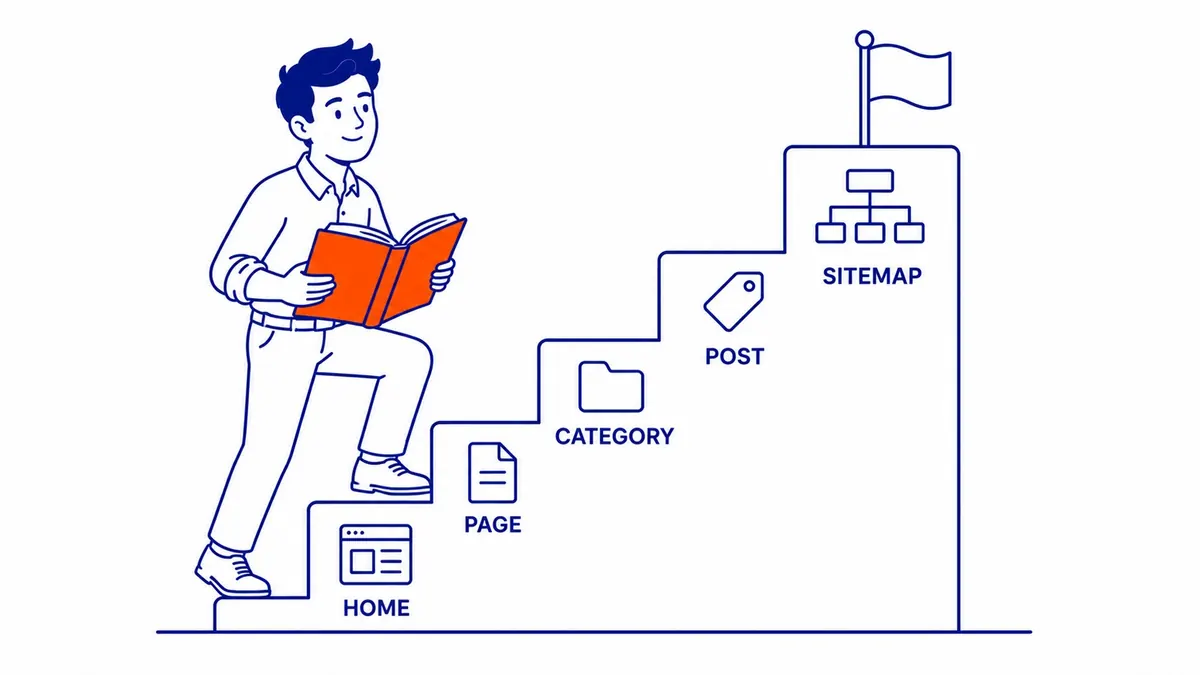
This guide explains what the file looks like, how it differs from an HTML sitemap, when a site benefits from one, and how to find, submit and check it. It also clears up a few beliefs about sitemaps that were true a decade ago and are not any more.
What Are the Best SEO Strategies for Financial Services Firms?
Financial firms come to us with a recognisable frustration. Ranking for nothing meaningful. The site looks credible. Content is published. Yet search engines return competitors with thinner credentials and shorter histories. Finance SEO carries constraints that generic SEO advice ignores entirely. That is almost always what we find when we dig in.
We have worked with financial advisors and insurance brokers since 2007. Lending firms too. The pattern repeats. Compliance slows content. Trust signals matter more here than in almost any other industry. Google applies a different level of scrutiny to financial content. Understanding that changes how every stage of SEO gets planned.
How to Find Low Competition Keywords
Most guides on keyword research start with tools. This one goes earlier. What these terms actually are, why they matter more than people realize, how to spot them without spending anything. Those questions come first.
Which Keywords Are Easiest to Target for SEO?
The short answer is settled. Long-tail phrases. Specific ones. Questions rather than bare nouns. Terms carrying a city in them. Anything the strong sites in your market never got around to writing about.
All of it is right. It is covered properly elsewhere, so none gets repeated here. The same goes for reading a difficulty score in whichever tool you pay for. Also for hunting down the low-volume terms nobody else wants.
Focus Over Density: How Many Keywords Per Page in SEO?
Practical answer: one primary keyword per page, with two to five supporting terms appearing naturally in the content. Not because some rule says so, but because each page should serve one clear search intent, and one intent maps to one primary query.
The longer answer is that “how many keywords per page” is the wrong question. Right question: does this page serve one intent clearly, or does it try to do too many things at once? Any Calgary SEO company that has been at this long enough has watched this confusion cause more wasted effort than almost any other SEO misconception. Good keyword basics address this distinction before going any further.
How to Do an SEO Audit: A Step-by-Step Guide
To do an SEO audit, work through nine steps in order: decide what question the audit has to answer, take a baseline in Google Search Console and Google Analytics 4, confirm Google can find and index the pages that matter, crawl the site for errors, check page experience, validate structured data, review each important page against its search intent, look at internal and external links, and check your Google Business Profile if you serve a local area. Finish by ranking what you found by its effect on the pages that earn you money, because a long list of issues with no order is not an audit. Each step below says which tool to use, what to look for and what usually goes wrong.

This guide is written for a site owner or marketer doing the work themselves, though it is just as useful if you are hiring someone and want to know what a proper deliverable should cover. Most of it needs only free tools from Google and a crawler, and each step that depends on how Google works follows Google’s own documentation.
Is SEO a One-Time Thing?
The question comes up at least once a month. You read something about search engine optimization. Two or three companies gave you a quote. Now you want to know whether a single project is enough to get your website ranking.
Not usually. A one-time project is a starting point. It is not a strategy. Here is why that distinction matters for your business before you spend anything.