
What Is an Example of an External App SEO Method?
A review site linking to your app’s store listing. That is an external app SEO method, and it is the example most lists open with. External means the work happened somewhere other than the listing.
Then the list stops. Nobody says where that link lands, or which ranking it moves. So the useful half of the answer never makes it onto the page.
What Is SEM and PPC, and Are They the Same Thing?
SEM stands for search engine marketing, the work of getting a business seen in search engines such as Google and Bing. PPC stands for pay-per-click, a way of buying ads in which you pay each time someone clicks. They are not the same thing, although they overlap a great deal. SEM describes where the marketing happens, in search results, while PPC describes how an ad is paid for, by the click, and the two meet in the search ads most businesses run on Google. Most of the confusion comes from the fact that SEM itself has two meanings.
Do SEO Services Work?
Yes, SEO services do work, but only under four conditions: people actually search for what you sell; the provider, or someone on your side, can make changes to your website and, for a local business, your Google Business Profile; the gap between you and the businesses already ranking can be closed with the time and budget you have; and the work follows Google’s rules. When one of those is missing, a good provider cannot make up for it. Google’s own guidance on hiring an SEO puts the trade-off plainly: a provider “can potentially improve your site’s visibility and save you time, but you can also risk damage to your site and reputation.” This page explains what decides which of those you get, and how to check.
What Is MSV in SEO?
MSV stands for Monthly Search Volume. It is the number sitting beside every keyword in every research tool you have ever opened. Roughly how often people type that phrase into Google in a month.
That is the definition. Three letters, one number, finished. The interesting part is the letter nobody argues with. Why a month?
What Is Pagination in SEO?
Pagination in SEO is the way a website splits a long list, such as blog posts, the products in a category or customer reviews, across a series of numbered pages. The SEO side is making sure search engines can crawl every page in that series, and so find every item on the list. Google’s current guidance comes down to three rules: give each page its own URL, link the pages to each other with ordinary <a href> links, and let each page name itself as its canonical instead of pointing back to page 1. Google also no longer uses the rel=”next” and rel=”prev” tags at all.
How to Block Keywords in YouTube Search
YouTube has no setting that lets a viewer block a keyword from search results, and the common forum tip of typing a minus sign before the word does not reliably work. When the minus sign was tested on 2026-11-21, YouTube usually showed more videos with the “excluded” word, not fewer. To block keywords in YouTube search for real, you need a filter that sits outside YouTube, such as a browser extension or an ad blocker rule on a computer, or the filter a school sets on the devices it manages. Parental controls and the YouTube app’s own tools work by content level, video and channel, not by word. If you run a channel, keyword blocking does exist, but it covers your comments, live chat and Community posts rather than search.
How to Change Your Domain Without Losing SEO
Map every URL on the old site. Point a redirect at each one. Tell Google the address changed. Resubmit the sitemap. That is the whole procedure, and it works.
Done properly, done once, nothing drops. Rankings wobble for a few weeks. Then they come back, usually inside three to six months. The switch itself is routine. Search engines have followed this kind of move for twenty years, and they follow it well.
What Do You Need to Balance When Doing SEO?
When doing SEO, you need to balance what people need from a page with what search engines need in order to find it, understand it and trust it. In practice that one balance shows up as six trade-offs: content quality against keyword targeting, on-page work against off-page signals, technical health against the visitor’s experience, traffic against conversions, quick wins against long-term rankings, and local relevance against broader reach. None of them has a permanent right answer, because the right weight depends on how old the site is, how competitive the market is and how soon the business needs enquiries. This guide explains each trade-off, what Google’s own documentation says about it, and how to decide where the weight should go.

Why SEO is a set of trade-offs rather than a checklist
The question turns up in SEO certification study sets, and it is a fair one to ask because a checklist suggests every item deserves equal effort and that the job ends when the boxes are ticked. Real projects never work that way. Time and budget are limited, so every hour spent on one area is an hour not spent on another, and pushing any single area too far tends to damage a neighbouring one. A page stuffed with keywords reads badly, while a page written with no thought for search terms can be excellent and still never be found.
Google frames the core balance itself. Its guide to creating helpful, reliable, people-first content says SEO “can be a helpful activity when it is applied to people-first content, rather than search engine-first content.” That sentence is a useful test for every trade-off below: search work earns its place when it helps a page that already serves people, and it becomes a liability when the page exists mainly to attract search visits. Keeping that test in mind makes most of the individual decisions easier.

Content quality and keyword targeting
This is the trade-off most people picture first. Write purely for readers and a page can miss the words customers actually type into Google; optimize purely for keywords and it reads as though it was assembled for software. Google’s spam policies describe the far end of that scale as keyword stuffing, which includes “repeating the same words or phrases so often that it sounds unnatural.” At the other end, Google’s SEO Starter Guide says its language matching systems can understand how a page relates to many queries “even if you don’t explicitly use the exact terms in them,” so there is no need to chase every variation of a phrase.
The balance in practice comes from the order of work. Good keyword research settles which question a page answers and which words searchers use for it, and the writing then answers that question as well as possible, using the main phrase where it reads naturally: in the title, the main heading and the opening, and wherever else it fits. Google’s Starter Guide also says there is no magical word count target, so length should follow what the reader’s decision needs rather than a number. A useful check after drafting is to read the page aloud. If any sentence exists only to hold a keyword, it should be rewritten or cut, and if the page never uses the words a customer would search with, it needs them added.
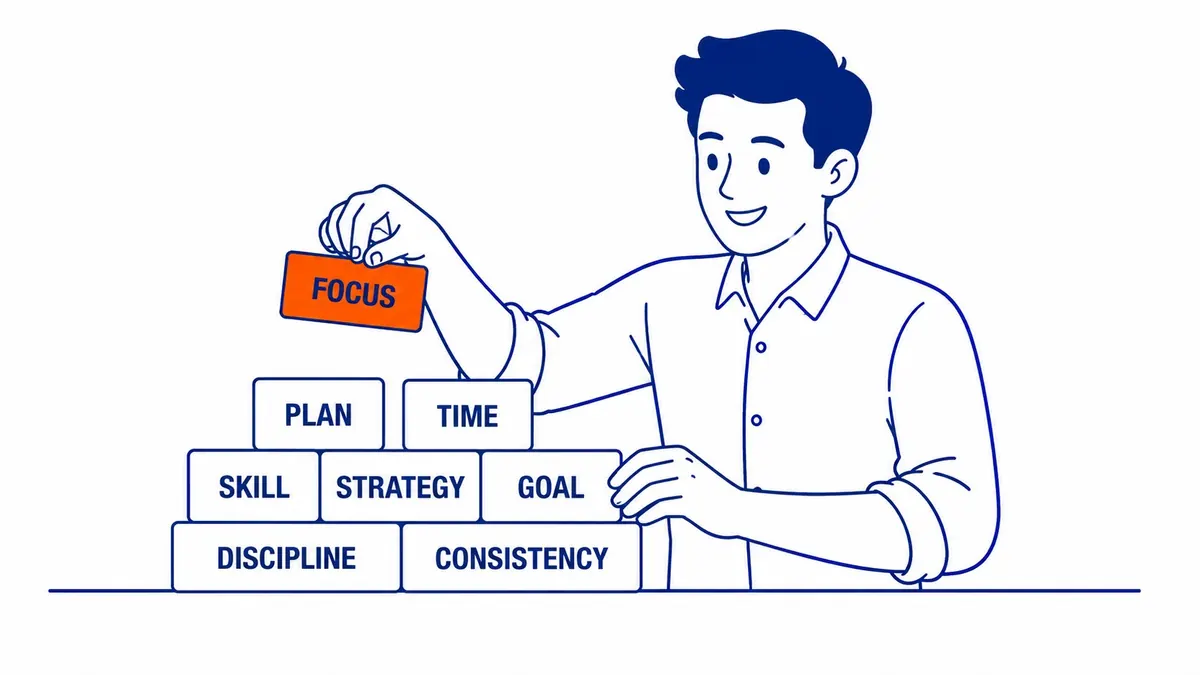
On-page work and off-page signals
The terms on-page and off-page SEO describe what a site controls directly and what other people say about it. On-page work covers the content, titles, headings, internal links and the structure that ties related pages together. Off-page signals include links from other sites, mentions of the business and, for local companies, reviews. A strong page with no outside recognition can struggle against well-known competitors, while links pointing at a thin or confusing page have little of value to support, so neither side works well alone.

The quality-versus-volume question sits inside this trade-off. Google’s spam policies define link spam as creating links “primarily for the purpose of manipulating search rankings,” and they list buying links for ranking purposes, automated link building and low-quality directory or bookmark site links among the examples. A handful of links from sites that a business’s customers and suppliers actually read is worth more than a large count of links nobody would ever click. For a local business, Google’s Business Profile help adds one more piece: it says local results are mainly based on “relevance, distance, and popularity,” and that prominence is partly based on how many websites link to the business and how many reviews it has. Asking satisfied customers for reviews is therefore part of the off-page side, and often the part a small business can do something about this week.
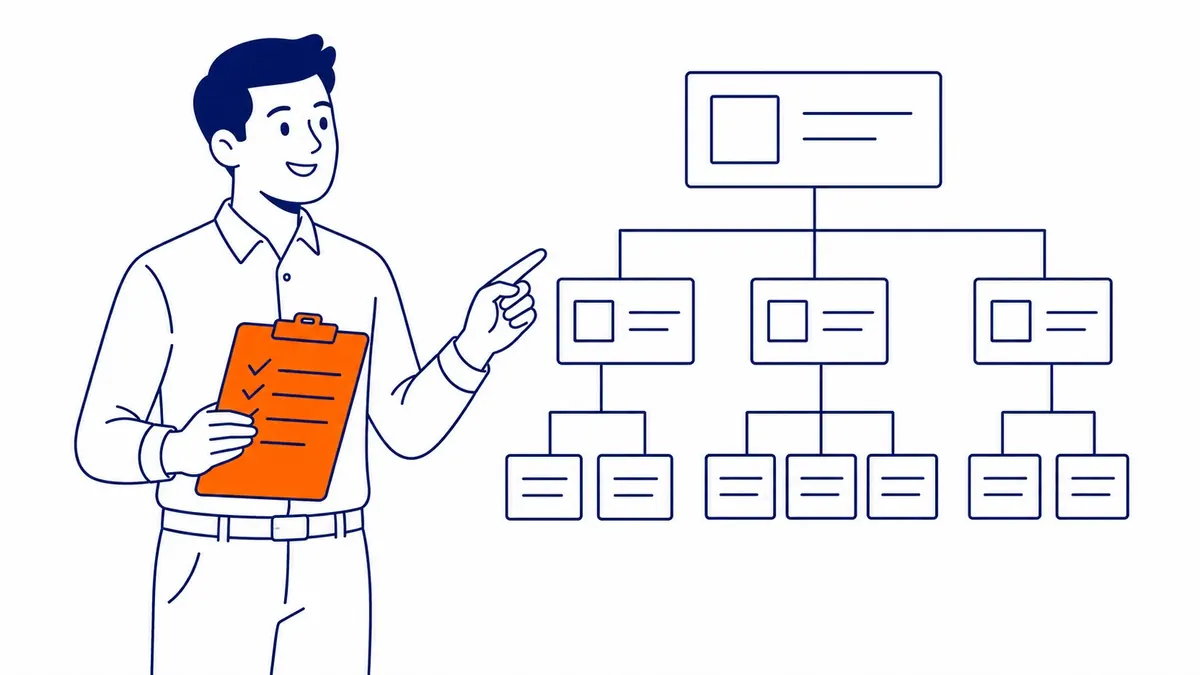
Technical health and the visitor’s experience
Technical SEO makes sure search engines can crawl, render and index a site: clean redirects, a working sitemap, sensible canonical tags and pages that are not blocked by mistake. Experience work makes the site pleasant for people: fast loading, a layout that works on a phone, clear navigation and ads or pop-ups that stay out of the way. The two overlap a great deal, but they are not the same, and it is easy to spend months polishing one while the other holds the site back.
Google is unusually clear about the order of priority here. Its page experience documentation says Google Search “always seeks to show the most relevant content, even if the page experience is sub-par,” and that a great page experience can contribute to success when there is lots of helpful content available for a query. It also says there is no single page experience signal and that, beyond Core Web Vitals, other page experience aspects do not directly help a site rank higher, although they make it more satisfying to use. The practical rule that follows is that crawling and indexing problems come first, because a page Google cannot index cannot rank at all, relevance and usefulness come next, and speed scores are worth improving once those are sound, without chasing a perfect number. The details of how Core Web Vitals affect rankings are worth reading before paying for a speed project.

Traffic and conversions
Rising traffic looks like progress on a monthly report, but visitors only matter to a business if some of them call, book or buy. The usual cause of traffic without enquiries is keyword choice. A page ranking for an informational phrase such as “what is SEO” draws readers who want to learn, while a page ranking for “SEO services Calgary” draws people who are deciding whom to hire. Both kinds of page have a place, because informational content earns links and builds familiarity, but they should be judged against different goals.
The balance is kept by measuring both sides together. Search Console shows which queries and pages bring visitors, and analytics or call tracking shows which of those visits turned into enquiries. When a page has steady traffic and almost no enquiries, the next step is usually to improve the page rather than chase more traffic: make the next step obvious, answer the questions a buyer has at that point, and check that the page matches what the searcher actually wanted. When a page converts well but gets few visits, the work runs the other way, toward better targeting and more links.

Quick wins and long-term rankings
Organic rankings usually build over months rather than days. Separately, Google’s own Starter Guide says some changes take effect in a few hours while others could take several months, and that you will likely want to wait a few weeks before judging whether a change helped. Paid search runs on a different clock: a Google Ads campaign can start bringing clicks soon after its ads are approved, and the clicks stop when the budget does. Each one covers the other’s weakness, which is why many businesses run both for a period rather than choosing one.
The balance shifts with the calendar. A business opening in a few weeks, or one whose demand peaks in a short season, needs paid visibility now, since organic work started today will not carry that deadline. A business with years of reviews, links and useful pages behind it can lean more on SEO and use ads to fill specific gaps, such as a new service or a competitive phrase it does not rank for yet. The quick wins on the SEO side are real too, for example fixing a page that was accidentally blocked from indexing or rewriting a title that does not match the query, but they are maintenance rather than strategy. With any provider, ask for the management fee and the ad spend as two separate numbers before you compare offers.
Local relevance and broader reach
Most service businesses earn their enquiries from customers within driving distance, so pages that make it clear where the business works and what it does there tend to matter more than broad national content. A Calgary trades company does not gain much from ranking in Halifax. The trade-off appears when a business serves several areas, for example Calgary and Edmonton, or Alberta and British Columbia, and wants to be found in each without writing thin copies of the same page.
Google’s spam policies settle part of this question directly. Their examples of keyword stuffing include “blocks of text that list cities and regions that a web page is trying to rank for,” so a footer listing twenty towns is not a local strategy. The sounder approach is a page for each area where the business has something specific to say, such as the services offered there, how visits or deliveries work, and the projects or customers it serves locally, plus an accurate Google Business Profile, since Google says local results are mainly based on relevance, distance and popularity. Broader informational content still has a job, since it can earn links and attract people early in their research, but it should support the local pages rather than replace them.

How to decide where the weight goes
The right balance is a starting weight for each trade-off, set by the business’s situation and revisited as results come in. The table below is a practitioner’s starting point, not a rule from Google, and every business will adjust it once data arrives.
| Situation | Lean toward | Why |
|---|---|---|
| New site, few links, little history | Technical health, a small set of strong pages, reviews and a few genuine links | Google needs to find and trust the site before content volume can pay off |
| Established site that already ranks | Protecting what works, improving pages close to page one, careful changes | A change to a ranking page carries more downside than a change to a new one |
| Launch date or short season ahead | Paid search now, SEO started in parallel | Organic results will not arrive in time for the deadline |
| Service-area business (several cities) | Local pages with real local substance and an accurate Business Profile | City lists are keyword stuffing; local results rest on relevance, distance and popularity |
| Plenty of traffic, few enquiries | Conversion work on the pages that already get visits | More of the same traffic will not fix a page that does not convert |
Whatever the starting point, the weights should move when the numbers do. Make one meaningful change at a time where possible, give it at least a few weeks as Google’s Starter Guide suggests, and compare rankings, traffic and enquiries for the pages involved rather than the site as a whole. If it is hard to tell which side of a trade-off is holding a site back, a site audit that looks at indexing, content, links and conversions together is usually the quickest way to find out.

Getting the balance right for your business
Since 2007, SEO Company To-The-TOP! has worked on search for Calgary businesses as a solo practice, which means the same person who weighs content against keywords also decides how hard to push technical fixes, link building and paid search for that client. The work uses White Hat methods only, To-The-TOP! is Google Ads certified, and every engagement includes monthly position reporting. The public portfolio of ranked keywords shows the kind of results the work aims for.
If you would like a second opinion on how your own site is balanced, or on a plan you have already been given, call (403) 308-5949.
What Is Social Bookmarking in SEO and Does It Still Work
Reddit. Pinterest. Public platforms where people save a link, tag it, share it, sometimes upvote it. That is social bookmarking. This tactic used to sit at the core of link building. Not anymore. Its value dropped hard once Google’s early link-spam updates hit.
Digg and StumbleUpon defined an entire era of SEO once. Most of that era is gone. What remains still has a narrow, legitimate use.
What Is Edge SEO?
Edge SEO means changing your website at the delivery layer instead of in the website. A rule sits on the network your domain points at. Your server sends the page it always sent. Then the rule rewrites the markup on the way to a visitor.
People reach for it because the ordinary route is slow. A canonical tag needs a developer. That developer has a list already. Your request joins the list, and months later the tag is still missing. An edge rule skips all of it. Titles. Redirects. Markup somebody would otherwise have to put in the code.